150x150.png)
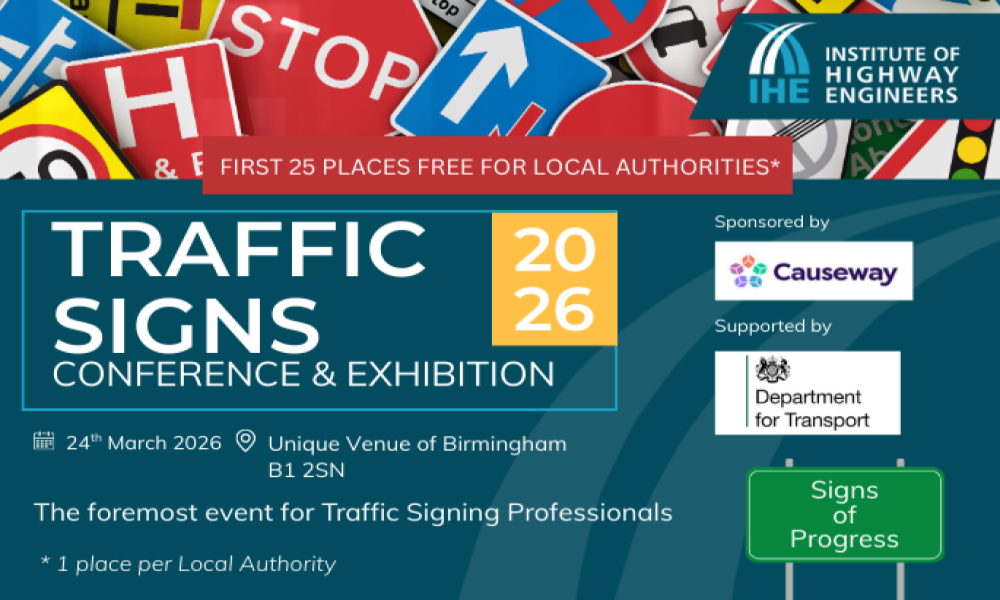
If the 2024 conference was about recovery and the 2025 event focused on policy shifts, 2026 will be remembered as the year the "Digital Road" became the industry standard.
A recurring motif throughout the day was the transition from static, "analogue" signage to dynamic, data-driven systems. In a keynote session that set the tone for the morning, speakers from the Department for Transport (DfT) outlined a vision where the physical sign is no longer the sole source of truth for the driver.
"We are moving toward a 'system-level' architecture", noted one senior DfT official. "The road sign of 2026 is becoming a data point. While the physical plate remains essential for safety and legality, its digital twin is what truly drives the modern traffic ecosystem."
The conference showcased the rapid acceleration of Vehicle-to-Everything (V2X) communication. Engineers discussed how 5G-enabled "smart poles" are now transmitting speed limits and hazard warnings directly to vehicle dashboards and Heads-Up Displays (HUDs). This shift is particularly critical for the deployment of Level 3 and Level 4 autonomous shuttles, which were a major talking point following several successful pilots in UK city centres over the past year.
Sustainability was not just a buzzword this year; it was backed by rigorous data and new material science. WJ Group and Ecopals were among the industry leaders presenting breakthroughs in carbon-neutral infrastructure.
A standout session focused on the "decarbonisation of the kerbside". Delegates were shown case studies of road markings made from recycled plastic additives and bio-binders that offer 40% lower embodied carbon than traditional thermoplastic.
"The challenge for 2026 is no longer just visibility, it’s longevity and footprint", said one panellist during the sustainability debate. The discussion highlighted how local authorities are now being graded on the "Scope 3" emissions of their maintenance contracts, making low-carbon signage and marking choices a top priority for procurement officers.
Three years after Wales implemented its default 20mph limit in residential areas, the conference provided a platform for a deep-dive retrospective. Representatives from the Welsh Government shared data on the long-term impact on road safety and active travel.
The "Wales Effect" has sparked a nationwide conversation about consistency. The conference heard how several English authorities are now moving toward similar "blanket" zones to reduce "signage clutter". By standardising the default speed, councils can remove thousands of repeaters, saving on both maintenance costs and visual pollution, a move championed by those looking to streamline the Traffic Signs Regulations and General Directions (TSRGD).
One of the most technically dense yet exciting sessions involved the rise of Virtual Loading Bays (VLBs). As urban deliveries continue to surge, traditional "Yellow Line" enforcement is proving insufficient.
The conference explored how "smarter, more flexible kerbside management" is being achieved through a combination of digital signage and app-based bookings. Instead of a permanent "No Loading" sign, 2026 is seeing the rollout of dynamic LED signs that change their restrictions based on real-time demand and air quality levels.
"The kerbside is the most valuable real estate in a city", noted a consultant from Buchanan Computing. "By digitising the regulations, we turn a static asset into a flexible tool that can support EV charging in the morning, deliveries at noon and outdoor dining in the evening."
In a moment of candid reflection, the conference addressed the recent controversy surrounding "colourful crossings". While intended to celebrate local culture or improve aesthetics, feedback from disability advocacy groups and Transport for London (TfL) has prompted a rethink.
The consensus in Birmingham was a return to "clarity over decoration". Speakers highlighted that for neurodivergent road users and those with visual impairments, traditional high-contrast markings remain the gold standard. The IHE emphasized that "inclusive design" must mean "predictable design", signalling a move away from experimental artistic treatments on the live carriageway.
Amidst the high-tech talk, the IHE reminded attendees that technology is only as good as the engineers who deploy it. There was a significant push for the IHE Professional Certificate in Traffic Signing and Road Marking.
With the DfT’s Traffic Signs Manual now recommending that those who design or check major signing work hold this accreditation, the conference saw a record number of registrations for upcoming training modules. This drive for "Professional Registration" is seen as a safeguard against the complexities of the new digital-physical hybrid road network.
As the sun set over Centenary Square, the mood was one of cautious optimism. The "Signs of Progress" are everywhere, from the satellite-enabled incident detection systems to the first Yorkshire councils trialling integrated EV charging signage.
The 2026 IHE Traffic Signs Conference proved that while the "look" of our roads might remain familiar to a driver from the 1960s, the "brain" behind the signs has evolved beyond recognition. The next twelve months will see these Birmingham-born ideas move from the theatre stage to the asphalt.
Click the buttons below to see more articles:
See all ArticlesIndustry InsightEventsITS Thought LeadershipITS Educational