150x150.png)
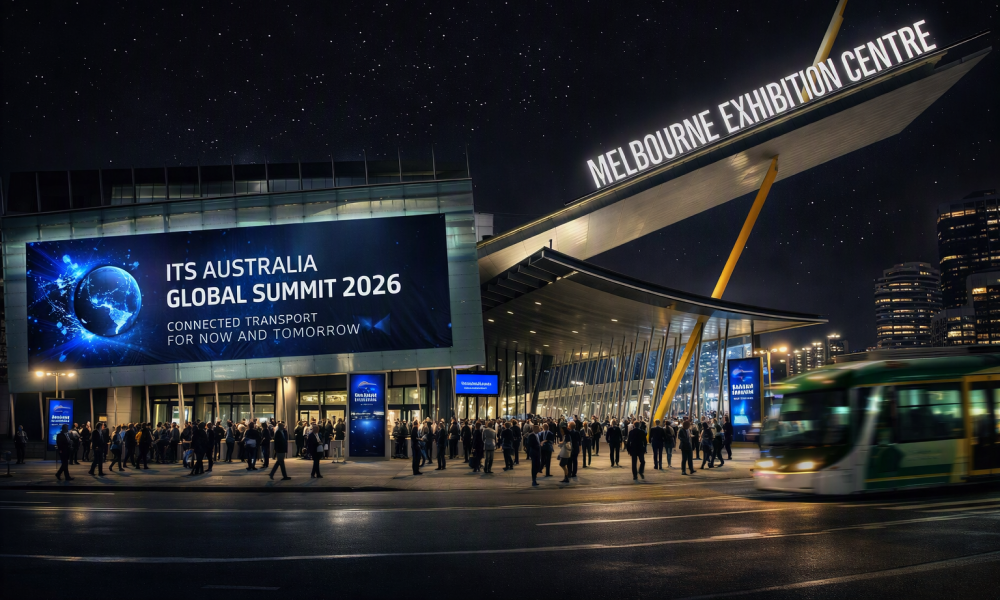
The ITS Australia Global Summit was held in Melbourne, with a sense of maturity and confidence that reflected both the evolution of the event and the pace of change across the sector. “Connected Transport for Now and Tomorrow” proved to be an apt theme for a gathering that focused squarely on delivery rather than distant aspiration. Melbourne offered a fitting backdrop, with delegates able to see how the city’s own transport network is embracing digital tools, connected infrastructure and data-driven operations in ways that are already shaping everyday journeys.
This year marked the inaugural ITS Australia Global Summit, rebranded from the ITS Australia Summit to reflect the increasingly international audience, the breadth of participation and the global relevance of the topics explored across the programme. The event has grown steadily over the last decade to become one of the industry’s most respected transport technology conferences. Its new identity felt entirely natural, particularly as the conversations throughout the week drew on experiences from across the Asia-Pacific region, Europe and North America. The shift in name captured the reality that connected transport is now a global endeavour, shaped by shared challenges and common ambitions.
Melbourne’s transport landscape provided a strong reference point for many of the discussions. Delegates spent time examining how the city is using digital tools to enhance multimodal journeys, improve passenger information and support more responsive operations. Real-time tram data connected intersections and automated shuttle trials were highlighted as examples of how legacy systems can evolve without losing their character. The city’s approach demonstrated that modernisation does not need to be disruptive for users, and that digital upgrades can be woven into existing networks with care and clarity.
The international dimension of the Summit was evident throughout the sessions. Speakers compared approaches to urbanisation, climate pressures, freight resilience and the rising expectation for seamless mobility. Delegates explored how cross-border interoperability and harmonised standards are becoming essential as connected vehicles and digital infrastructure mature. Conversations often returned to the importance of shared safety frameworks, particularly as cooperative systems become more sophisticated. The global nature of the event ensured that these discussions were grounded in practical experience rather than theoretical speculation.
Connected Transport for Now and Tomorrow encouraged a strong focus on the human dimension of intelligent mobility. Presenters emphasised that technology alone cannot deliver safer roads, cleaner air or more reliable journeys. Those outcomes depend on public trust, thoughtful design and clear communication. Several sessions explored how behavioural insights and inclusive planning can shape solutions that genuinely meet people’s needs. Delegates heard how digital tools are supporting vulnerable road users, improving accessibility and creating environments where everyone feels confident navigating the transport system. Melbourne’s diverse communities provided a useful context for these reflections.
Industry transformation emerged as a recurring theme. The rise of connected transport is reshaping the roles of traditional players and creating new opportunities for innovators. Automotive manufacturers are becoming software-driven mobility providers. Infrastructure operators are taking on responsibilities as data stewards. Technology companies are entering the transport space with fresh perspectives on cybersecurity, cloud-based operations and user experience. The Summit examined how these shifts are influencing procurement models, partnership structures and long-term investment strategies. Delegates discussed how organisations can build the skills, governance frameworks and cultural readiness required to thrive in a connected ecosystem.
Safety remained a central priority. Real-time hazard warnings, cooperative perception, automated incident detection and connected heavy-vehicle monitoring were showcased as technologies already delivering measurable benefits. Presenters shared evidence from recent deployments and outlined how these tools are supporting emergency response and protecting vulnerable users. The Summit provided a forum to explore how such technologies can be scaled responsibly, how data can be shared securely and how regulatory frameworks can evolve without compromising public protection. Australia’s strong record in road safety research ensured that these conversations were grounded in evidence.
Environmental sustainability featured prominently across the programme. Connected transport is playing a vital role in reducing emissions by smoothing traffic flows, supporting electrification, improving freight efficiency and enabling more attractive public transport options. Delegates examined how digital tools are helping cities meet their climate commitments, how connected charging infrastructure is supporting electric fleets and how data-driven planning is encouraging more sustainable travel choices. Melbourne’s own climate ambitions provided a compelling backdrop for these discussions, reinforcing the message that connected transport is central to a greener future.
The Summit took place at a moment when artificial intelligence, digital twins, edge computing and next-generation connectivity are converging. These technologies are no longer emerging concepts but active components of modern transport systems. Presenters shared examples of how AI is supporting predictive maintenance, optimising multimodal networks and enhancing operational decision-making. Digital twins were highlighted for their role in improving planning, testing and resilience. Delegates reflected on how 5G and future connectivity standards are unlocking new forms of cooperative mobility. The tone of these sessions was pragmatic, with a clear focus on responsible integration and measurable outcomes.
Melbourne’s role as host city added a sense of energy and optimism. The Summit drew on the region’s academic strength, entrepreneurial spirit and transport heritage. Local projects demonstrated what connected transport looks like when it moves beyond pilot phases and becomes part of everyday life. Delegates experienced a city that is actively shaping its mobility future through collaboration between government, industry and research institutions. That collaborative ethos mirrored the spirit of the Summit itself.
Connected Transport for Now and Tomorrow ultimately served as a call to action. The week’s discussions emphasised that the future of mobility will not be defined by isolated breakthroughs but by the ability to combine technologies, policies and human insight into systems that work seamlessly. The Summit provided a space to explore how that can be achieved, how barriers can be overcome and how ambition can be translated into real-world outcomes.
Melbourne hosted a conversation that mattered. The Summit brought together leaders who recognise that connected transport is no longer a distant horizon but a present-day responsibility. Delegates left with a renewed sense of purpose, shaped by the knowledge that the industry stands at a pivotal moment. The event offered an opportunity to reflect on progress, share lessons and shape the direction of travel for years to come.
Click the buttons below to see more articles:
See all ArticlesIndustry InsightEventsITS Thought LeadershipITS Educational