150x150.png)

Traffex returned to Coventry this week with a renewed sense of purpose, a sector gathering that felt both grounded in its engineering heritage and boldly future-facing. Across the exhibition hall, the conversations were sharper, the demonstrations more ambitious and the appetite for collaboration unmistakably stronger. Intelligent Transport Systems (ITS) and mobility technology were present, shaping discussions on safety, sustainability, digitalisation and the evolving hierarchy of road users.
For many, Traffex 2026 arrived at exactly the right moment. With local authorities under pressure to deliver more with less, with active travel continuing its rise and with AI and edge processing now moving from experimental to operational, the industry needed a forum to take stock. Coventry provided that, and more.
I had the privilege of delivering the Opening Address for The TechTalks Theatre at Traffex 2026, setting the tone for two days of discussion, debate and discovery. My message was simple, this sector is stronger than it realises. We are not merely adapting to change, we are shaping it. From the engineers designing safer crossings to the innovators rethinking traffic control architectures, the UK’s transport technology community continues to punch well above its weight.
I also had the honour of hosting the TechTalks Theatre across both days. This was a lively and well-attended space that brought together practitioners, policymakers, researchers and suppliers for a rapid-fire programme of insights. The range of speakers was exceptional, reflecting the breadth of the modern technology landscape. My thanks go to Khalifa Bokhammas and Tereza Simpson, whose meticulous work in curating and organising the conference programme ensured that every session delivered value, clarity and relevance.
Two keynote sessions anchored the programme. On day one, Darren Capes, from the Department for Transport, offered a thoughtful and pragmatic view of the digital road ahead, emphasising the need for standards, interoperability and a renewed focus on operational resilience. His message resonated strongly with local authorities grappling with legacy systems and rising expectations.
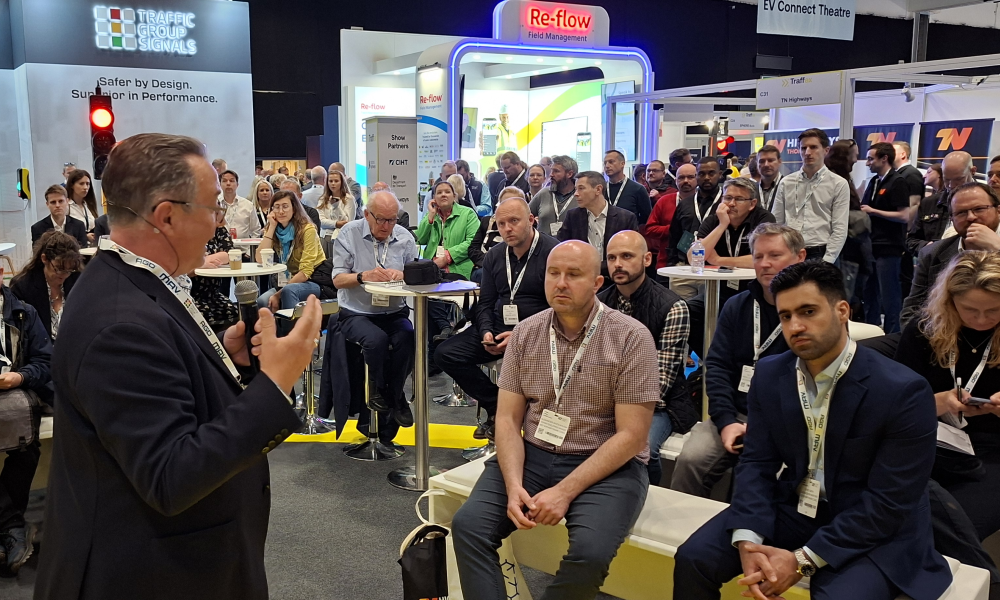
On the second day, Max Sugarman, Chief Executive of Intelligent Transport Systems UK, delivered a keynote that struck a chord with every authority, supplier and practitioner in the room. Under the title “Stuck on Red – From Obsolescence to a Network Fit for the Future”, he set out a clear and compelling case for why the UK must urgently address the operational risks posed by ageing traffic signal infrastructure. Max highlighted the uncomfortable reality that much of the country’s signal stock is (or soon will be), beyond its intended design life, creating vulnerabilities that affect safety, network performance and resilience. His message was not one of criticism but of collaboration, a call for central government and local authorities to work more closely together, aligning funding, policy and long-term planning to ensure that the UK’s traffic control systems remain fit for purpose. It was a keynote that blended honesty with optimism, a reminder that modernising the network is not just a technical challenge, but a shared national responsibility.
Walking the exhibition floor, it was clear that the industry is entering a new phase, one defined by intelligence at the edge, modularity and a deeper respect for vulnerable road users. Radar, AI-enhanced detection, connected signal control and digital tools for frontline operatives were everywhere. The shift from hardware-centric thinking to system-level outcomes was unmistakable.
Suppliers showcased solutions that were lighter, smarter and more adaptable. Local authorities came with sharper questions. And the conversations felt more grounded than ever, whether they were about data governance, multimodal integration, or the practicalities of deploying new technology on constrained budgets.
Traffex 2026 wasn’t just a showcase, it was a snapshot of a sector maturing.
Traffex 2026 demonstrated a sector that is not only innovating but maturing, becoming more integrated, more user-centred and more confident in its role within the wider mobility ecosystem. The conversations in Coventry reflected a community that understands its responsibilities: to safety, to sustainability, to accessibility and to the public it serves.
From AI-powered detection to re-engineered signal architectures and digital tools for operatives, the innovations recognised in this year’s @ITSNow Awards show a sector that is solving real problems with intelligence and purpose.
And from the Opening Address to the final session in the TechTalks Theatre, the message was clear: the future of transport will be shaped not by isolated technologies, but by the people, organisations and collaborations that bring them to life.
Traffex 2026 was a reminder of just how strong that community is.
One of the highlights of the week is the announcement of the 2026 @ITSNow Innovation Award winners. This is a celebration of the ingenuity, engineering excellence and practical problem-solving that define the best of our sector. Building on the legacy of previous years, the 2026 awards once again recognised innovations that deliver real-world impact, support the evolving needs of road users and demonstrate clear technical advancement. Below are this year’s winners, to find out more about the @ITSNow Innovation Awards, see our dedicated Awards page.
AGD Systems takes the top spot in 2026 with the AGD646, a next-generation detector that blends AI, long-range infrared illumination and edge processing to deliver highly accurate detection and classification of non-motorised users (NMUs). This includes pedestrians, cyclists, wheelchair users and those pushing prams or buggies, a group whose safety and priority are now central to UK transport policy.
The AGD646 is designed specifically for kerbside detection, identifying users in waiting areas and enabling adaptive pedestrian signal strategies that reduce waiting times and improve safety. Its ability to distinguish between different NMU types provides a powerful new building block for modern traffic control systems, especially as the hierarchy of road users continues to shift toward active travel.
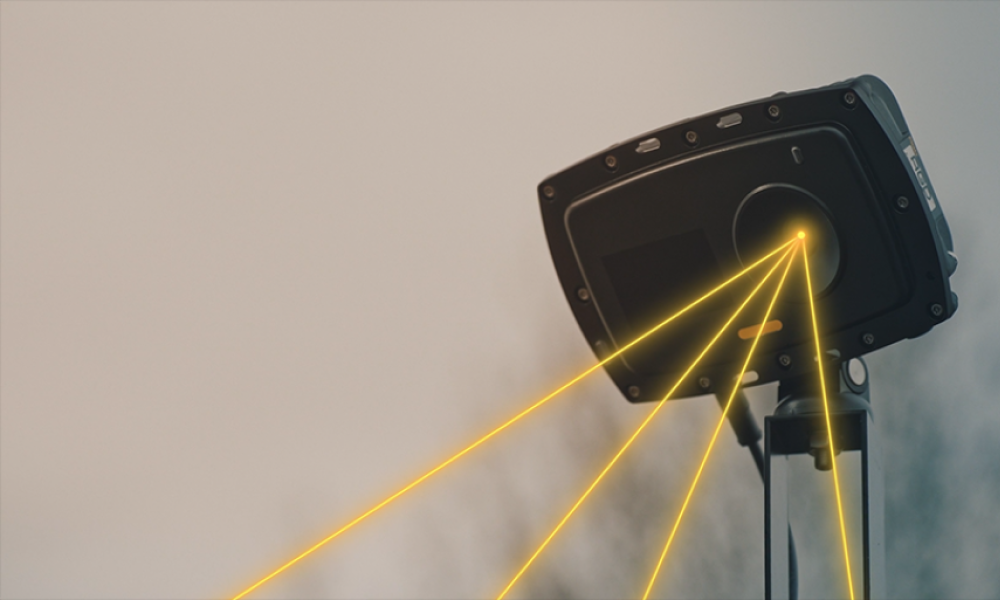
The product’s engineering credentials are strong: a high-quality image sensor, long-range IR illumination, an AI engine trained for kerbside environments and compliance with TOPAS 2507B. But its real significance lies in what it enables, a more responsive, inclusive and intelligent approach to pedestrian and cyclist crossings.
For more details, click Here.
The second prize goes to Yunex Traffic for the Plus+ Advantage, an elegant and genuinely lateral piece of engineering thinking. The innovation lies not in a single component but in the re-imagining of how traffic signals can be provided during refurbishment or upgrade works.
Traditionally, temporary signals require separate wireless or battery-powered units, complex cabling and often compromise UTC connectivity. Plus+ Advantage flips this model by using the permanent Plus+ system (with its distributed intelligence and minimal cabling), from the very start of the works programme. Signals are installed in temporary positions using the same power and data ring architecture, then moved to their permanent locations as civils work progresses.
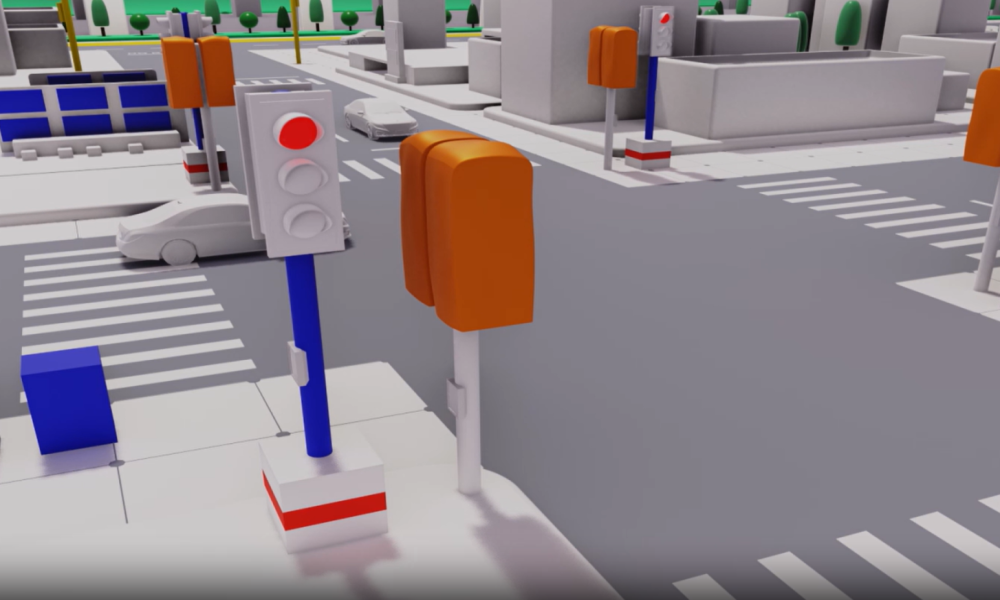
The result is a solution that eliminates the need for third-party temporary signals and maintains SCOOT® or MOVA connectivity throughout, so it doesn’t suffer operational degradation, whilst also reducing cost, complexity and disruption.
It’s a smart, efficient and operationally resilient approach that demonstrates how rethinking established practices can unlock major benefits.
For more details, click Here.
The third prize is awarded to SafeSite Companion, a digital tool designed to support operatives deploying traffic management (from cones and signs to portable signals), on roadworks sites. What sets this innovation apart is its focus on consistency, compliance and frontline usability.
SafeSite Companion provides operatives with a reliable, always-available source of guidance that aligns with statutory requirements and industry good practice. In a field where mistakes can have serious safety implications, this kind of accessible, standardised support is invaluable.
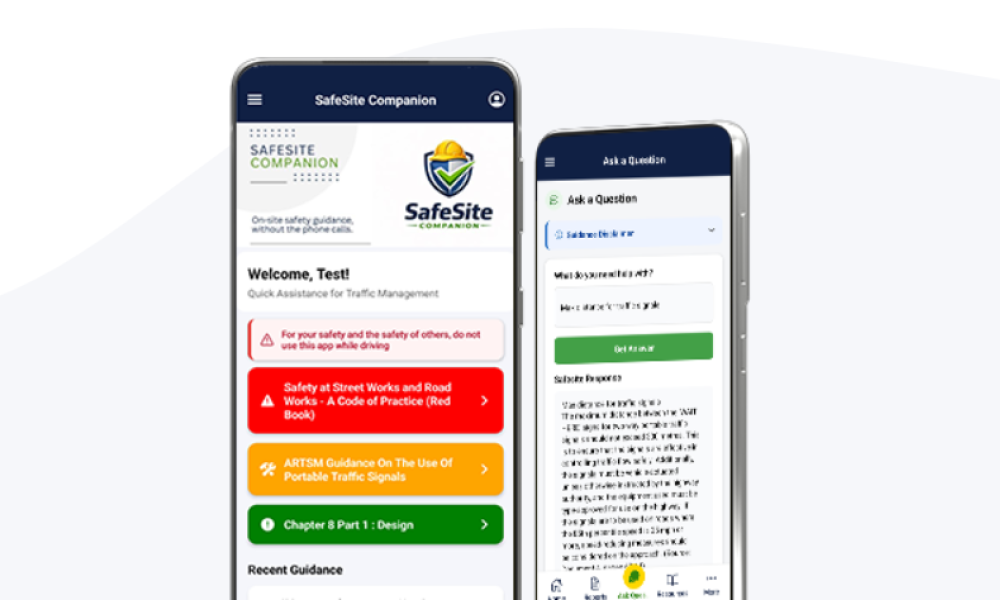
The product also impressed during the National Highways and Connected Places Catapult Launchpad presentations at the TechTalks Theatre, where it took the top spot, judged by Darren Capes and myself. Its combination of practicality, clarity and compliance makes it a worthy addition to the 2026 winners’ list.
For more details, click Here.
Click the buttons below to see more articles:
See all ArticlesIndustry InsightEventsITS Thought LeadershipITS Educational