150x150.png)
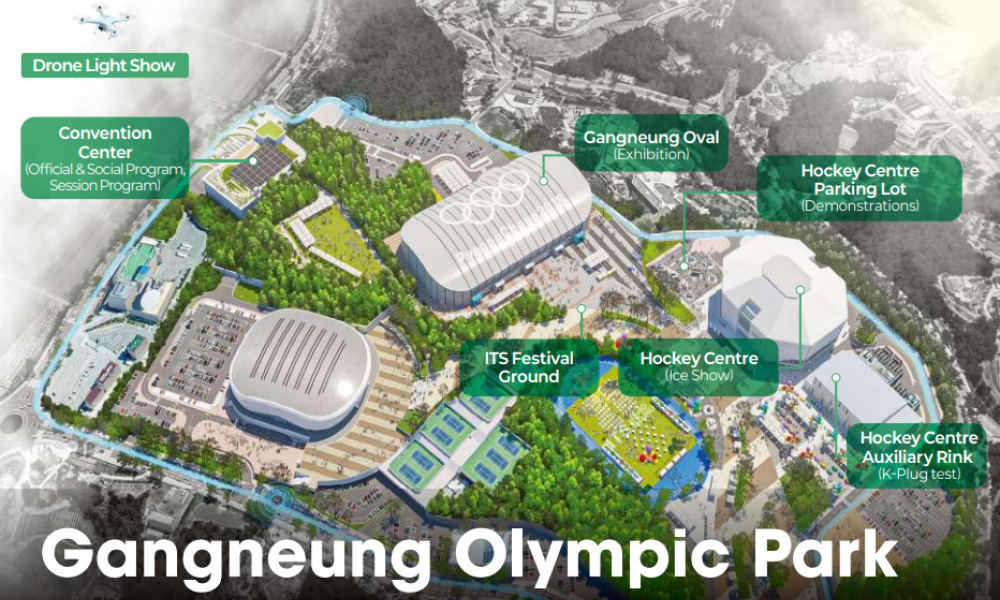
The opening day of the 2026 ITS World Congress in Gangneung carries a particular sense of anticipation. Delegates will arrive in a city that has spent years preparing for its moment on the global ITS stage, shaping an environment where intelligent mobility is not a distant ambition but a visible, functioning reality. Gangneung’s Olympic Park and Convention Centre will become the focal points of the international ITS community from the morning of the nineteenth, setting the tone for a week built around collaboration, innovation and the shared pursuit of safer, cleaner and more efficient transport systems.
The day begins with the formal Opening Ceremony at the Convention Hall. This is always a symbolic moment for the Congress, yet in Gangneung it feels especially significant. The theme, A World United Beyond Mobility, reflects both the sector’s growing maturity and the recognition that intelligent transport systems now sit at the heart of wider societal and economic transformation. Senior figures from governments, industry and academia will gather to mark the start of the week, reaffirming the Congress’s role as a platform where international partnerships are strengthened and new ones formed. The ceremony traditionally blends formality with a sense of optimism, and this year’s edition is expected to follow that pattern, offering delegates a clear signal of the ambitions driving the programme ahead.
Attention then shifts to the Exhibition Opening Ceremony at the Gangneung Oval. This marks the unveiling of one of the most extensive ITS exhibitions ever staged in Korea, with more than one hundred organisations and companies represented. The presence of global technology leaders such as Hyundai Motor, Google, Qualcomm, Toyota and Honda underscores the breadth of the sector and the scale of investment flowing into intelligent mobility. Delegates will be able to explore demonstrations ranging from autonomous vehicle platforms to AI-driven traffic optimisation tools, electric truck digital twins and next-generation connected infrastructure. The exhibition is designed not simply as a showcase but as a working environment where ideas can be exchanged, partnerships initiated and practical solutions examined up close.
Academic sessions begin shortly after the exhibition opens, and the first day’s programme offers a clear indication of the themes shaping the Congress. Data analytics features prominently, with discussions on sustainable and inclusive mobility exploring how large-scale datasets can reveal behavioural patterns, accessibility barriers and opportunities for more equitable transport planning. Presentations will examine public transit efficiency, latent travel behaviours and the integration of digital twins into commercial electric truck operations. These sessions highlight the growing sophistication of data-driven mobility research and the importance of evidence-based policymaking in shaping future transport networks.
Active mobility also receives early attention. A dedicated session on bike sharing and geoinformation will explore demand forecasting, structural imbalances in bike distribution and the characteristics of group cycling trips. The inclusion of pedestrian-friendly public space design reflects a broader shift within ITS thinking, where active modes are no longer treated as peripheral but as essential components of integrated mobility ecosystems. This aligns closely with Gangneung’s own approach to urban mobility, where walkability and cycling infrastructure have become increasingly prominent.
Safety remains a central pillar of the Congress, and the first day includes a session focused on protecting vulnerable road users and micro-mobility riders. Presentations will cover AI-enabled smart glasses designed to enhance safety, comparative analyses of cargo-bike and truck-based last-mile delivery, and broader assessments of risk in urban environments. These discussions reflect the sector’s recognition that technological progress must be matched by a commitment to safeguarding those most exposed to transport-related hazards.
Beyond the formal sessions, Gangneung itself becomes part of the Congress experience. The city has invested heavily in intelligent transport infrastructure, and delegates will be able to see many of these systems in operation. Smart intersections, priority signals for emergency vehicles and autonomous buses form part of the city’s mobility landscape, offering visitors a chance to observe real-world deployments rather than conceptual prototypes. Autonomous vehicles will circulate around Olympic Park throughout the week, giving attendees the opportunity to experience the technology first-hand. This practical dimension reinforces the Congress’s role as a bridge between theory and implementation, demonstrating how ITS solutions can be integrated into everyday urban life.
The first day also introduces the public-facing elements of the Congress. Gangneung has placed considerable emphasis on accessibility, ensuring that residents and visitors can engage with the event even if they are not attending the formal programme. Outdoor areas around Olympic Park will host science and technology activities, including autonomous driving demonstrations, VR truck experiences, mini-robot football and drone soccer. These activities run throughout the week and are designed to spark curiosity, encourage learning and showcase the potential of intelligent mobility in a way that is both engaging and enjoyable.
As evening approaches, the city prepares for one of the most visually striking moments of the Congress with a drone light show featuring 3,500 drones. Scheduled for eight o’clock, the display will mark the official opening of the event and is expected to draw large crowds. Drone shows have become increasingly popular at major technology gatherings, yet Gangneung’s edition stands out for its scale and choreography. The performance will serve as a celebration of innovation and a reminder of the creative possibilities that emerge when digital technologies are applied in imaginative ways.
The logistical arrangements for the day reflect the scale of attendance. With around sixty thousand visitors expected across the week, Gangneung has increased bus frequencies on key routes serving Olympic Park and introduced dedicated parking areas to manage demand. Access restrictions around the Convention Centre and speed skating venue will help maintain smooth traffic flow, while temporary controls during the drone show will ensure safety. These measures illustrate the city’s commitment to delivering a seamless experience for delegates and residents alike.
By the time the first day draws to a close, delegates will have gained a clear sense of the Congress’s direction. The programme blends high-level strategic discussion with detailed technical exploration, practical demonstrations and public engagement. Gangneung’s role as host city adds a distinctive dimension, offering a living example of how intelligent transport systems can be woven into the fabric of urban life. The opening day sets the stage for a week that promises to be rich in insight, collaboration and forward-looking debate, reflecting both the maturity of the ITS sector and its readiness to shape the future of global mobility.
Click the buttons below to see more articles:
See all ArticlesIndustry InsightEventsITS Thought LeadershipITS Educational