150x150.png)
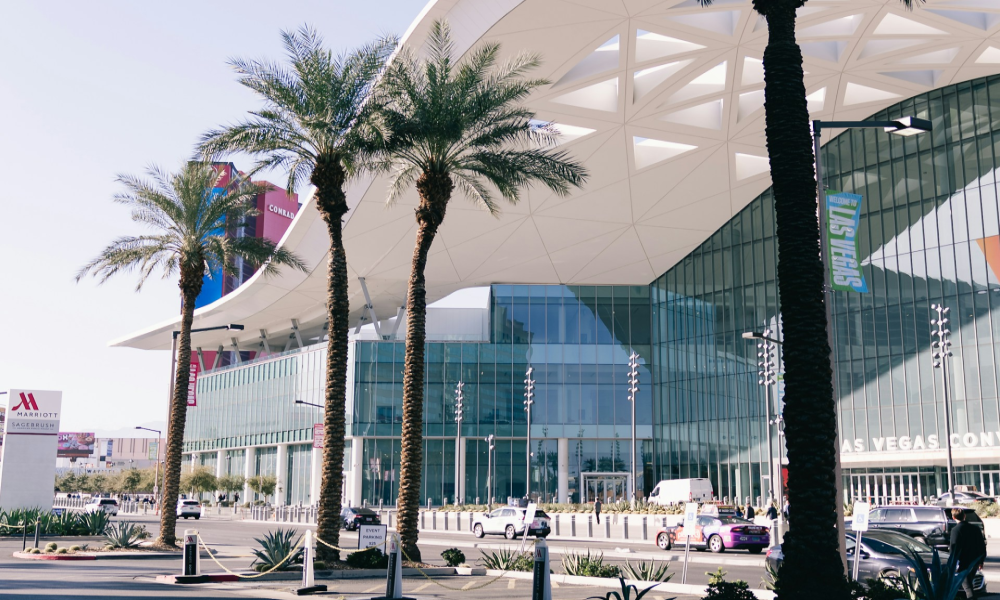
ACT Expo 2026 in Las Vegas showed with unusual clarity the intelligent transport shift reshaping commercial fleets.
Las Vegas is no stranger to spectacle, yet from 4 to 7 May 2026 the main attraction was not on the Strip but inside the Las Vegas Convention Center, where the Advanced Clean Transportation Expo again demonstrated why it has become the most influential commercial fleet technology gathering in North America. What stood out this year was not a single headline grabbing launch but the sense that several strands of change are now converging. Intelligent transport systems, zero emission vehicle platforms, hydrogen innovation and software led operations are no longer separate conversations. They are beginning to form one connected picture of how freight and fleet mobility will work in practice.
That was the real message running through the halls and conference sessions. Fleet operators are moving into a mixed energy era in which battery electric, hydrogen-based systems, renewable fuels and cleaner combustion technologies will coexist. Managing that complexity will depend less on choosing one perfect powertrain and more on building the digital intelligence needed to route vehicles, plan charging and fuelling, monitor safety and keep assets in service. In other words, the transition is becoming as much about information as propulsion.
One of the clearest signs of that shift came from hydrogen technology moving out of the concept stage and into operational view. PHINIA used the Expo to unveil what it described as the first homologated hydrogen internal combustion engine light commercial vehicle, developed with Aramco. The van meets Euro 7 standards, offers a real-world range of up to 500 km and is reported to cut tailpipe carbon dioxide emissions by as much as 99 per cent compared with diesel. That matters not simply because it expands the range of low emission options available to fleets, but because it signals that hydrogen combustion is now being discussed in terms of deployment and operations rather than distant promise.
Importantly, this was not a prototype kept at a distance. Delegates were able to ride in the vehicle during the Ride and Drive programme, which gave the announcement a practical weight often missing from exhibition launches. For transport technologists the significance reaches beyond the engine bay. A hydrogen fleet requires its own layer of intelligence, from station mapping and live availability data to predictive route planning based on fuel use, safety critical diagnostics and integration with telematics platforms. Hydrogen is still at an early stage in many markets, but at ACT Expo it looked much more like an operational reality than a speculative idea.
Electrification was still central to the show, though the conversation has matured noticeably. The question is no longer whether fleets can electrify, but how they can do so intelligently, economically and at scale. That change in tone was evident across the exhibition floor where suppliers focused less on declaring the inevitability of battery electric transport and more on solving the operational problems that come with it. Uptime, thermal stability, charging efficiency and battery longevity are now the practical measures that matter.
BorgWarner’s presence captured that mood well. The company showcased high performance NMC and LFP battery systems, silicon carbide-based inverter motor drive modules and a range of thermal management technologies including eCoolers and high voltage heaters. Taken together, these systems are designed to support the next generation of commercial electric vehicles by improving efficiency and helping operators manage the real constraints of demanding duty cycles.
For the intelligent transport sector, the lesson is straightforward. Large scale electrification depends on real time battery health analysis, charging optimisation, grid aware scheduling and predictive maintenance informed by telematics. The hardware remains crucial, but the success of electric fleets increasingly rests on the software layer that interprets data and turns it into better decisions. ACT Expo made it clear that electrification is becoming a systems challenge rather than a simple hardware rollout.
The same pattern could be seen in the rapid rise of vehicle intelligence. Beyond energy systems, the Expo underlined how quickly commercial vehicles are becoming software defined machines. It was reported that MicroVision expanded its lidar portfolio after two acquisitions, strengthening its position in perception systems for advanced driver assistance and autonomous driving. At the same time, fleets are adopting AI powered in cab coaching tools that analyse video and telematics data in real time rather than waiting for an incident review after the event. This shift from reactive oversight to proactive intervention is reshaping safety management and bringing commercial operations closer to the digital logic already familiar in passenger vehicle development.
That broader digital transformation was impossible to miss across the official programme as well. Sessions throughout the event returned repeatedly to telematics, automation, geolocation, V2X connectivity and software defined fleet platforms. Route optimisation based on live operating data, predictive maintenance built on sensor fusion, V2X enabled safety functions and telematics led energy management for mixed fleets were all treated not as experimental extras but as core capabilities. The strongest impression left by the Expo was that digitalisation has moved to the centre of fleet operations. It is no longer an add on layer. It is becoming the operating system through which modern fleets are run.
Perhaps the most important conclusion from the wider news cycle around the event was that fleets are not moving towards a single energy future. Reporting from Alliance2K described a market preparing for battery electric vehicles, hydrogen fuel cells, hydrogen combustion, renewable fuels and cleaner diesel technologies to coexist for years to come. That point matters because every additional energy pathway adds another layer of operational complexity. Vehicle selection, route planning, infrastructure access, maintenance regimes and cost modelling all become harder when fleets are managing several propulsion strategies at once. Yet that very complexity is also creating the opportunity for more sophisticated intelligent transport tools.
Manufacturers reinforced the point. Hino showed chassis platforms intended to support multiple propulsion systems, while Honda demonstrated hydrogen technologies that appear to be moving closer to commercial use. The implication is clear enough. Fleets are unlikely to make a neat one-way transition from one fuel to another. They are far more likely to adopt intelligent systems capable of coordinating several energy options at once.
Infrastructure emerged as the next major bottleneck and, at the same time, one of the biggest opportunities. As more fleets commit to alternative powertrains, the practical question of where and how vehicles refuel or recharge is becoming central. Mack Trucks highlighted this pressure by announcing a significant expansion of its battery electric infrastructure programme through partnerships with turnkey providers. Around that announcement sat a wider discussion about charging network planning, hydrogen station deployment, renewable fuel supply chains and long-term control of energy costs. All of those issues depend on better coordination between vehicles, depots, networks and operators.
This is another area where intelligent transport systems have a decisive role. Smart charging management, infrastructure to vehicle communication and energy aware scheduling are becoming essential if operators are to avoid turning the low emission transition into a logistical bottleneck. In that sense, infrastructure is not only a civil or energy challenge. It is also an information challenge.
Taken together, these developments say a great deal about where the intelligent transport sector is heading next. ITS is becoming the glue that holds the mixed energy fleet ecosystem together. Routing, charging, fuelling, safety monitoring and maintenance planning all now rely on real time data and intelligent orchestration. Hydrogen has moved closer to day-to-day operations, which means digital tools for safety, routing and infrastructure integration will need to evolve quickly alongside it. Electrification itself is becoming more intelligent, with battery analytics, thermal optimisation and predictive maintenance now treated as essential functions rather than premium extras.
At the same time, AI based safety tools, lidar systems and connected infrastructure are broadening the very definition of what a commercial vehicle is. It is no longer just a machine that moves goods from one place to another. It is part of a connected operational network that must sense, report, optimise and adapt. That was the strongest message to emerge from ACT Expo 2026. The future of commercial mobility will not be shaped by clean technology alone, but by the intelligence that makes complexity manageable.
ACT Expo 2026 did not feel like a show about a distant horizon. It felt like a view of the immediate next phase, in which fleets are deploying cleaner vehicles now while building the data systems needed to manage a far more complex operating environment. Commercial mobility is becoming cleaner, more connected and more coordinated and ITS is emerging as the strategic layer that will make the whole transition work.
Click the buttons below to see more articles:
See all ArticlesIndustry InsightEventsITS Thought LeadershipITS Educational