150x150.png)
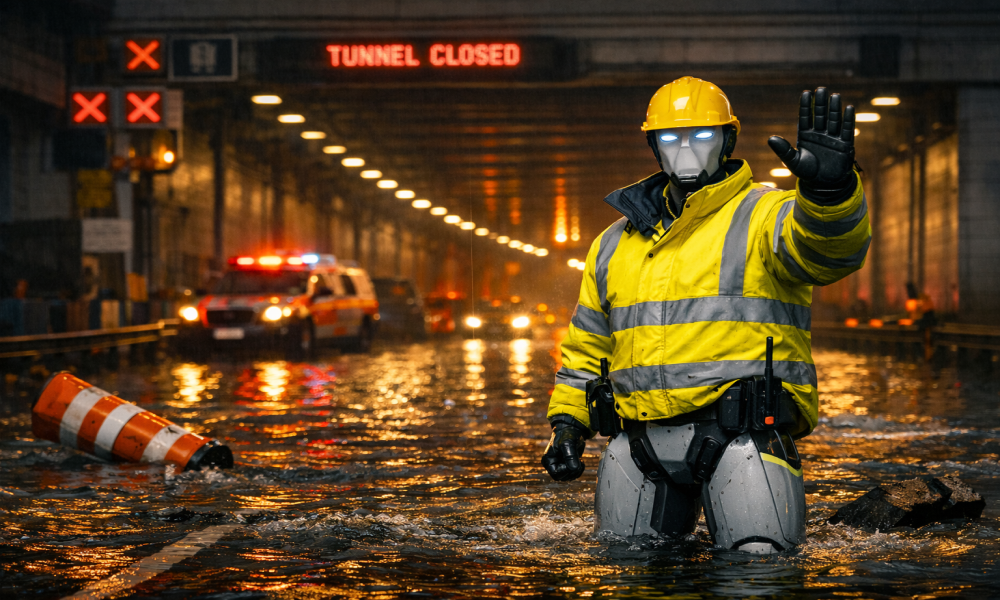
Climate resilience has quietly become the defining KPI for Intelligent Transport Systems. Not because the sector suddenly discovered an environmental conscience, but because the climate itself has become an operational threat. Floods, heatwaves, wildfires, storm surges and landslips are no longer edge-case scenarios for emergency planners, they are weekly realities for network operators. As the pressure mounts, ITS is shifting from a toolkit for efficiency to a frontline system for adaptation.
What’s emerging is a new operational logic that if a transport network cannot anticipate, absorb and recover from climate shocks, it cannot claim to be modern, safe or reliable. In this new landscape, traffic management, digital twins and predictive analytics are no longer optional enhancements. They are the backbone of climate-ready mobility.
The shift begins with a simple truth that climate impacts are dynamic, fast-moving and deeply interconnected. Traditional infrastructure planning using static models, historic averages, fixed design assumptions, cannot keep pace with the volatility of today’s weather patterns. ITS, by contrast, thrives in the real-time, the uncertain and the data-rich. It is built to sense, interpret and respond. That makes it uniquely suited to climate adaptation.
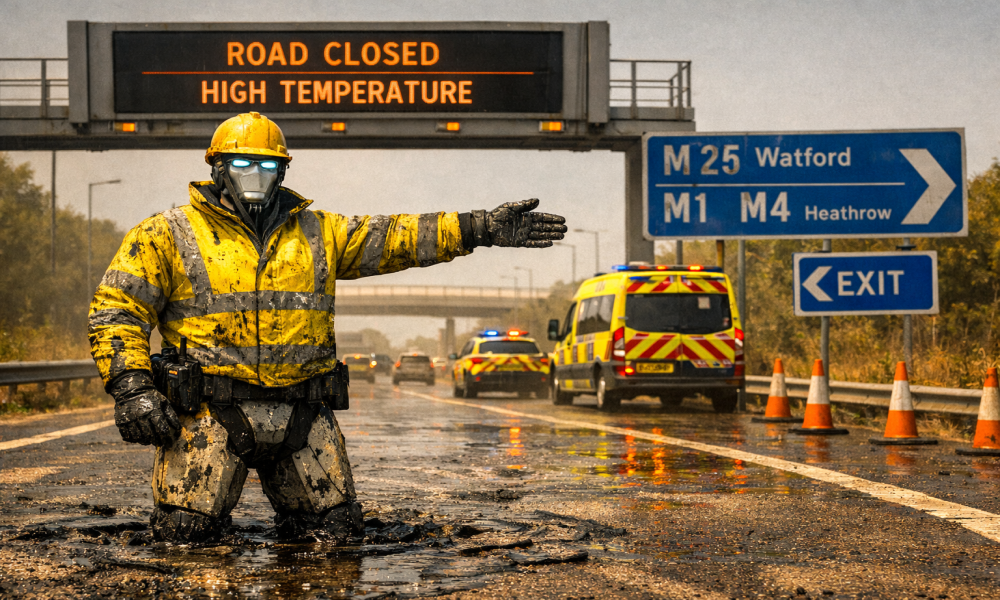
Traffic management centres are already evolving into climate operations hubs. The same systems that once optimised peak-hour flows are now being used to reroute vehicles around flooded corridors, manage evacuation traffic, prioritise emergency services and maintain public transport reliability during extreme weather. The integration of hyperlocal weather feeds, hydrological sensors, air-quality monitors and geospatial risk layers is turning network control rooms into situational awareness platforms. Operators can see not just congestion, but vulnerability.
This is where predictive analytics begins to reshape the game. Machine-learning models trained on years of traffic, weather and incident data can now forecast disruption, hours before it materialises. A storm front approaching a coastal city can trigger automated scenario modelling, looking at which underpasses will flood first, which bus routes will be affected, where queues will form and how long recovery will take. Instead of reacting to chaos, operators can pre-position resources, adjust signal plans, issue targeted traveller alerts and coordinate with emergency services. The KPI is no longer throughput, it is resilience.
Digital twins take this a step further by providing a virtual testbed for climate adaptation. High-fidelity replicas of road networks, tunnels, bridges and public transport corridors allow planners to simulate extreme events with unprecedented precision. A digital twin can model how a heatwave will affect pavement performance, how a river will overtop its banks, how a landslip will cascade through a rural road network or how a wildfire will alter evacuation patterns. It can test thousands of scenarios in minutes, revealing weak points that would otherwise remain hidden until failure.
Crucially, digital twins are no longer static planning tools. They are becoming operational systems, fed by live data from IoT sensors, connected vehicles, CCTV, weather stations and satellite imagery. This fusion of real-time and predictive intelligence allows operators to see climate impacts as they unfold and to understand their consequences before they escalate. It is the difference between knowing that a road is wet and knowing that it will become impassable in 27 minutes.
The private sector is accelerating this shift. Technology suppliers are embedding climate-risk modules into traffic management platforms. AI-driven flood-prediction engines are being integrated into routing algorithms. Roadside units are being designed to withstand higher temperatures and more frequent inundation. Even V2X communications are being repurposed for climate alerts, enabling vehicles to warn each other of hazards ahead. The sector is quietly retooling itself for a hotter, wetter, more volatile world.
Local authorities, meanwhile, are discovering that climate resilience is not just a technical challenge but a governance one. Data sharing between agencies across highways, drainage, emergency services and utilities, is becoming essential. The old silos cannot survive in a world where a blocked culvert can shut down a bus corridor or where a power outage can cripple a traffic signal network during an evacuation. ITS provides the connective tissue that allows these systems to work as one.
The economic case is also shifting. Historically, resilience investments were seen as cost centres. Today, they are increasingly recognised as value multipliers. Every hour of avoided disruption, every prevented incident, every preserved public transport journey translates into measurable economic benefit. Predictive maintenance, powered by digital twins and AI, reduces repair costs and extends asset life. Climate-aware traffic management reduces emissions and improves air quality. The KPI is no longer simply “network performance”, it is “network survivability”.
Perhaps the most profound change is cultural. Climate resilience is forcing the ITS sector to think long-term, system-wide and cross-discipline. It is encouraging engineers to collaborate with meteorologists, data scientists, ecologists and emergency planners. It is pushing suppliers to design for uncertainty rather than stability. It is prompting cities to view digital infrastructure as essential as physical infrastructure. And it is giving ITS a new narrative, not just smarter transport, but safer futures.
As climate impacts intensify, this transformation will accelerate. Traffic management systems will become more autonomous, adjusting in real time to protect vulnerable users. Digital twins will expand to cover entire regions, integrating transport, energy, water and land-use systems into unified climate-risk platforms. Predictive analytics will evolve into prescriptive intelligence, recommending not just what will happen but what should be done. Resilience will become the KPI that shapes procurement, investment and policy.
The sector is not starting from scratch. Many of the tools already exist. What is changing is the urgency, the integration and the expectation. Climate resilience is no longer a specialist concern, it is the new baseline for transport performance. ITS is stepping into that role not as a niche technology, but as the nervous system of climate-ready mobility.
In the end, resilience is not about avoiding disruption entirely, that is no longer possible. It is about ensuring that when disruption comes, the network bends but does not break. Intelligent Transport Systems, with their blend of sensing, modelling and adaptive control, are becoming the mechanisms that allow transport networks to bend intelligently. In a century defined by climate volatility, that may be the most important KPI of all.
Click the buttons below to see more articles:
See all ArticlesIndustry InsightEventsITS Thought LeadershipITS Educational