150x150.png)
The conversation about transport emissions often focuses on vehicles, fuels and modal choices. Digital infrastructure rarely receives the same scrutiny, yet it is now woven through every part of modern mobility. Intelligent Transport Systems have become essential to how roads are managed, how cities respond to congestion and how travellers receive information. The industry has long celebrated the efficiency gains that digital systems deliver, but the carbon cost of the infrastructure that supports them has remained largely out of sight. The physical and digital layers of ITS carry embodied emissions that accumulate long before a sensor is switched on or a server begins to process data. These emissions sit quietly in the background, shaping the true environmental footprint of smart mobility.
The sector has spent years refining operational efficiency. Signals adapt to traffic conditions, roadside units communicate with vehicles, and control centres optimise flow across corridors. These systems reduce idling, smooth journeys and support safer roads. They are often presented as inherently green because they improve how networks behave. The reality is more complex. Every cabinet, sensor, pole, server and communications link has a carbon history. Materials are mined, components are manufactured, equipment is transported and installations require civil works. The embodied emissions locked into these processes form a significant part of the environmental impact of ITS. They are not immediately visible to operators or policymakers, yet they shape the true cost of digital mobility.
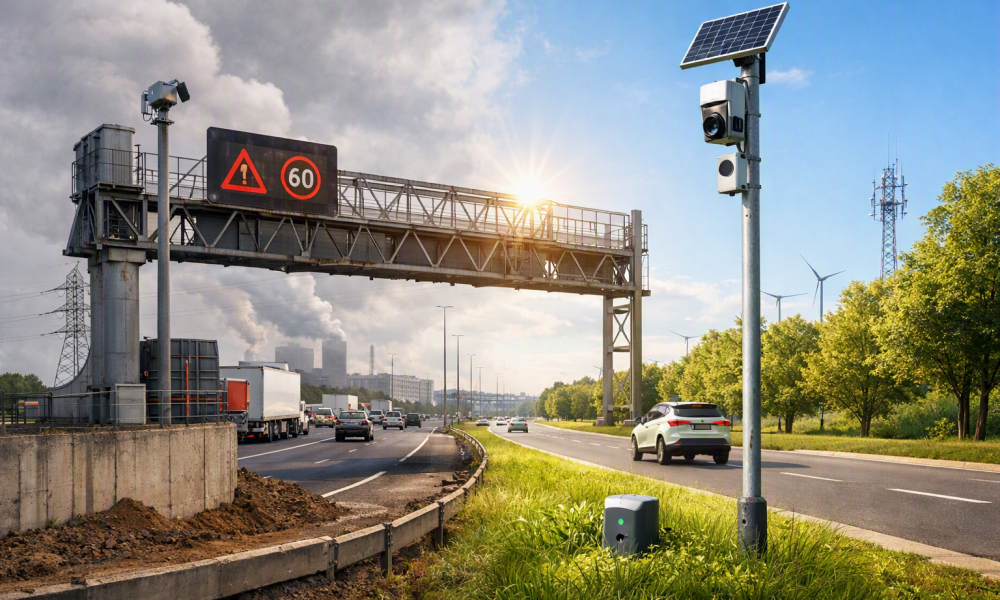
The industry has relied for decades on large roadside structures. Gantries, steel frames and concrete foundations have been the backbone of motorway ITS. They carry signs, cameras and detection systems. They are durable and familiar, but they are also carbon intensive. Steel production is energy heavy. Concrete carries a substantial footprint. Earthworks disturb soil and release stored carbon. The installation of these structures requires machinery, transport and labour. The result is a physical presence that delivers operational benefits while carrying a substantial environmental burden. These structures have been justified because they support critical safety and information systems. They have been treated as unavoidable components of modern road management.
A shift is now underway with the advent of connected vehicles, which do away with the need for much of the traditional ‘heavy’ roadside ITS infrastructure. Lightweight technology solutions are beginning to replace heavy roadside installations. IoT sensors, compact cameras and small communications units can be mounted on existing street furniture. They require far less material. They avoid the need for deep foundations. They reduce the scale of earthworks. They can be installed quickly and maintained with minimal disruption. This transition is not only a technical evolution. It is a carbon story. The embodied emissions associated with lightweight equipment are significantly lower than those of traditional structures. The physical footprint of ITS shrinks when intelligence is delivered through small devices rather than large, engineered frames.
The digital layer carries its own hidden footprint. Data centres consume vast amounts of electricity. Servers run continuously. Cooling systems operate around the clock. Communications networks require energy to transmit information. These operational emissions are well documented, but the embodied emissions of digital hardware are often overlooked. Manufacturing servers, switches and networking equipment requires metals, plastics and chemicals. Transporting them across global supply chains adds further carbon. Disposal at end of life contributes to electronic waste. The digital infrastructure that supports ITS is part of a wider ICT footprint that is growing rapidly. It is easy to forget that every byte of traffic data, every video feed and every connected vehicle message relies on equipment that carries a carbon cost.
Cities and highway authorities are beginning to recognise that digital systems must be assessed through a full life cycle lens. Operational efficiency alone does not define sustainability. The materials used to build infrastructure, the energy required to manufacture components and the emissions generated during installation all contribute to the true environmental impact. A lightweight sensor mounted on a lamp column may deliver similar functionality to a gantry-mounted device, yet its embodied emissions are dramatically lower. This difference matters when organisations are working towards net zero targets. Reducing the carbon intensity of infrastructure is as important as improving the efficiency of operations.
The shift towards smaller equipment also changes how networks evolve. Heavy structures lock systems into long life cycles. They are expensive to replace and difficult to adapt. Lightweight devices encourage modularity. They can be upgraded more easily. They support iterative improvements rather than large capital interventions. This flexibility reduces waste, although shorter life expectancy cycles for much of this equipment will also need to be factored in. It allows operators to respond to technological change without committing to carbon-intensive construction. The environmental benefits extend beyond materials. Maintenance becomes simpler. Transport requirements fall. The overall carbon footprint of the system decreases because the physical burden is lighter.
There is a cultural dimension to this transition. The industry has traditionally valued robustness and permanence. Large structures convey authority. They are visible symbols of investment. Lightweight devices feel less monumental. They blend into the streetscape. They represent a quieter form of intelligence. This shift challenges long-held assumptions about what infrastructure should look like. It encourages a mindset that values minimalism and efficiency. It aligns with broader sustainability goals that prioritise low-carbon design. The future of ITS may be defined not by large structures but by discreet sensors that deliver high performance with minimal environmental impact.
The hidden carbon footprint of ITS infrastructure is becoming harder to ignore. Organisations are under pressure to account for embodied emissions. Reporting frameworks are tightening. Stakeholders expect transparency. The industry must respond by examining every part of the digital ecosystem. Sensors, cabinets, servers and communications networks must be assessed not only for their operational performance but also for their material and manufacturing impact. This requires new procurement strategies. It demands closer collaboration with suppliers. It encourages innovation in low-carbon materials and modular design.
The transition to lightweight ITS equipment is not a simple substitution. It is part of a broader rethinking of how digital mobility should evolve. The goal is not only to reduce emissions but to design systems that are inherently sustainable. This means choosing materials carefully. It means reducing the scale of civil works. It means extending the life of digital hardware. It means designing networks that are flexible, efficient and low carbon. The industry has an opportunity to redefine what intelligent infrastructure looks like. The shift away from heavy roadside structures is a visible part of this change. The deeper transformation lies in recognising that digital systems carry a physical footprint that must be managed with the same care as any other part of the transport network.
The future of ITS will be shaped by this awareness. Digital mobility will continue to expand. Data will flow more freely. Connectivity will deepen. The challenge is to ensure that the infrastructure supporting this evolution does not undermine the environmental goals it seeks to advance. Lightweight sensors, compact devices and efficient digital systems offer a path towards a lower-carbon future. The hidden emissions of ITS infrastructure can be reduced through thoughtful design and careful procurement. The industry is beginning to understand that sustainability is not only about how systems operate but also about how they are built.
Smart mobility will feel more authentic when its physical footprint aligns with its environmental ambitions. The transition to lightweight ITS infrastructure is a step towards that alignment. It reveals a future where digital intelligence is delivered through small, efficient devices rather than heavy structures. It encourages a transport system that is both technologically advanced and environmentally responsible. The hidden carbon footprint of ITS infrastructure is becoming visible, and the industry is learning how to respond with clarity and purpose.
Click the buttons below to see more articles:
See all ArticlesIndustry InsightEventsITS Thought LeadershipITS Educational