150x150.png)
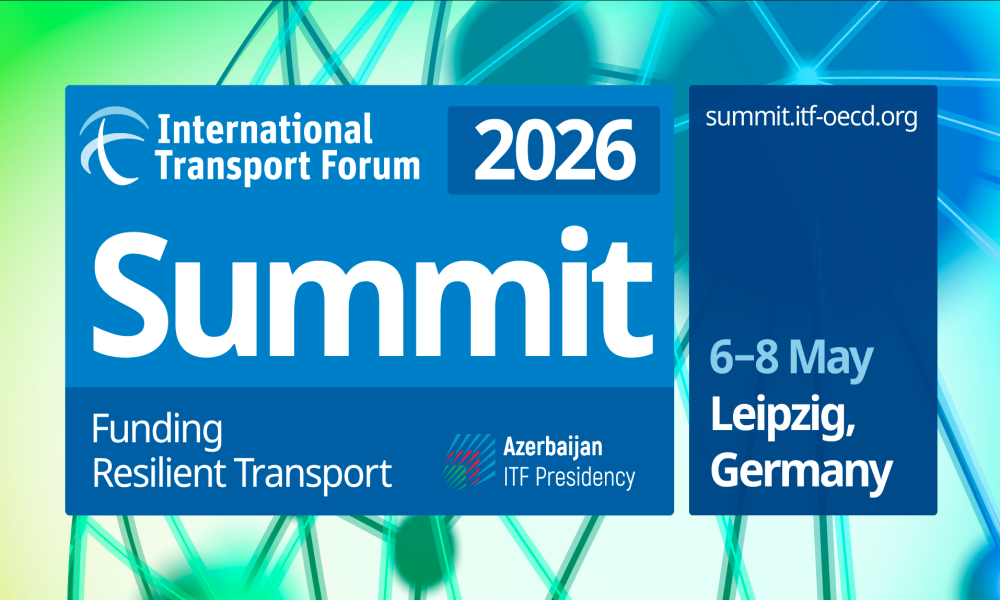
When Leipzig fills with transport ministers, operators, researchers and technology companies for the annual International Transport Forum Summit, the city always seems to take on a sharper sense of purpose. This year that mood felt especially pronounced. The ITF 2026 Summit, held from 6 to 8 May under the Presidency of Azerbaijan, centred on Funding Resilient Transport, a theme that goes directly to the question now facing governments and agencies almost everywhere. How do you keep mobility systems functioning in an era of climate shocks, cyber risk, volatile supply chains and stretched public finances.
What emerged in Leipzig was not simply another debate about infrastructure budgets. It was a broader recognition that resilience is no longer defined only by the strength of bridges, tunnels, rail corridors and ports. It is also shaped by the quality of data, the reliability of digital systems, the security of connected networks and the intelligence built into operations. The official framing of the summit made that clear, with discussions focused on long term financing, system robustness and the role of digitalisation in maintaining connectivity and reliability.
That shift matters because it changes the place of intelligent transport systems in the policy conversation. For years, ITS was often treated as an enhancement, useful and sometimes impressive, but still secondary to the larger business of funding physical assets. At this summit it felt much more central. Across the programme, resilience was discussed across physical infrastructure, digital systems and cybersecurity, which is a strong signal that transport authorities are beginning to see digital capability as part of the core asset base rather than a layer applied afterwards.
It is not difficult to see why this is happening. The pressures on transport systems now arrive from multiple directions at once. Extreme weather can disrupt roads, railways and ports with growing frequency. Geopolitical tension can quickly expose weaknesses in supply chains. Economic uncertainty can delay investment just when renewal is most urgent. At the same time, cyber-attacks and digital failures have become operational risks in their own right. The summit background material captured this overlap clearly, describing a transport landscape exposed to climate impacts, pandemics, cyber-attacks and broader uncertainty, all of which demand a more resilient model of planning and funding.
In that context, the summit theme was well chosen. Funding resilience is not just a matter of spending more. It is about spending in ways that reduce fragility over the life of the network. That means looking beyond headline capital projects and asking where intelligence can improve performance, extend asset life, cut downtime and make scarce resources work harder. It also means accepting that a transport system which cannot sense disruption, model it, respond to it and recover from it quickly is no longer resilient in any serious sense.
One of the clearest ideas to come out of the week was that digital infrastructure now belongs in the same conversation as concrete and steel. This is not just a fashionable phrase. It reflects the reality that modern networks depend on real time information, software defined control, connected vehicles, secure communications and decision support tools that can detect problems before passengers or freight operators feel them. The summit’s research spotlight explicitly separated resilience into physical, digital and cybersecurity dimensions, which underlines how seriously this shift is being taken in the policy community.
That has important consequences for the technologies now moving from pilot status into operational practice. Digital twins, predictive maintenance systems, machine vision and AI assisted traffic management are no longer interesting side projects for innovation teams. They are increasingly being treated as tools that can protect network performance and improve value for money. If a digital twin helps an authority anticipate asset failure, stage maintenance more effectively, or model the effect of severe weather before it causes widespread disruption, then it is contributing directly to resilience. If AI can smooth traffic flow, detect incidents earlier, or support more reliable public transport operations, then it is doing more than optimising convenience. It is helping a system stay functional under pressure.
Cybersecurity also sat much closer to the centre of the conversation than it would have done a few years ago. That too is a sign of maturity. As transport becomes more connected, the attack surface grows and resilience can no longer be separated from digital security. Official material around the summit identified cyber-attacks as part of the wider risk environment confronting transport systems, while the research agenda highlighted cybersecurity resilience as a standalone area of concern. For operators and public authorities, the implication is straightforward. A connected network that is not secure is not resilient, however modern it may appear on paper.
Another notable feature of this year’s summit was the way decarbonisation and digitalisation were discussed as intertwined rather than separate agendas. That is an important development for the transport sector. Ambitious climate targets are difficult to meet with analogue systems. Smarter charging, better demand management, more responsive public transport, cleaner freight operations and stronger multimodal integration all depend on intelligence somewhere in the chain. The official summit description pointed to the need to align investment strategies with sustainability, digitalisation and inclusive economic growth, which suggests that digital tools are increasingly being understood as enablers of lower carbon transport rather than optional enhancements.
Freight and logistics form another part of this story. When supply chains are under strain, the value of visibility rises sharply. Operators need better information on bottlenecks, border conditions, route options and the status of critical assets. Public authorities need a clearer picture of where disruption may spread and how to intervene early. In practical terms, that points towards platforms, data sharing, predictive tools and corridor level coordination, all areas where ITS capability can have a decisive effect. It also reinforces the broader point that resilience is as much about the quality of operational intelligence as it is about the strength of physical connections.
The financing implications are significant. Once digital systems are recognised as essential infrastructure, they can no longer be funded as occasional upgrades or isolated procurements. They need lifecycle planning, stable investment and clear accountability for outcomes. The official summit material referred to innovative funding mechanisms, public private partnerships and investment strategies designed to safeguard long term connectivity and reliability. That language matters because it opens the door to models that reward performance over time rather than simple asset delivery. In that world, data rich systems have a stronger case because they make outcomes visible. Reliability can be measured, emissions impacts can be tracked, and safety improvements can be evidenced more clearly.
By the end of the week in Leipzig, the wider direction of travel felt unmistakable. The transport sector is moving into a period in which resilience will be judged not only by what it builds, but by how intelligently it can operate what it has. That means better sensing, better modelling, better forecasting, better protection and better coordination across modes and institutions. It confirmed that intelligent transport systems are no longer hovering at the edge of strategy. They are moving into the centre of it, where funding decisions are made, where risk is priced and where the future shape of transport is being determined.
Click the buttons below to see more articles:
See all ArticlesIndustry InsightEventsITS Thought LeadershipITS Educational