150x150.png)
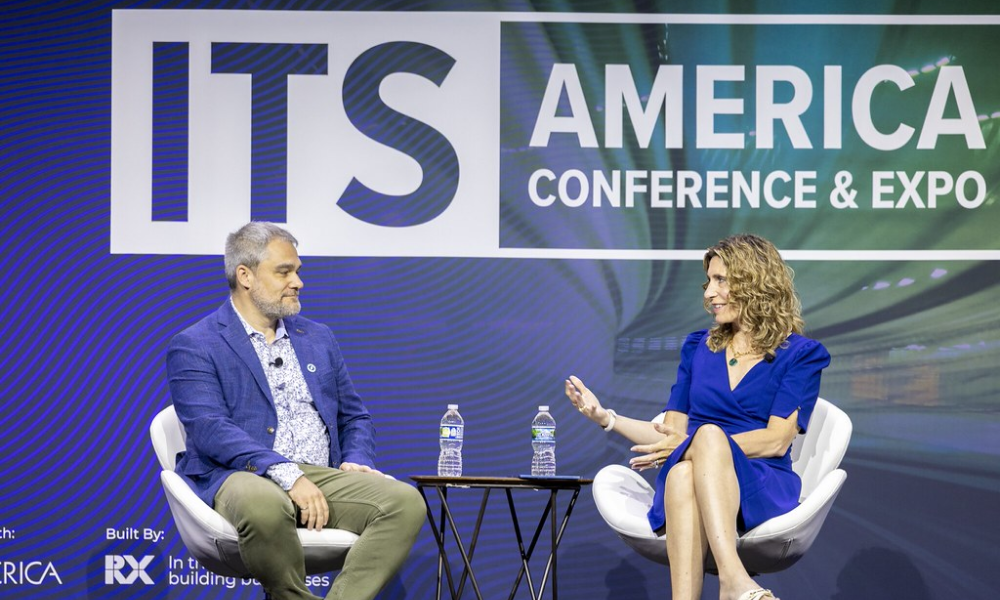
Detroit has always known how to reinvent itself. The ITS America Conference & Expo returned to Huntington Place (9 - 12 June 2026), the city once again became the proving ground for the next chapter of connected, automated and intelligent mobility. What emerged from the halls, demo zones and side rooms was not simply a collection of product launches or policy statements. It was a clear signal that the sector is shifting from potential to proof, from pilots to platforms, and from isolated innovations to integrated systems.
Across the week, the mood was unmistakable: The industry is no longer asking whether intelligent transportation systems can transform mobility. It is asking how quickly, how equitably and how collaboratively that transformation can be delivered.
At the centre of that conversation, as ever, was ITS America President & CEO Laura Demeo Chace, whose voice threaded through the event like a conductor guiding an orchestra of public agencies, private innovators, researchers and operators.
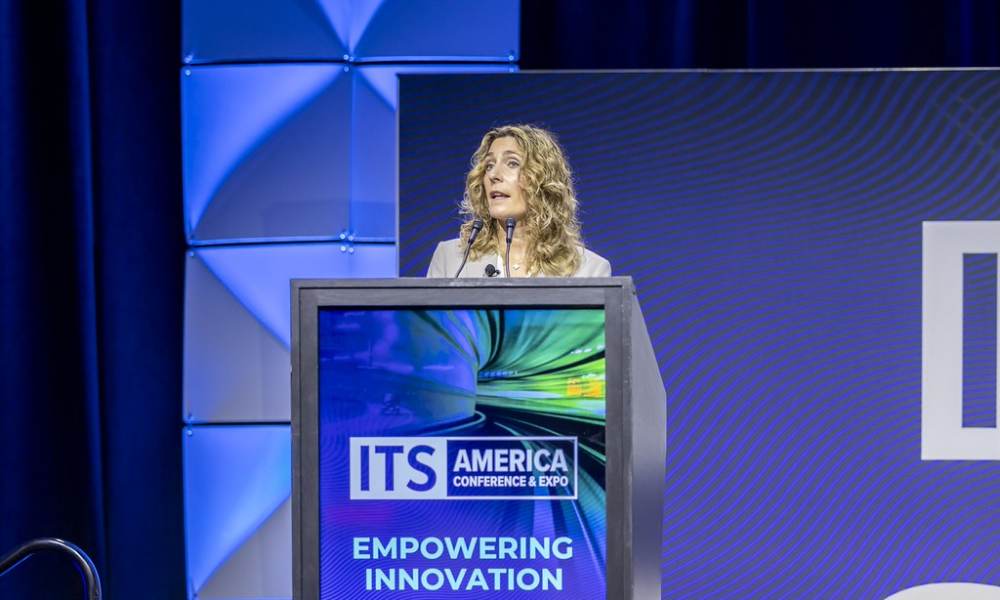
“We are moving from talking about the promise of technology to demonstrating its real-world impact”, Chace said during her opening keynote. “Detroit is where the future of mobility becomes tangible”.
ITS America’s official programme set the tone early with a focus on safety, sustainability, resilience, digital infrastructure and the responsible deployment of AI. In Detroit, however, there was also a palpable sense of acceleration.
The industry is no longer content with incrementalism. The conversations in Huntington Place reflected a sector that recognises the urgency of climate commitments, the rising expectations of travellers and the economic stakes of global competition.
The conference’s theme, “Connecting Systems, Empowering Communities”, was more than a slogan. It served as a challenge to the sector to deliver mobility that is not only smarter, but fairer.
Chace captured this in a panel on digital equity, “Technology must serve people. If we build systems that only work for some, then they don’t work at all”.
While some announcements were expected, including expansions of existing pilots, new partnerships and updated standards, Detroit also produced several surprises. The most significant developments across the week pointed to a sector that is becoming more confident in translating ambition into deployment.
One of the most discussed releases was ITS America’s unveiling of a National Digital Infrastructure Framework, a guidance document designed to help states and cities align their digital investments with emerging federal standards.
The framework sets out a unified architecture for connected vehicle data exchange, recommendations for cybersecurity baselines, a roadmap for integrating AI-driven traffic management and a national approach to digital twins for multimodal networks.
While the document is advisory, its impact could be profound. Several state DOTs signalled their intention to adopt the framework as the backbone of their 2027–2030 ITS strategies.
Chace described it as “a foundation for interoperability, scalability and trust”.
In partnership with Michigan DOT, the City of Detroit and a consortium of private firms, ITS America showcased a new Integrated Mobility Demonstration Zone located just outside Huntington Place.
This live environment brought together connected intersections, automated shuttle loops, drone-supported incident response, real-time kerbside management, freight priority corridors and a digital twin visualisation layer.
The demo zone was not just a showcase. It was a testbed for evaluating how these systems interact in real time.
A Michigan DOT representative described it as “the closest thing yet to a fully orchestrated multimodal ecosystem”.
AI was everywhere in Detroit, but not in an abstract or speculative sense. Several vendors launched operational AI platforms designed to support predictive congestion management, automated incident detection, adaptive signal optimisation, real-time multimodal balancing and safety-critical anomaly detection.
One standout announcement came from a coalition of mid-sized cities unveiling a shared AI-enabled traffic operations platform, built to reduce cost barriers and accelerate deployment.
Chace emphasised the importance of responsible AI, “AI must enhance safety, not compromise it. Transparency, accountability and human oversight are essential”.
In response to rising work-zone fatalities, ITS America announced a new Roadway Worker Safety Coalition, bringing together unions, contractors, DOTs and technology providers.
The coalition will focus on connected work-zone alerts, automated enforcement technologies, wearable safety devices, vehicle-to-worker (V2W) communications and standardised digital work-zone mapping.
This initiative was widely praised as one of the most urgent and impactful outcomes of the conference.
Kerbside management has been a growing theme in recent years, but Detroit marked a turning point. Several cities announced new deployments of dynamic kerbside intelligence systems that integrate freight delivery windows, ride-hail pick-up optimisation, micro-mobility docking, EV charging allocation and accessibility-first design.
A panel of city mobility directors described kerbside intelligence as “the missing link between policy and practice”.
Freight automation was a major presence in Detroit, with new commitments from logistics operators and state agencies to expand automated freight corridors across the Midwest and Southwest.
Announcements included a Detroit to Toledo to Columbus automated freight pilot, a new cross-border data-sharing agreement with Ontario and a consortium exploring automated yard operations at scale.
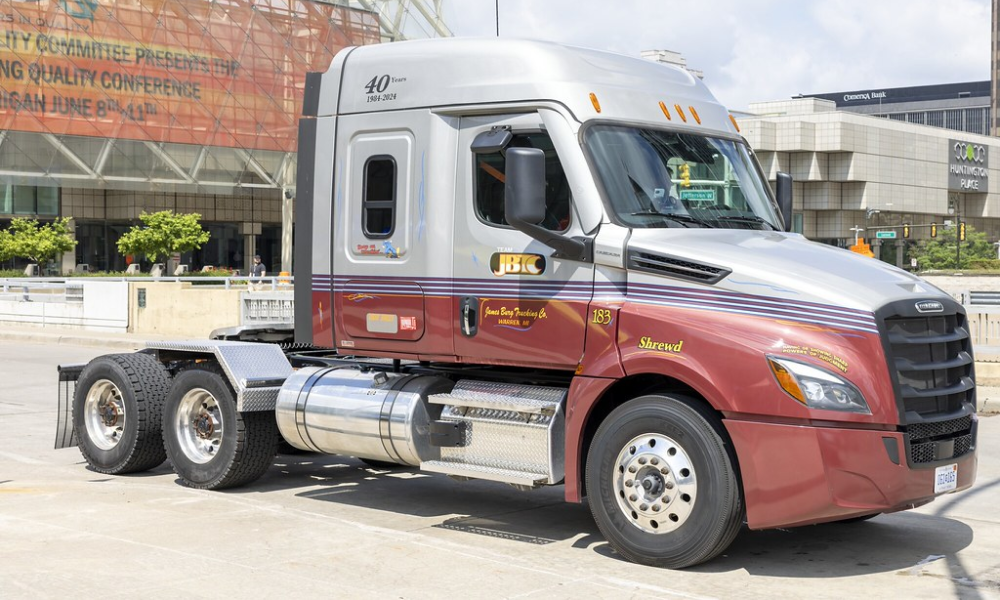
These developments reflect a broader shift: automation is moving from controlled environments to real corridors.
Several sessions focused on mobility data trusts, governance structures that allow cities, operators and communities to share data securely and ethically.
Detroit saw the launch of two new pilot trusts, a regional multimodal data trust for Southeast Michigan and a national template for privacy-preserving data collaboration.
Chace highlighted the importance of trust, “Data is the lifeblood of modern mobility, but trust is the heart. Without trust, data cannot flow.”
Chace’s presence was felt throughout the event, reinforcing her long-standing message that the sector must think in systems, not silos.
“We cannot optimise one mode at the expense of another. The future is multimodal, integrated and user-centred”.
Her remarks resonated strongly with city leaders, many of whom spoke about the need to break down institutional barriers.
City officials from Detroit, Chicago, Phoenix, Charlotte and Seattle returned repeatedly to the same concerns, the need for equitable deployment, the importance of community engagement, the challenge of maintaining new digital infrastructure and the pressure to deliver visible improvements quickly.
One Detroit mobility official put it bluntly, “People don’t care about pilots. They care about whether the bus comes on time”.
Private-sector leaders were notably pragmatic this year. The message was clear, the era of hype is over.
A major AV supplier said: “We’re not selling dreams anymore. We’re selling systems that work”.
A traffic-management vendor added, “Cities want outcomes, not dashboards”.
Universities and research institutes brought a strong focus on AI ethics, safety validation, human factors, climate modelling and digital twin accuracy.
A researcher from Carnegie Mellon noted, “The more complex the system, the more important the evidence”.
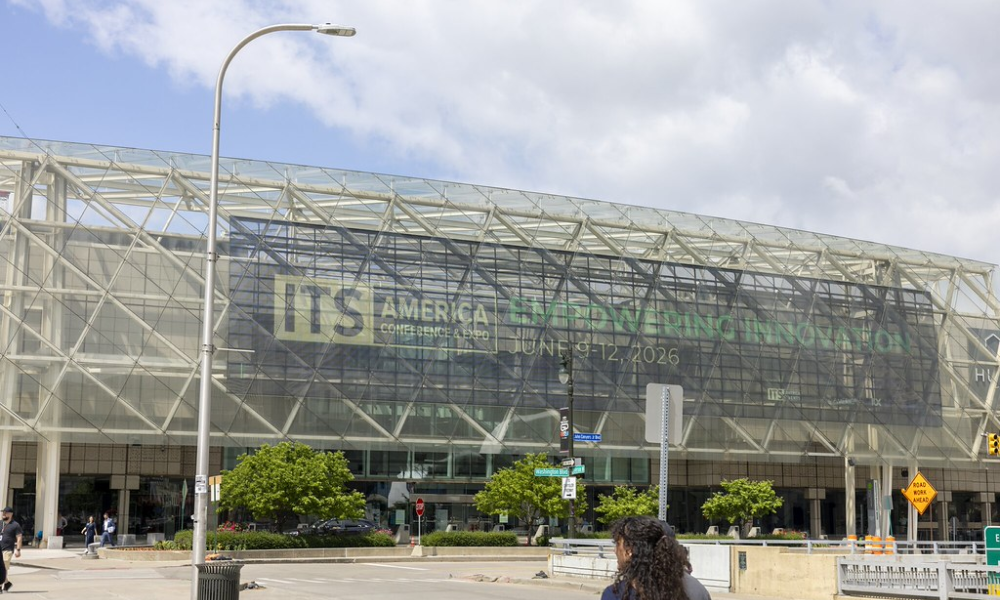
Detroit gave this year’s conference a particular flavour, a blend of industrial heritage, technological ambition and community-driven mobility.
Detroit’s legacy as the Motor City gave the event a sense of continuity. Its modern identity as a city of innovation districts, EV manufacturing and community-led mobility projects made it the perfect backdrop for the sector’s next phase.
Michigan’s long-standing commitment to CAV testing and deployment was on full display through Mcity, the American Center for Mobility, statewide CAV corridors and a robust ecosystem of suppliers and OEMs.
This created a sense that Detroit wasn’t just hosting the conference, it was embodying its themes.
Detroit’s mobility initiatives, from neighbourhood-based microtransit to accessible design, grounded the conference in real-world needs.
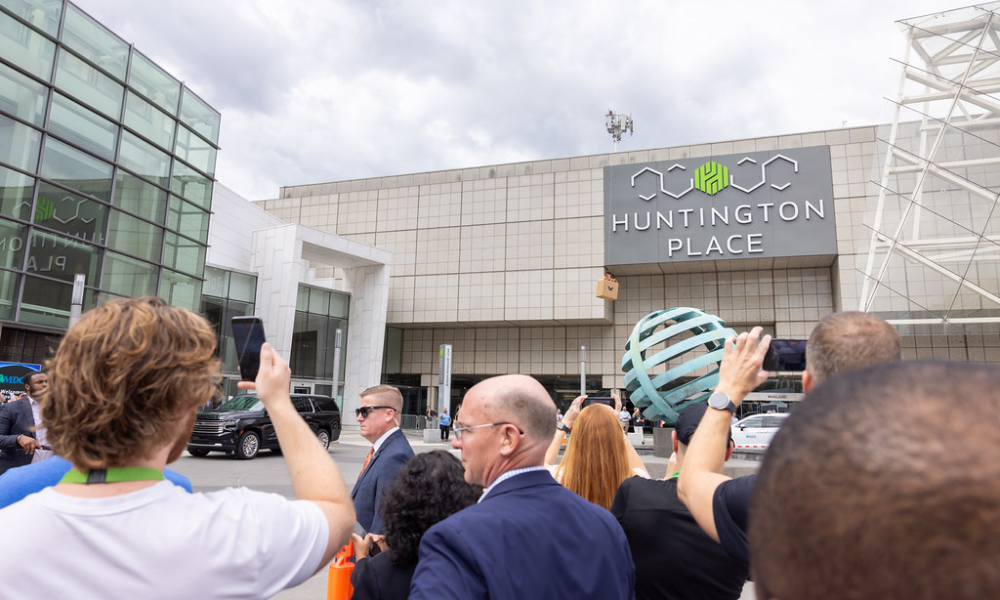
The strongest message from Detroit was that integration is becoming the defining form of innovation. The most important advances were not individual technologies in isolation, but the ways systems were being connected across modes, agencies and operators.
AI is also becoming operational rather than aspirational, moving out of the research space and into day-to-day traffic and network management. Safety remained the sector’s north star throughout the week, from roadway workers to vulnerable road users, while equity was treated not as an optional add-on but as central to deployment strategies. Above all, Detroit underscored that digital infrastructure is now being recognised as a public asset, as essential to future mobility as the physical roads and networks it supports.
As the conference drew to a close, Chace offered a final reflection that captured the spirit of the week, “We are building the future of mobility together, not as competitors, not as isolated agencies or companies, but as partners. Detroit shows what is possible when we align our vision with our values”.

The applause that followed was more than polite. It reflected a recognition that the sector is entering a new phase, one defined by collaboration, responsibility and delivery.
Detroit didn’t just host the ITS America Conference & Expo. It helped define the next chapter of intelligent mobility.
Click the buttons below to see more articles:
See all ArticlesIndustry InsightEventsITS Thought LeadershipITS Educational