150x150.png)
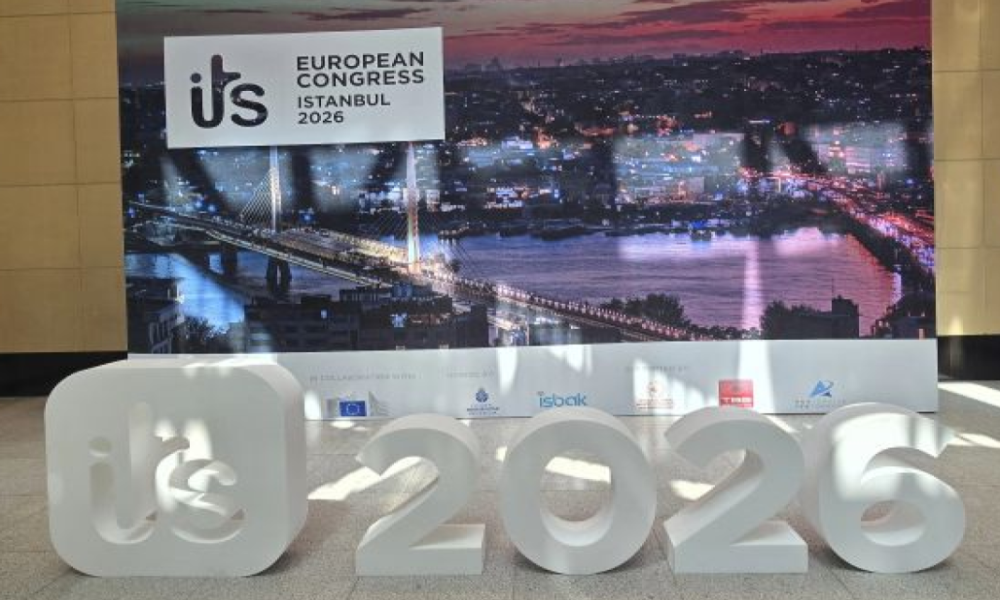
The first morning of the ITS European Congress in Istanbul began not with the usual polite warm-up of a major industry gathering, but with a sense of acceleration, as if the sector had collectively decided that 2026 would no longer tolerate incrementalism. Delegates arriving at the Istanbul Congress Centre stepped into a building already humming with conversation, the kind that signals a shift in mood where Europe’s mobility community has moved beyond the era of pilots and prototypes and is now speaking the language of deployment, integration and measurable impact. The city itself, straddling continents and histories, seemed to echo that sentiment. Istanbul has always been a place where worlds meet and today it became the symbolic crossroads for Europe’s next chapter in intelligent mobility.
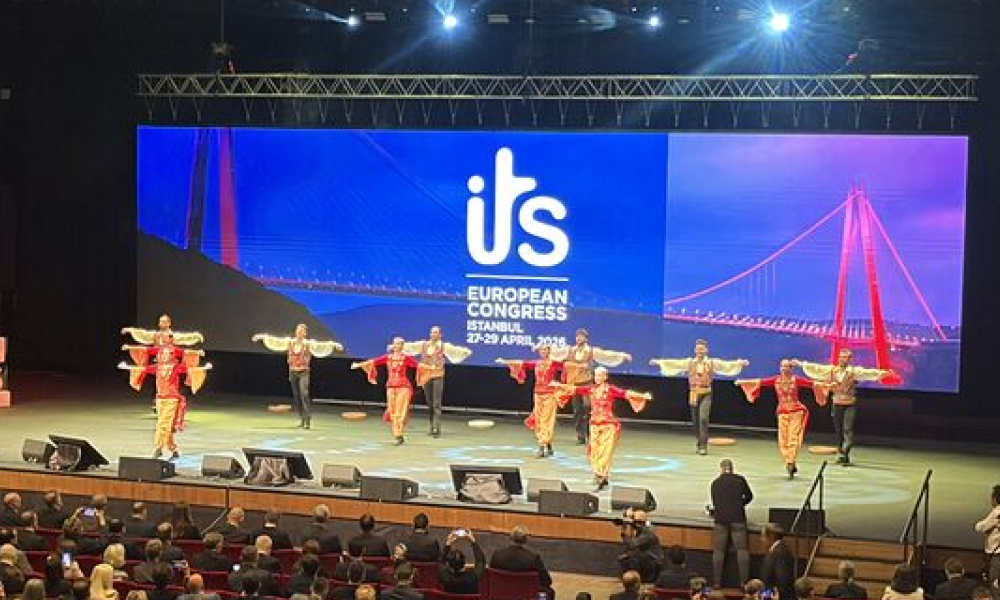
From the outset, the tone was set by Joost Vantomme, CEO of ERTICO – ITS Europe, whose welcome address was less a ceremonial greeting and more a call to collective purpose. He spoke of a sector that has matured, one that understands that innovation is no longer defined by the novelty of technology but by its ability to deliver real, lived benefits to citizens. The message was unmistakable that the future of mobility will be shaped not by isolated breakthroughs but by systems that talk to each other, learn from each other and serve people with clarity and trust. Vantomme emphasised that user-centricity is not a fashionable add-on but the anchor point of everything the sector must now build. In a world increasingly shaped by automation, data and digital infrastructure, the human experience remains the measure by which success will be judged.
The theme of data as infrastructure and people as purpose, was picked up with striking clarity by Jurgis Vilcinskas, deputy head of the EU Delegation to Türkiye. His intervention was one of the day’s most widely discussed moments, not because it was provocative but because it articulated what many in the room have long felt: Europe has reached the limits of what pilots can teach us. The challenge now is scale. Vilcinskas argued that data must be treated not as a by-product of mobility systems but as a structural component of them. If Europe is to build interoperable corridors, resilient cities and transparent governance frameworks, then data must be embedded into the very fabric of infrastructure, as essential as asphalt, steel or signalling. He linked this directly to the evolution of Sustainable Urban Mobility Plans, noting that European corridors cannot function unless European cities function and that cities cannot function unless their digital foundations are robust, open and designed for collaboration.
It was a message that resonated strongly with the Turkish hosts, who brought their own perspective to the conversation. Türkiye’s deputy minister of transport and infrastructure, Ömer Fatih Sayan, reminded delegates that mobility is ultimately about human connection. Technology, he said, is not merely a tool for efficiency but a medium through which people experience their cities, their opportunities and each other. He spoke of a “new dimension” created by digital mobility, one that blends the physical and the virtual, the infrastructural and the emotional. In a city like Istanbul, where ferries, trams, metros, buses and bridges weave together millions of daily journeys, that sentiment felt particularly apt. The city’s mobility landscape is a living demonstration of how complexity can be navigated when systems are designed to serve people rather than the other way around.
As the morning progressed, the conversations across the Congress Centre began to converge around a shared frustration with what some delegates jokingly referred to as “pilot purgatory”. Europe has spent more than a decade testing autonomous shuttles, experimenting with AI-enabled junctions, trialling digital freight corridors and deploying smart kerbside systems. Many of these pilots have been successful, even celebrated. Yet too often they remained confined to small-scale, time-limited environments, unable to transition into permanent, city-wide or region-wide deployments. Day 1 made it clear that the sector is ready to break that cycle. The discussions were not about whether technologies work (they do!), but about how to integrate them into the everyday functioning of mobility systems. The focus has shifted from innovation to implementation, from experimentation to endurance.
This shift was visible not only in the plenary sessions but in the corridors, coffee queues and exhibition floor, where conversations were grounded in pragmatism. Delegates spoke about procurement frameworks, governance models, cross-border interoperability, data stewardship and the need for long-term investment strategies that match the long-term nature of mobility infrastructure. There was a sense that Europe is finally aligning its political, technical and financial machinery to support the kind of scaled deployments that citizens have been promised for years. The Congress’s overarching themes of safety, sustainability, resilience and efficiency, were not treated as separate pillars but as interconnected outcomes that depend on integrated systems thinking.
And it is not only in the conference sessions and exhibition halls that the Congress comes alive. Alongside the formal programme, the ITS European Congress also includes technical visits and demonstrations, offering delegates a closer look at how intelligent mobility is being managed, operated and scaled in the real world. This week’s visits range from Istanbul’s city traffic management and control operations, to major road and tunnel infrastructure control centres, to smart logistics and maritime mobility, and even a real-world C-ITS corridor deployment. The week is also marked by the presence of national and regional delegations from across Europe, including the British Pavilion and the Finnish delegation, underlining the Congress’s role as a meeting point for policy, delivery and collaboration at every level.
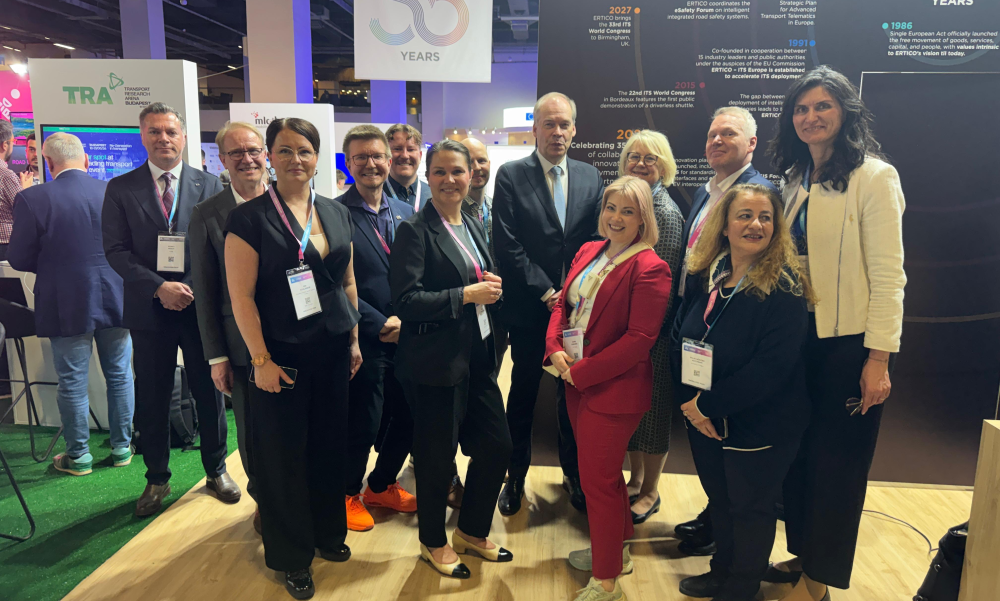
One of the more uplifting aspects of the day was the visibility of emerging talent. The collaboration between ERTICO and the Young Mobility Network (YMN) was highlighted repeatedly, not as a token gesture but as a strategic necessity. The sector is facing well-documented skills shortages and the presence of young professionals, researchers and early-career engineers brought a welcome energy to the proceedings. Their questions were sharp, their expectations high and their presence a reminder that the future of ITS will be shaped as much by the next generation as by the established leaders who opened the Congress this morning.
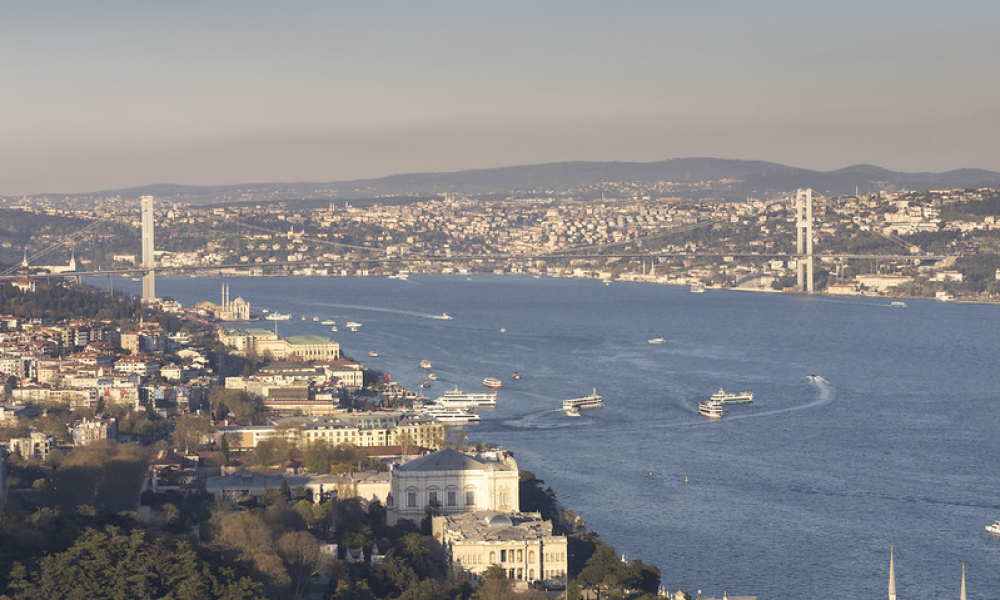
Beyond the formal sessions, the Congress’s location played a subtle but important role in shaping the day’s atmosphere. Istanbul is a city that defies simple categorisation. It is ancient and modern, European and Asian, orderly and chaotic, familiar and surprising. Its transport networks reflect that duality, with ferries glide across the Bosphorus as they have for generations, while new metro lines burrow beneath the city and digital mobility services knit together the gaps. Delegates stepping outside the Congress Centre were greeted by the sounds, scents and rhythms of a city that has always been a crossroads, a fitting backdrop for a Congress dedicated to connection, integration and the movement of people and ideas.
As the afternoon sessions drew to a close, attention began to turn to the evening’s programme. Istanbul is not a city that retires quietly at dusk and tonight delegates will have the opportunity to experience its hospitality more directly. Receptions and networking events are planned across the city, offering a chance for informal conversations that often prove as valuable as the formal sessions. For many, the evening will be an opportunity to deepen partnerships, explore collaborative ideas and reflect on the day’s themes against the backdrop of the Bosphorus, where Europe and Asia meet under the glow of the city’s lights. The organisers have been careful to balance professional engagement with cultural experience, ensuring that delegates leave not only with insights but with a sense of place.

What stands out most from Day 1 is the clarity of purpose. The ITS community has always been ambitious, but this year there is a new confidence, a belief that the sector is ready to deliver at scale and that the political, technical and societal conditions are finally aligned. The conversations in Istanbul today were not about distant futures but about the practical steps needed to build systems that work for everyone. There was talk of trust, of transparency, of inclusivity and of the responsibility that comes with deploying technologies that shape how millions of people move through their daily lives. The mood was optimistic but grounded, ambitious but realistic.
As the Congress moves towards its second day, the expectations are high. Istanbul has set the tone: bold, connected, human-centred and ready for action. The week ahead promises to build on that momentum and ITS Now will be following every development closely.
Make sure to come back to ITS Now for daily updates throughout the Congress — Whether you're in Istanbul or at home, be HERE, at ITS Now.
Click the buttons below to see more articles:
See all ArticlesIndustry InsightEventsITS Thought LeadershipITS Educational