150x150.png)
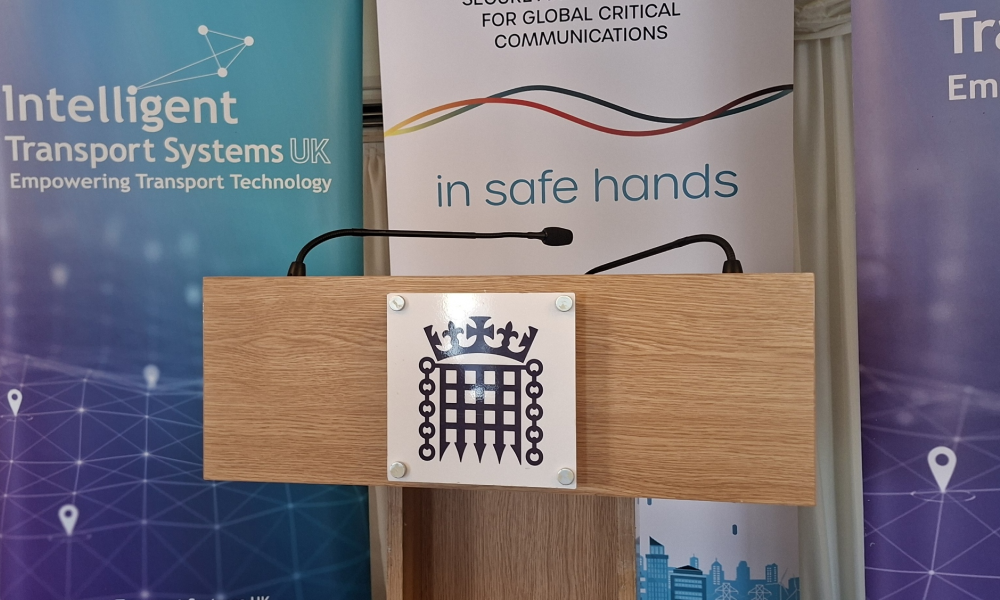
On a sweltering summer afternoon in Westminster, ITS UK’s annual parliamentary reception once again brought together policymakers, industry leaders and innovators to take stock of a sector that is becoming increasingly central to the future of UK transport. Hosted by Alex Mayer MP and supported by Mobius Networks, the event was part celebration, part policy forum and part call to action – with speeches from across the political spectrum underlining just how important transport technology has become.
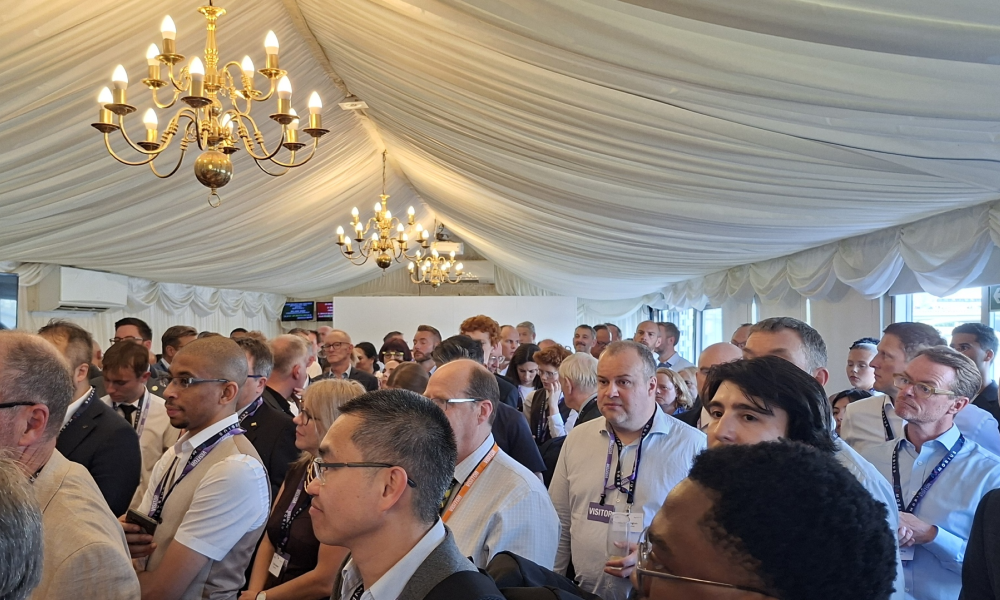
Welcoming guests to Parliament, Alex Mayer MP, Labour MP for Dunstable and Leighton Buzzard and a member of the Transport Select Committee, framed the event in the context of a busy legislative period for transport. “I’m really pleased to be able to welcome you here and to host this important reception on behalf of ITS, the voice of the transport technology industry”, she said, pointing to a policy agenda spanning rail, buses, devolution, taxi regulation and civil aviation. Her remarks captured the mood in the room that transport technology is no longer sitting at the edges of policy but increasingly shaping the centre ground.
That point was reinforced by ITS UK Chief Executive Max Sugarman, who used the reception to reflect on the state of the sector and the opportunities ahead. “Transport technology is no longer a niche industry”, he said, citing research from Capital Economics showing that the sector contributes £3.2 billion to the UK economy, supports 45,000 jobs and generates £500 million in tax revenue. For an industry long seen as specialist or behind-the-scenes, those figures are significant. They show a sector that is not only innovating but already delivering measurable economic value.
Sugarman’s speech ranged across the breadth of ITS UK’s current work, but one campaign stood out in particular. Launched last month, Stuck on Red shines a spotlight on the ageing traffic signal infrastructure that underpins the road network. According to ITS UK, around 15,000 traffic signals across the UK, 51% of the network, are now technologically obsolete. “We often hear about potholes”, Sugarman said, “but we’re trying to bring attention to the dot-hole, the digitally obsolete traffic technology”. It is a neat line, but it points to a serious issue that outdated infrastructure means higher operational costs, fewer opportunities to use the network intelligently, a larger carbon footprint and greater vulnerability to cyber threats. In a future shaped by connected vehicles, AI and more responsive traffic management, that ageing infrastructure risks becoming a real brake on progress.
Beyond traffic signals, Sugarman made the case for a more open and ambitious policy framework around transport data, integrated ticketing, road pricing, road safety and demand-responsive transport. Across each theme ran the same thread: the sector is ready to help government move faster. On data, ITS UK has been pressing for an open approach as Great British Railways takes shape and as tools such as digital traffic regulation orders are developed. On road pricing, Sugarman argued that if government wants to address declining fuel duty revenues, then “without a technology-based solution, this scheme is not going to work”. On road safety, he welcomed the publication of the road safety strategy and its emphasis on data analytics, while warning that the approval process for enforcement equipment remains too slow and opaque. And on integration, he pointed to the need for better support for smart ticketing, connected local networks and demand-responsive transport if joined-up journeys are to become a reality rather than a slogan.

Skills were another recurring concern. Sugarman spoke candidly about the challenge of building a stronger pipeline of talent into the sector, particularly in digital and data roles that remain poorly understood by students. ITS UK’s response is Project Route, a campaign launched with partners including Dig Data and backed by organisations such as Arup, Amey, Kapsch and CGI, with an ambition to reach 10,000 students. The aim is straightforward but important, to show young people that transport is not just about visible front-line roles, but also about the data, systems and digital tools that increasingly shape the network behind the scenes.
That agenda found echoes in the contributions from politicians representing different parties. Speaking for the Liberal Democrats, Olly Glover MP argued that the transport debate must be rooted in the practical realities people face, including the cost-of-living crisis, the climate challenge, road congestion and changing travel expectations. He made a strong case for what the Transport Select Committee has been calling “joined-up journeys”, an intentionally plain-English description of integrated transport. “Only by integrating those modes will we help to level the playing field with the car”, he said, highlighting the need for simpler fares, better customer information and better alignment between different parts of the network. His remarks were especially striking in the way they linked technology to convenience and confidence. From genuinely multimodal journey planners to better disruption information and smarter decision-making on the railway, he painted technology as a means of making the transport system feel more coherent for users.
Richard Holden MP, Shadow Transport Secretary, struck a similarly supportive note from the Conservative benches, emphasising the importance of remaining “curious, open and eager to back the integration of new technologies into our existing infrastructure”. He highlighted automated vehicles, digital signalling, data-led planning and innovation across roads, rail, ports and aviation as areas where the UK should be ambitious. He also picked up on ITS UK’s concerns about obsolete traffic signals, saying that if the country is serious about “unleashing the full potential of our roads as arteries of growth and mobility, then modernising that infrastructure has got to be a core part of the conversation”. While party-political differences were evident elsewhere, there was a notable degree of consensus that technology has to be part of the answer to the UK’s transport challenges.
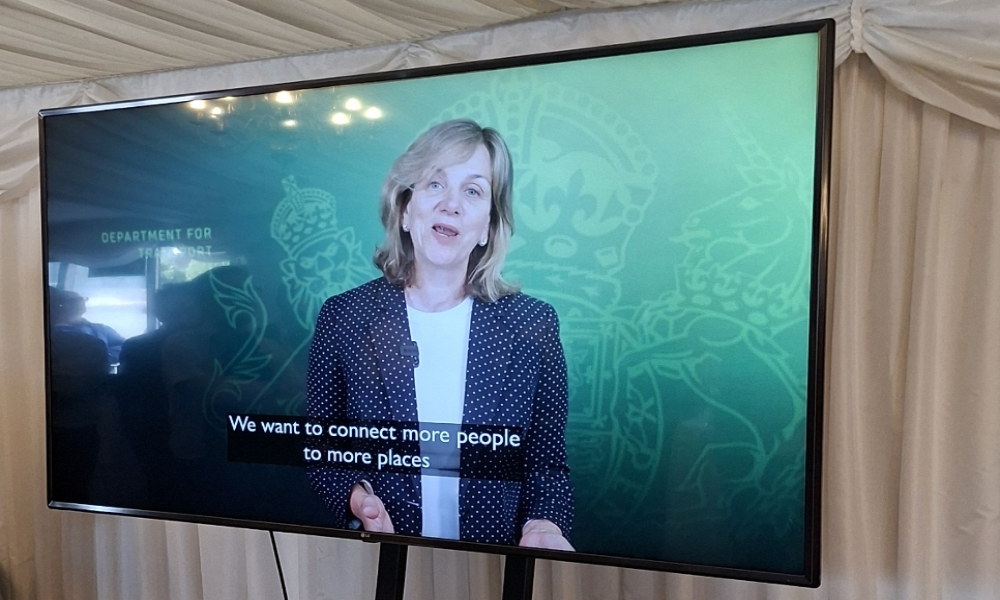
That sense of momentum was reinforced by Local Transport Minister Lilian Greenwood MP, who sent a video message to the reception. “We want to connect more people to more places in easier, safer, faster journeys, whoever and wherever they are”, she said. Her message set out a programme of work that closely aligns with ITS UK priorities, including the connected vehicle services framework, digitised traffic regulation orders, digital traffic signal systems, bus open data, Street Manager and the National Parking Platform. “You can see my department is committed to technology”, she told delegates, adding that the government is delighted to support ITS World Congress in Birmingham in October 2027 as an opportunity to showcase UK innovation on the global stage.
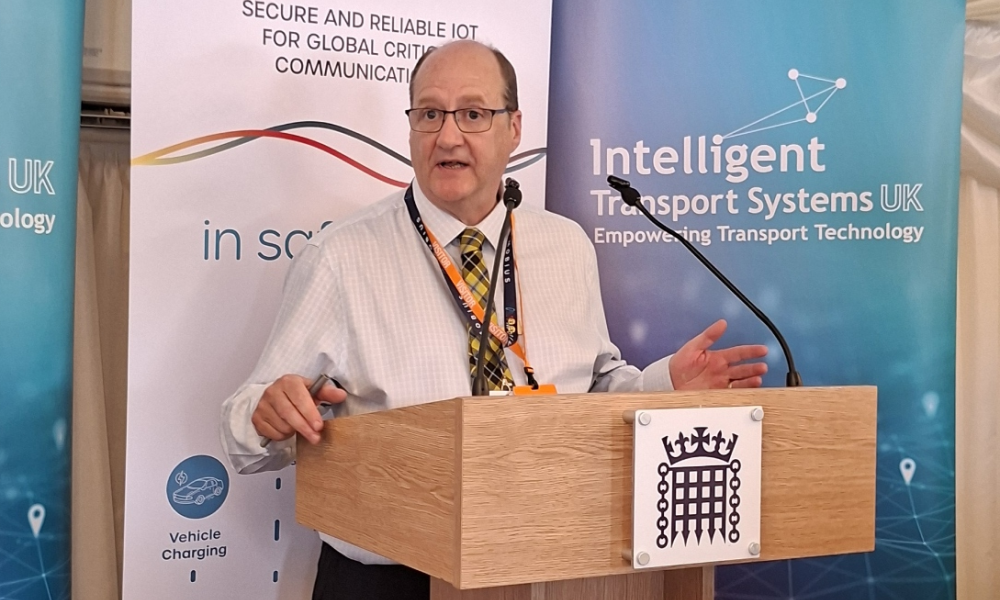
The reception also celebrated the next generation of transport thinkers through the Allen Prize, ITS UK’s essay competition for students and early career professionals, run in partnership with Smart Applications Management. Announcing the winners, Andrew Seedhouse praised the “absolutely stonking year in terms of the quality” of entries, with essays exploring the theme of Transport 4.0: Inclusive, Integrated and Intelligent. As one of the judges for this competition, I can attest to the quality and diversity of approaches taken by the student entries. It was a reminder that while much of the afternoon focused on immediate policy and infrastructure questions, there is also a strong appetite for fresh thinking from those entering the industry.

If there was one overarching takeaway from the afternoon, it was that transport technology is no longer waiting in the wings. Whether the issue is road safety, traffic signals, integrated journeys, open data, digital enforcement or skills, ITS is becoming fundamental to the way transport policy is made and the way networks are operated. The reception showed a sector with growing confidence, political access and a clear sense of purpose. As Birmingham 2027 comes into view and as government continues to rethink the transport system around users, data and connectivity, the challenge now is to turn that momentum into action. For ITS UK, the argument being made in Westminster was simple: the tools are there, the expertise is there, and the time to move is now.
Click the buttons below to see more articles:
See all ArticlesIndustry InsightEventsITS Thought LeadershipITS Educational