150x150.png)
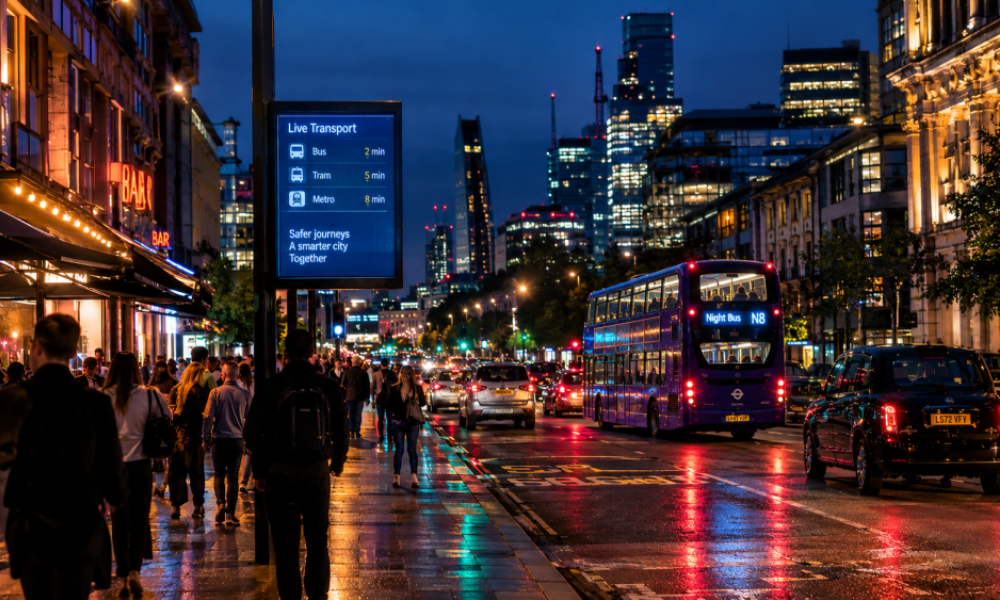
Cities change character when daylight fades. Streets that feel orderly and predictable during working hours take on a different rhythm once offices close, shops wind down and social venues come alive. Movement becomes more dispersed, more spontaneous and more varied in purpose. Crowds form in places that were quiet earlier in the day. Public transport patterns shift as commuters give way to late-night workers, hospitality staff, event-goers and people simply enjoying the city after dark. This transition creates a distinct mobility landscape that demands its own intelligence. The night-time economy is vibrant, valuable and increasingly central to urban life, yet it places pressures on transport networks that cannot be managed with daytime assumptions. Intelligent Transport Systems are becoming essential for understanding and guiding mobility when cities shift into after-hours mode.
Night-time mobility is shaped by a blend of predictable flows and unpredictable surges. Regular patterns exist around closing times, shift changes and scheduled events. These are interwoven with spontaneous movements driven by social choices, weather, venue popularity and the ebb and flow of crowds. ITS provides the situational awareness that allows operators to understand these patterns in real time. Sensors track pedestrian density around nightlife districts, transport hubs and popular venues. Data from ride-hailing platforms reveals where demand is rising and how quickly it is likely to spread. Public transport feeds show passenger volumes building on key corridors. CCTV analytics highlight crowd formation and movement trends. This intelligence forms a live picture of how the city is behaving after dark, allowing operators to anticipate pressure points rather than simply reacting to them.
Routing and traffic management take on a different character at night. Roads that carry heavy commuter traffic during the day often become corridors for taxis, private hire vehicles, late-night deliveries and people travelling home from social venues. Congestion can appear suddenly when multiple venues close at similar times or when weather pushes crowds towards sheltered areas. ITS tools help manage these shifts with precision. Adaptive signal control adjusts timings to reflect late-night flows, removing unnecessary delays caused by junction interlinking and synchronisation that are essential during peak-periods in the day. Dynamic kerbside management allocates space for pick-up and drop-off activity, preventing conflicts between taxis, buses and pedestrians. Real-time routing guidance helps drivers avoid hotspots and supports safer movement through areas with high footfall. Variable message signs provide information that reflects the unique conditions of the nighttime economy rather than daytime traffic patterns.
Public transport plays a crucial role in supporting safe and efficient night-time mobility. Services that run late into the evening or through the night must respond to patterns that differ significantly from daytime operations. Passenger volumes can fluctuate rapidly, with sudden surges following concerts, sporting events or venue closures. ITS helps operators manage these variations with clarity. Real-time passenger counting reveals where additional capacity is needed. Predictive models highlight corridors likely to experience increased demand. Control centres can adjust headways, deploy additional vehicles or modify routes to maintain reliability. Information systems provide travellers with accurate updates, reducing uncertainty and supporting safer journeys. Night buses, trams and metro services become part of a coordinated ecosystem rather than isolated operations.
Safety becomes a central concern in the night-time economy. Crowds gather in areas with limited lighting, narrow pavements or constrained kerbside space. Alcohol consumption can influence behaviour and increase vulnerability. Conflicts between vehicles and pedestrians become more likely when visibility is reduced and movement patterns are less predictable. ITS provides tools that help cities manage these risks. Smart lighting systems adjust brightness based on pedestrian density, improving visibility where it is most needed. CCTV analytics detect behaviours that may indicate rising tension or unsafe crowding. Sensors near crossings and junctions track pedestrian movement, allowing signal plans to adapt to protect people walking through busy nightlife districts. Public transport hubs use digital monitoring to manage queues and prevent overcrowding. These measures create a safer environment without relying solely on physical enforcement.
The night-time economy also places unique demands on emergency response. Incidents can occur in crowded areas where access is constrained. Response times may be affected by late-night traffic patterns or by the dispersal of crowds. ITS enhances situational awareness for emergency services. Real-time data reveals the fastest routes through busy districts. Crowd analytics highlight areas where assistance may be required. Connected vehicles provide updates on road conditions and hazards. Control centres can coordinate responses with greater precision, ensuring that emergency teams reach people quickly and safely. This intelligence strengthens resilience and supports public confidence in the nighttime environment.
Freight and servicing activity often increases after hours. Many cities encourage night-time deliveries to reduce daytime congestion. This shift creates its own pressures. Heavy vehicles must navigate streets filled with pedestrians and late-night traffic. Kerbside space becomes contested between deliveries, taxis and public transport. ITS helps manage these interactions. Digital kerbside allocation ensures that delivery vehicles have access to loading zones at appropriate times. Routing guidance directs freight away from areas with high footfall. Sensors monitor noise levels to reduce disturbance for residents. These tools allow cities to support efficient logistics without compromising safety or the experience of people enjoying the night-time economy.
The transition into after-hours mode also affects asset management. Roads, signals and public transport infrastructure experience different stresses at night. Surfaces may cool rapidly, affecting grip and braking performance. Lighting systems operate at full intensity for extended periods. Public transport vehicles run longer hours and require more frequent cleaning and inspection. Predictive maintenance helps operators manage these demands. Sensors track asset performance throughout the night. Data reveals how infrastructure behaves under late-night conditions. Maintenance teams receive alerts that highlight emerging issues, allowing them to intervene before problems affect safety or reliability. This approach ensures that networks remain resilient even as usage patterns shift.
Cities that embrace ITS for the nighttime economy are discovering that after-hours mobility can be managed with sophistication rather than improvisation. The result is a safer, more efficient and more enjoyable urban environment. People feel more confident travelling at night when information is accurate, services are reliable and streets are managed intelligently. Businesses benefit from smoother flows of customers and staff. Public transport becomes a trusted part of the nighttime experience. Emergency services operate with greater clarity. Freight moves efficiently without disrupting social activity. The city becomes a place that supports life after dark rather than simply tolerating it.
The future of night-time mobility will be shaped by deeper integration of digital intelligence. Sensors will become more widespread, providing continuous awareness of crowd movement, traffic conditions and environmental factors. Routing engines will incorporate behavioural insights that reflect how people move at night. Public transport will use predictive models to anticipate demand with greater accuracy. Kerbside management will become fully dynamic, adjusting space allocation minute by minute. Safety systems will use advanced analytics to detect risks earlier. Cities will gain the ability to manage the nighttime economy with the same precision they apply to daytime operations.
The night-time economy is one of the most dynamic expressions of urban life. Intelligent Transport Systems provide the tools that allow cities to support this vibrancy with confidence. Mobility after dark is no longer a secondary concern. It is a central part of how cities function, how people live and how businesses thrive. ITS ensures that when the lights come on and the streets fill with energy, the transport network is ready to guide the city through its after-hours rhythm with intelligence, safety and grace.
Click the buttons below to see more articles:
See all ArticlesIndustry InsightEventsITS Thought LeadershipITS Educational