150x150.png)
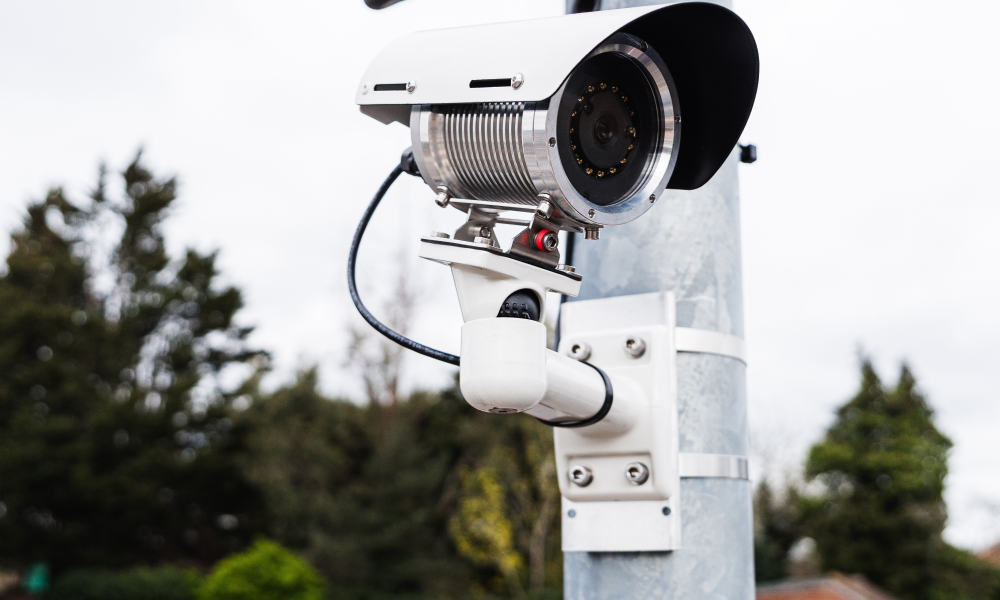
MAV Systems has introduced the AiQ Lite as a lower-cost, lower-complexity automatic number plate recognition camera aimed at the practical realities of parking, enforcement and traffic management. The launch speaks to a wider ITS challenge, how to deliver reliable roadside intelligence at scale without pushing capital, installation and maintenance demands beyond what many operators can justify.
In intelligent transport systems, the most interesting innovations are not always the ones with the longest specification sheets. Often, the real breakthrough lies in making proven capability easier to deploy, easier to integrate and easier to fund. That appears to be the thinking behind the latest launch from MAV Systems, which has brought the AiQ Lite to market as a streamlined addition to its ANPR portfolio. Built and engineered in Britain, the camera is designed to offer dependable number plate recognition in the kinds of day-to-day environments where transport technology either proves its worth or quickly gets found out. Public car parks, private enforcement sites, roadside corridors and urban traffic operations all place pressure on systems to perform consistently, whatever the light levels, weather conditions or installation constraints.
That positioning is significant because ANPR has moved well beyond niche enforcement use. Across the ITS landscape, plate recognition now underpins parking access, compliance monitoring, tolling support, kerbside management, traffic surveys and a growing range of data-led operational decisions. But while demand has broadened, budgets and site conditions remain highly variable. Not every deployment needs the full capability of a premium, highly configurable platform. What many operators want is a camera that captures plates accurately, copes with difficult conditions and can be installed without excessive complexity. In that context, the AiQ Lite is less about stripping back performance than about matching capability to mainstream requirements.
MAV describes the product as a more compact and affordable route into its AiQ platform, carrying over core performance characteristics while reducing cost and deployment friction. That distinction matters for integrators and operators alike. A system can be technically impressive, but if it requires extensive civil works, multiple devices, difficult commissioning or high ongoing power demand, the total cost of ownership can quickly outweigh the benefit. By contrast, a practical all-in-one unit with lower installation overhead can unlock schemes that might otherwise stall at the business-case stage.
On paper, the AiQ Lite focuses on a set of capabilities that align closely with what many transport and parking schemes actually require. MAV says the camera delivers reliable, high-accuracy plate capture under typical operating conditions, while maintaining strong performance in poor lighting and adverse weather. The unit is IP68 rated, a specification that speaks directly to the realities of exposed roadside and open-site deployment. In a sector where maintenance visits are costly and equipment often has to keep working through rain, dirt and temperature swings, physical resilience is not a secondary feature, it is part of the value proposition.
Among the more notable specifications is two-lane coverage from a single camera. For operators, that could translate into fewer installed assets, simpler mounting arrangements and a lower overall installation cost. The compact all-in-one format also suggests a faster deployment path, which is important for projects that need to be delivered quickly or with limited engineering resource. MAV further highlights low power consumption in all lighting conditions, making the product suitable for renewable-powered or otherwise energy-constrained sites. For ITS practitioners looking at off-grid or semi-remote locations, that point alone may be enough to widen the number of viable deployment scenarios.
MAV is also making a broader argument about what accuracy really means in the field. Capturing ideal plates in controlled conditions is one thing, maintaining dependable recognition when a plate is worn, manipulated, partially obscured or damaged is quite another. The company says the AiQ Lite uses intelligent processing to sustain reliable reads in exactly those difficult scenarios. That matters because the usefulness of ANPR in live operations is determined less by laboratory performance and more by how well it handles the messy edge cases that appear every day on public roads and in busy parking environments. If systems fail too often when conditions deviate from the ideal, confidence in the wider workflow quickly erodes.
The likely appeal of the AiQ Lite is its fit with mainstream applications rather than edge-case specialism. In parking operations, the priorities are often throughput, dependable access control and revenue protection without introducing unnecessary infrastructure cost. In private or roadside enforcement, consistent capture quality and robust operation under variable conditions are paramount. In urban traffic management, ANPR can support broader situational awareness, compliance activity and network monitoring. A camera that can serve these environments without carrying the complexity of a top-tier bespoke platform may prove attractive to both established operators and organisations taking a first step into ANPR-enabled workflows.
There is also a wider sector lesson here. As ITS programmes mature, the market increasingly needs products that are scalable not just in technical terms, but commercially and operationally as well. Authorities and service providers are under pressure to deliver measurable outcomes, often across diverse estates with mixed infrastructure maturity. That creates a strong case for equipment that is robust enough for live operations but simple enough to roll out repeatedly. In other words, progress in transport technology does not always come from adding more features, sometimes it comes from packaging proven functionality in a form that more schemes can actually use.
MAV Systems’ decision to emphasise that the AiQ Lite is manufactured in Britain is more than a branding note. For many buyers, especially in critical transport and enforcement environments, provenance still matters. It speaks to engineering oversight, supply confidence, long-term support and a perception of accountability that can be hard to replicate in commoditised technology markets. The company points to decades of experience delivering ANPR solutions for enforcement, parking and transport applications worldwide and that heritage may reassure customers that the Lite model is not a compromise product, but a distilled version of established know-how.
The themes MAV attaches to the product, durability, real-world reliability and operator-focused design, are exactly the attributes that tend to shape buying decisions in the ITS sector. Transport technology is rarely judged only at the point of procurement. It is judged months and years later, when the weather turns, the site gets busier, traffic patterns shift and maintenance teams need quick answers rather than excuses. Solutions that succeed over time are usually the ones designed around operator outcomes rather than technology for its own sake. On that measure, the AiQ Lite is being presented as a tool for solving everyday deployment problems rather than an exercise in headline grabbing.
Affordability in ITS is often discussed purely in terms of unit price, but deployment economics are broader than that. Installation time, lane coverage, power demand, maintenance exposure and system complexity all influence whether a scheme gets approved and whether it performs sustainably over time. By focusing on lower complexity as well as lower cost, MAV is targeting a procurement mindset that is increasingly common across transport technology: buy what will work reliably in context, integrate cleanly and scale sensibly.
That makes the AiQ Lite notable not simply as a new product launch, but as a signal of where part of the ANPR market is heading. There is clear demand for technology that preserves the benefits of advanced recognition while becoming more accessible to mainstream deployments. For parking operators, enforcement providers and integrated transport schemes, the promise is straightforward: practical performance, a simpler installation path and value from day one. If the product delivers on those claims in live operations, it may well resonate with a market that is less interested in maximum theoretical capability than in dependable outcomes at scale.
As Andy Humphries, managing director at MAV Systems, puts it, the aim is to deliver “what most deployments actually need, reliable, accurate ANPR in a simple, cost-effective package”. He adds that the AiQ Lite brings MAV performance to everyday environments without the complexity of higher-end systems. That summary neatly captures the product’s intended role, not to replace specialist platforms, but to make dependable ANPR easier to justify and easier to deploy across a far wider range of ITS applications.
The AiQ Lite is available now for deployment across parking, enforcement and integrated transport applications, placing it squarely in the part of the market where practical engineering, operational resilience and commercial realism matter most. For ITS professionals, that may be the most important aspect of this launch: it reflects a recognition that the future of intelligent transport will be built not only by headline innovations, but by technologies that work consistently in the real world.
Click the buttons below to see more articles:
See all ArticlesIndustry InsightEventsITS Thought LeadershipITS Educational