150x150.png)
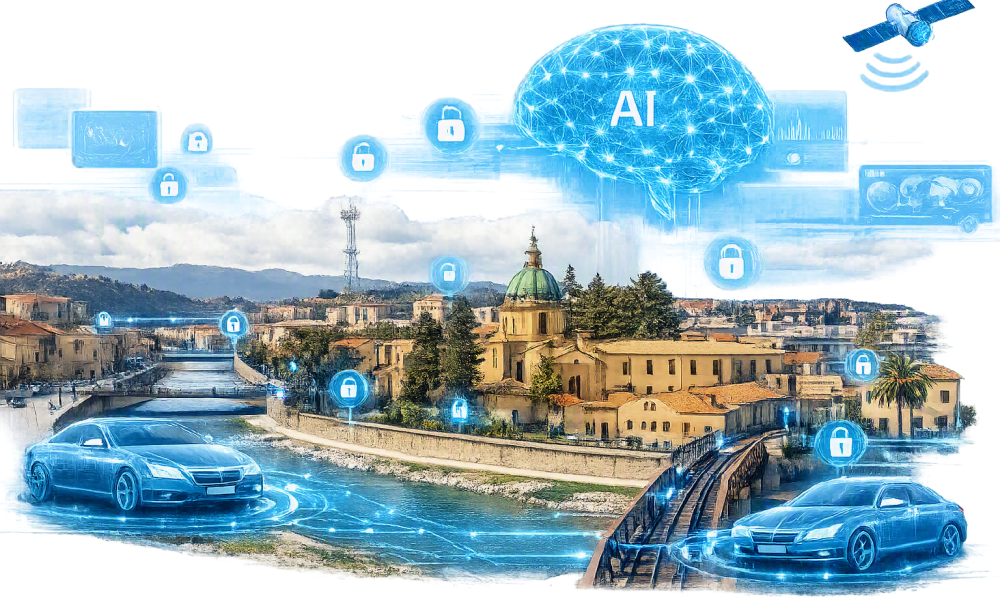
The hills of Calabria had a way of framing technological ambition with a sense of permanence. Rende, a university town with a growing reputation for digital research, became the host of the first International Workshop on Secure, Trusted, and Scalable Next-Generation Mobility during the IEEE Smart World Congress in September 2026. The organisers chose to call it NextGen-XDV, a title that hinted at the industry’s shift from traditional automotive engineering to a world shaped by software, artificial intelligence, and emerging quantum technologies.
The workshop arrived at a moment when mobility systems are being rewritten from the inside out. Software-Defined Vehicles (SDV) have moved from concept to commercial reality, and manufacturers are treating code as the primary medium through which capability, safety, and user experience evolves. The shift has profound consequences for security. Vehicles once protected by physical boundaries and isolated electronic control units are operating as distributed digital platforms, constantly updated, constantly connected, and constantly exposed to new forms of cyber risk. The organisers of NextGen-XDV recognised that this transformation demanded a new architecture of trust stretching from silicon to cloud.
Rende provided an appropriate backdrop for such discussions. The University of Calabria has become a focal point for research into secure systems, embedded intelligence, and advanced communications. The workshop’s steering committee reflected this blend of academic depth and industrial relevance, bringing together experts from Italy, France, India, Sweden, and the United States. Their collective aim was to explore how mobility could remain secure, resilient, and ethically governed as vehicles became more autonomous, more connected, and more dependent on artificial intelligence.
The agenda was shaped around several key themes. One of the most pressing concerns centred on the development of hardware-rooted trust mechanisms. Physical unclonable functions, secure elements, and cryptographic primitives form the foundation of secure identity within next-generation vehicles. These technologies allow systems to verify components, authenticate updates, and maintain integrity even when operating across vast digital ecosystems. The workshop highlighted the importance of Zero-Knowledge Proofs and Multi-Party Computation, techniques that enabled sensitive information to be validated without revealing underlying data. Their relevance grows as vehicles exchange information with infrastructure, cloud services, and other road users.
Another major track focused on secure over-the-air updates. Manufacturers are increasingly relying on remote software deployment to introduce new features, patch vulnerabilities, and refine performance. The process needs protection against interception, manipulation, and spoofing. The organisers emphasised that secure update pipelines are essential for maintaining trust in SDVs, particularly as Adversarial Machine Learning (ML) becomes a recognised threat. Malicious actors could attempt to manipulate AI models, distort sensor interpretation, or influence decision-making processes. The inclusion of adversarial ML within the programme signalled a growing awareness that AI security has become inseparable from automotive safety.
Quantum-resilient cryptography featured prominently. The industry is preparing for a future in which quantum computers might undermine classical encryption. Post-quantum cryptographic schemes are being evaluated for use in vehicles, infrastructure, and cloud services. The workshop’s call for papers stressed the need for algorithms capable of withstanding quantum attacks while remaining efficient enough for embedded systems. The challenge lays in balancing performance with resilience, ensuring that vehicles can operate securely without compromising responsiveness or energy consumption.
Service providers occupy a third position. They build applications that rely on connected vehicle data but do not control the vehicles or the infrastructure. Their value lies in interpretation, prediction and service delivery. They need access to data at scale, yet they also contribute to the ecosystem by creating new markets. Insurance companies use driving behaviour data to refine risk models. Logistics firms use real-time traffic information to optimise routes. Mobility-as-a-service platforms rely on integrated data streams to coordinate journeys. These companies often pay for access, either through commercial agreements with OEMs or through data marketplaces. Their profitability depends on the balance between the cost of acquiring data and the value of the services they provide.
Legal and regulatory frameworks formed another pillar of the discussion. The workshop acknowledged that secure mobility was not solely a technical challenge. Compliance with UNECE regulations, GDPR, and emerging automotive cybersecurity standards such as ISO/SAE 21434 and 24089 are essential for building public trust. These frameworks shape how data is collected, processed, and shared. They also influence how manufacturers design systems to ensure accountability, transparency, and user protection. The organisers highlighted the importance of data sovereignty, particularly as vehicles generate vast quantities of information that might cross borders and jurisdictions.
The human dimension was woven throughout the programme. Mobility systems need to be designed with an understanding of how people interact with technology, how trust is formed, and how responsibility is perceived. The workshop’s emphasis on bridging deep-tech with human-centred considerations reflect a broader shift in the industry. Engineers and policymakers are increasingly recognising that secure mobility requires collaboration across disciplines. Technical solutions need to align with legal expectations, ethical principles, and societal values.
Rende’s role as host was more than symbolic. Italy had been investing in digital transformation across transport, energy, and public services. The region’s research institutions have developed strong links with European initiatives focused on cybersecurity, artificial intelligence, and connected mobility. The workshop benefited from this ecosystem, drawing on expertise from Inria Lille, the University of Calabria, the University of Padova, and partners across Sweden, India, and the United States. Their involvement underscored the global nature of the challenge. Secure mobility cannot be addressed in isolation. Vehicles cross borders, data flows across continents, and threats can emerge from anywhere.
The event’s timing within the IEEE Smart World Congress added further significance. The congress brought together researchers working on smart cities, intelligent infrastructure, and digital ecosystems. Mobility sits at the intersection of these domains. Vehicles are becoming nodes within broader networks, interacting with sensors, traffic systems, and cloud platforms. The workshop’s focus on secure, trusted, and scalable mobility aligns with the congress’s ambition to create integrated environments where technology enhanced safety, efficiency, and sustainability.
Attention is now turning to how the workshop’s discussions might influence industry direction. Manufacturers are already experimenting with AI-driven security, quantum-resilient cryptography, and hardware-rooted trust. Regulators are refining standards to ensure that vehicles remain safe as autonomy increased. Researchers are exploring how mobility systems can adapt to new threats without sacrificing performance or user experience. The workshop provided a space where these threads could be woven together, creating a clearer picture of what secure mobility might look like in the next decade.
Rende might not have been the first place that comes to mind when imagining the future of automotive technology, yet its role in hosting NextGen-XDV reflected a broader truth. Innovation often thrives in places where academic curiosity meets industrial ambition. The workshop brought together voices from across the mobility landscape, each contributing to a shared vision of vehicles that are not only intelligent and connected but secure, trusted, and resilient. The journey from SDV to AI-driven and quantum-aware mobility is already underway. The conversations in Calabria helped determine how confidently that journey continues.
Click the buttons below to see more articles:
See all ArticlesIndustry InsightEventsITS Thought LeadershipITS Educational