150x150.png)
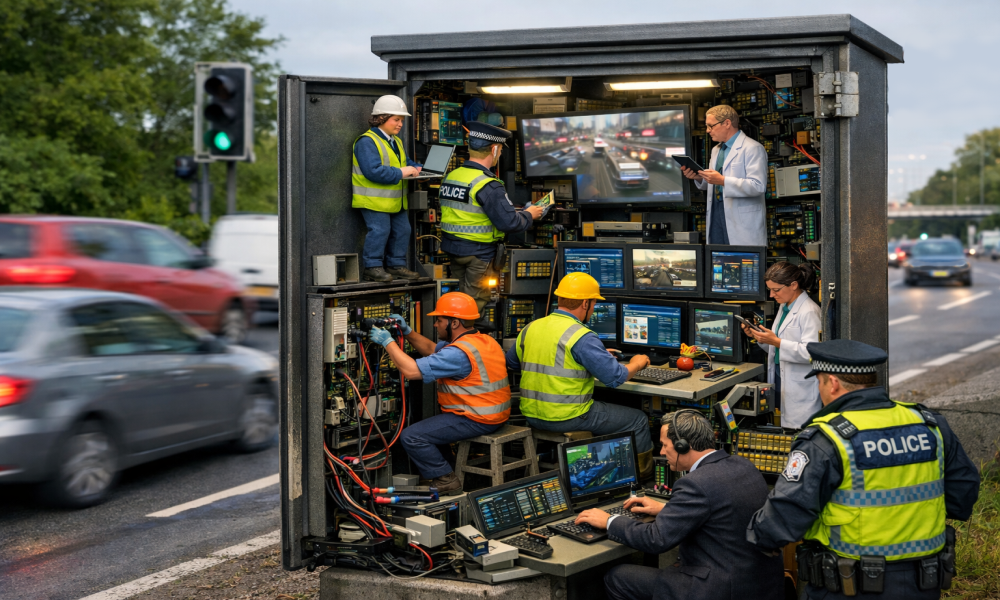
For years, the intelligent transport systems community has talked about digital transformation as if it were something that would arrive with a dramatic flourish, with fleets of autonomous vehicles, cities humming with connected mobility and cloud platforms orchestrating traffic like a conductor guiding a symphony. But the real revolution, the one that is quietly reshaping the foundations of mobility, is happening in places most road users never notice, the humble roadside cabinet, the signal controller, the gantry that has stood over the carriageway for decades. These assets, once passive and predictable, are becoming intelligent in their own right. And that shift is redefining what ITS actually is.
Edge computing, which is the ability to process data locally, at or near the source, is no longer a fringe concept reserved for futurists. It is becoming the operational backbone of modern transport networks. As roadside devices gain the capacity to analyse, decide and act without relying on distant servers, the sector is witnessing a profound change in how infrastructure behaves, how data flows and how mobility systems are governed.
This is the quiet revolution where infrastructure thinks for itself.
Historically, roadside technology has been built around centralised architectures. Signals, cameras, detectors and signs collected data and sent it upstream to regional or national control centres. Decisions were made centrally, then pushed back down to the roadside. It worked, but it was slow, bandwidth-hungry and vulnerable to outages. And as the volume of data exploded, the model began to creak.
Edge computing flips that model on its head. Instead of waiting for instructions, roadside devices can now run analytics locally, detect anomalies, optimise performance and even collaborate with neighbouring assets. A signal controller can adjust timings based on real-time pedestrian flows. A gantry can detect a stopped vehicle and trigger an automated response. A cabinet can monitor its own health and predict failures before they occur.
This shift is not about replacing central systems, it is about distributing intelligence so that the network becomes more resilient, responsive and scalable. The cloud still plays a vital role, but the edge is where the action increasingly happens.
Three forces are accelerating the rise of roadside intelligence:
Together, these forces are transforming roadside assets from data collectors into decision-makers.
The emerging ITS architecture is neither centralised nor decentralised, it is a hybrid. Intelligence is layered, distributed and dynamic.
At the device level, sensors and controllers run lightweight analytics, detect events and take immediate action.
At the local edge, clusters of devices share information, coordinate responses and optimise performance across corridors or junction groups.
At the regional and national levels, cloud platforms aggregate insights, run long-horizon analytics, manage strategy and provide oversight.
This layered approach mirrors the way modern digital systems operate in other sectors, from energy to manufacturing. ITS is finally catching up, and in some cases, leading.
One of the most overlooked benefits of edge computing is its alignment with data protection principles. As transport authorities grapple with GDPR obligations, the edge offers a pragmatic and powerful solution.
By processing data locally, sensitive information, particularly video, ANPR data and behavioural analytics, can be analysed, anonymised or discarded before it ever leaves the roadside. Only the insights, not the raw personal data, need to be transmitted.
This reduces risk, simplifies compliance and supports a “privacy by design” approach that regulators increasingly expect. In a world where public trust is fragile, edge computing helps ITS operators demonstrate that intelligence does not have to come at the expense of privacy.
The quiet revolution is not theoretical. Across the UK and internationally, transport authorities are deploying edge intelligence in ways that are already delivering measurable benefits.
Perhaps the most profound change is not technological but cultural. Roadside infrastructure is no longer being treated as static hardware with fixed functions. It is becoming a digital asset which is upgradable, reconfigurable and capable of evolving over time.
This shift has implications for procurement, governance, skills and investment. Authorities must think in terms of software lifecycles, cybersecurity, data stewardship and interoperability. Vendors must design open, modular systems that can integrate with wider ecosystems. The workforce must develop new capabilities in data science, edge orchestration and digital operations.
The sector is moving from engineering to engineering-plus-intelligence.
As edge computing becomes ubiquitous, the transport network will behave less like a collection of isolated assets and more like a distributed digital organism, sensing, learning and adapting in real time.
This is the foundation for the next generation of mobility, where connected and automated vehicles interact seamlessly with infrastructure, digital twins mirror the network with unprecedented fidelity and resilient corridors are able to self-optimise under stress. It is also the basis for privacy-preserving analytics that can maintain public trust while enabling a transport system that is not simply managed, but truly intelligent.
The quiet revolution is already underway. It is happening in the cabinets by the roadside, the controllers at the junctions, the gantries above the motorway. And as these assets gain intelligence, the entire mobility ecosystem becomes smarter, safer and more sustainable.
Infrastructure is no longer waiting for the future. It is becoming the future.
Click the buttons below to see more articles:
See all ArticlesIndustry InsightEventsITS Thought LeadershipITS Educational