
Ambitious visions for cleaner, safer and more efficient urban transport remain central to Singapore Urban Mobility Week, but Tuesday's discussions demonstrated that many of the technologies long associated with the future of mobility are now entering a phase where integration, operations and scalability matter just as much as innovation itself. For those involved in Intelligent Transport Systems, this evolution was impossible to ignore. Across the Industry Forums, speakers repeatedly returned to a common theme that the challenge is no longer simply developing new technologies. The real test lies in connecting systems, organisations and infrastructure in ways that deliver measurable outcomes for transport authorities, operators and road users alike.
Day two's programme reflected this reality through a series of discussions that addressed some of the most pressing issues facing mobility professionals today. Sustainability featured prominently, with conversations exploring how transport infrastructure can be designed, constructed and maintained more responsibly. In a region where urban density presents unique challenges, delegates examined low-carbon construction techniques, sustainable road materials and smarter approaches to asset management. For the ITS community, these discussions reinforced the growing convergence between infrastructure and digital technology. Modern roads are increasingly expected to perform as connected assets, generating data, supporting monitoring systems and enabling predictive maintenance strategies. The emergence of intelligent asset management platforms illustrates how traditional transport engineering is becoming inseparable from digital transformation.
Connected and integrated mobility formed another major pillar of the day's agenda. Sessions focused on the role of Integrated Operations Centres, intelligent transport systems and seamless mobility payment platforms in creating more coordinated transport networks. Such discussions sit at the heart of contemporary ITS thinking. Cities continue to expand their use of sensors, connectivity, artificial intelligence and real-time data platforms, yet the value of these technologies ultimately depends upon their ability to work together. Delegates explored how Integrated Operations Centres are evolving into the nerve centres of urban mobility, bringing together information from roads, public transport networks, traffic management systems and emerging mobility services to support faster and better-informed decision making.
This emphasis on integration extended beyond technology itself. Interoperability between agencies, operators and service providers emerged as an equally important consideration. Several discussions highlighted the need for governance frameworks and collaborative operating models that enable organisations to share information effectively while maintaining security and resilience. Electrification also remained high on the agenda. Conversations surrounding bus fleet electrification reflected the growing momentum behind zero-emission public transport, particularly in major metropolitan environments where air quality and decarbonisation objectives are increasingly shaping policy decisions. While electric vehicle deployment is now well established as a strategic direction for many cities, speakers acknowledged some of the operational challenges that accompany large-scale adoption. Battery technology, charging infrastructure, energy management and emergency response planning all featured prominently in the debate. From an ITS perspective, these issues again highlighted the importance of intelligent system management. The transition to electric mobility is not merely about replacing one propulsion technology with another. It requires new digital tools capable of optimising energy consumption, monitoring vehicle performance and coordinating charging operations across entire fleets.
Autonomous mobility represented another focal point during the day. Discussions spanning autonomous rail operations and wider automated transport systems reflected the growing maturity of technologies that only a few years ago were largely confined to pilot projects. Particularly noteworthy was the attention given to governance, standards and deployment frameworks. Technology alone will not determine the success of autonomous mobility. Public confidence, regulatory certainty and operational safety remain fundamental prerequisites for widespread deployment. Participants explored how international standards and common approaches can support the development of safe and trusted autonomous ecosystems. For ITS professionals, these conversations serve as a reminder that automation is no longer a standalone innovation topic. Instead, it is becoming part of a broader intelligent mobility landscape in which connected infrastructure, advanced communications, real-time analytics and digital traffic management all play essential supporting roles.
The final major theme of day two looked towards the workforce itself. As transport systems become increasingly data-driven and technologically sophisticated, organisations face growing pressure to develop the skills required to manage this transformation. Discussions examined the capabilities that future mobility professionals will need, spanning traditional engineering disciplines as well as data science, cybersecurity, software development and systems integration. The transport sector has long faced skills challenges, but the pace of digitalisation is creating fresh demands that cannot be addressed through conventional workforce strategies alone.
Beyond the conference sessions, the exhibition floor continued to provide a valuable showcase of practical innovation. Technology providers, infrastructure specialists and mobility companies demonstrated solutions covering intelligent transport systems, sustainable infrastructure, autonomous mobility, electrification and integrated operations. What stood out most was the extent to which previously separate technology domains are converging. Traffic management, public transport operations, road asset management, mobility services and vehicle technologies increasingly depend upon shared data environments and common digital platforms. Visitors moving between exhibition stands encountered not isolated innovations but components of an emerging integrated mobility ecosystem.
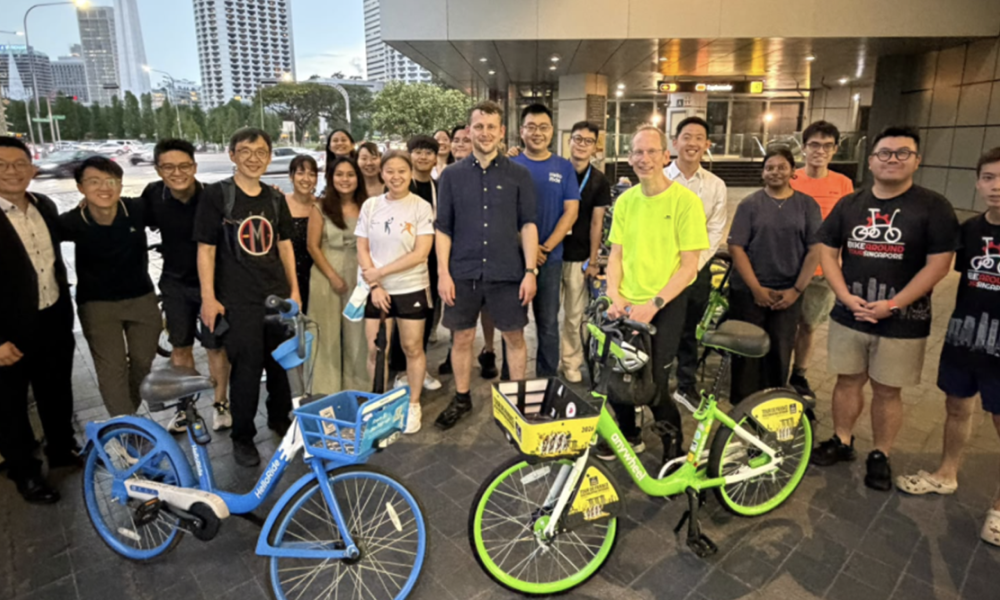
Although adverse weather forced the cancellation of the planned guided cycling tour, enthusiasm for active mobility remained evident throughout the event. The disappointment surrounding the cancellation highlighted the continuing importance of active travel within Singapore's broader urban mobility strategy and the strong interest among participants in understanding how walking and cycling can be integrated alongside technologically advanced transport systems.
Attention now turns to day three, the final day of SUMW 2026, which promises one last opportunity for delegates to deepen conversations, strengthen partnerships and translate insights into actionable plans. As the event enters its concluding phase, delegates are expected to focus increasingly on implementation. The concepts explored throughout the week, whether related to connected mobility, electrification, automation or sustainable infrastructure, are likely to be examined through a more practical lens. Questions surrounding affordability, scalability, system integration and operational delivery will remain central.
The exhibition will continue to play an important role in this process, offering transport authorities and industry stakeholders opportunities to engage directly with solution providers and explore technologies that may support their future programmes. For many attendees, these face-to-face exchanges are where strategic discussions begin to evolve into genuine collaboration opportunities. Equally important will be the conversations taking place between sessions, across meeting tables and throughout the exhibition halls. Urban mobility challenges rarely fit neatly within organisational boundaries, and many of the strongest messages emerging from SUMW 2026 have centred on the value of partnership. Delivering safer, smarter and more sustainable transport systems requires cooperation between governments, operators, technology suppliers, infrastructure providers and academic institutions.
As delegates prepare for the final day, there is a clear sense that SUMW 2026 has provided much more than a showcase of emerging technologies. Throughout the week, the event has demonstrated how intelligent transport systems are maturing from individual solutions into interconnected ecosystems capable of supporting broader societal goals. For the ITS sector, that may ultimately prove to be the most significant takeaway. Innovation remains essential, but success increasingly depends on integration. Whether the challenge involves managing electrified fleets, deploying autonomous services, maintaining infrastructure or improving multimodal journeys, the future of mobility will be defined not by isolated technologies but by how effectively they work together. Day three offers a final opportunity to explore exactly how that future can be delivered.
Click the buttons below to see more articles:
See all ArticlesIndustry InsightEventsITS Thought LeadershipITS Educational