150x150.png)
Meet the Leaders Shaping the Future of Mobility Singapore Urban Mobility Week (4-6 November 2026) – Leaders Summit Preview
Singapore has never been shy about setting the pace for global mobility innovation. But in 2026, as cities everywhere confront the realities of automation, ageing infrastructure, workforce transformation and the relentless pressure of urban density, the questions facing transport leaders are no longer simply technical. They are strategic, societal and deeply human. That is the backdrop for the Singapore Urban Mobility Week (SUMW) Leaders’ Summit, a gathering designed not just to showcase progress, but to interrogate the choices that will define the next decade of land transport.
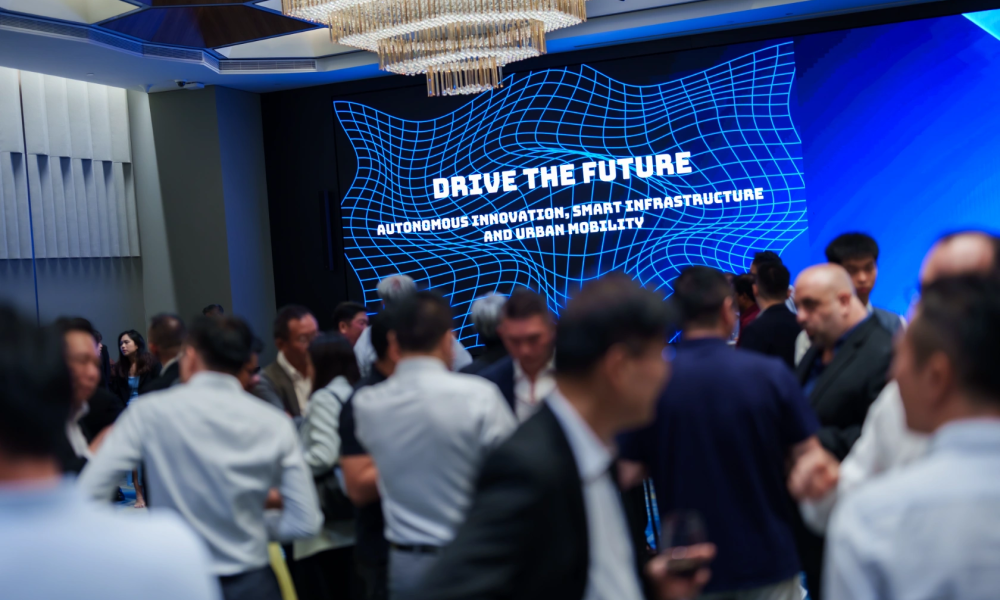
Taking place on Day 1 of SUMW 2026, the Leaders’ Summit brings together senior decision-makers, thought leaders and industry experts from across Asia, Europe and beyond. Their task is to confront the most pressing challenges facing the sector and to explore how technology, policy and people can be aligned to deliver mobility systems that are resilient, inclusive and future-ready.
What makes this year’s Summit distinctive is its focus on leadership, not as a title but as a responsibility. The programme is built around four themes that cut across every transport authority, operator and technology provider, these are the rise of autonomous mobility, the renewal of critical assets, the transformation of the workforce and the deployment of autonomous vehicles in the world’s most complex urban environments. Each theme reflects a sector in transition, where decisions made today will shape mobility for generations.
The first panel explores a question that has moved from theoretical to urgent: How can autonomous technologies be deployed in ways that genuinely improve mobility for cities and communities? For Singapore, where land is scarce and demand is high, autonomy is not a novelty, it is a strategic tool. But the global conversation is shifting. Cities are increasingly asking whether autonomous systems can expand access, reduce inequality and support ageing populations, rather than simply optimise operations.
This panel brings together leaders who understand that autonomy is only as valuable as the outcomes it delivers. With Singapore’s Land Transport Authority (LTA) at the forefront of regulated AV trials, and with international operators contributing lessons from dense, multimodal networks, the discussion will examine how cities can design autonomous mobility ecosystems that are safe, trusted and genuinely inclusive.
Automation is reshaping the transport workforce, but not in the way early predictions suggested. Instead of replacing people, automation is redefining roles, elevating skills and demanding new forms of organisational capability. The second panel tackles this head-on, exploring why workforce development, culture and human-centred design remain critical differentiators in an increasingly automated industry.
This is a conversation that goes far beyond training. It touches on organisational identity, leadership culture and the ability to attract and retain talent in a sector that is becoming more digital, more interdisciplinary and more competitive. With voices from public transport authorities, unions and technology-driven mobility companies, the panel will examine how organisations can build cultures that embrace innovation while protecting the dignity, safety and aspirations of their people.
Every major city faces the same dilemma: How to renew and modernise infrastructure that was never designed for today’s demands. The third panel focuses on the strategies transit operators are using to future-proof ageing assets through digitalisation, predictive maintenance and integrated asset management.
This is not simply an engineering challenge. It is a financial, operational and political one. Ageing infrastructure is expensive to maintain, disruptive to upgrade and essential to keep running. The panel will explore how digital twins, condition-based monitoring, AI-driven maintenance and cross-agency collaboration are enabling operators to extend asset life, reduce downtime and improve passenger experience while managing rising expectations and constrained budgets.
The final panel addresses one of the most complex challenges in global mobility: How to turn the promise of autonomous vehicles into deployable, scalable solutions in high-density urban environments. Singapore, Hong Kong, Tokyo and Taipei all operate in contexts where space is limited, demand is intense and reliability is non-negotiable. These cities are not testing autonomy for novelty, they are testing it for necessity.
This session will examine the operational, regulatory and infrastructural conditions required to deploy AVs at scale. It will also explore the interplay between AVs and public transport, the role of data governance, and the importance of public trust, which is a critical factor that can accelerate or stall deployment regardless of technical readiness.
The Summit’s strength lies in the calibre and diversity of its speakers, with leaders who bring operational experience, strategic insight and a deep understanding of the communities they serve.
From Singapore’s Land Transport Authority, the Summit features:
Joining them are international leaders who bring perspectives from some of the world’s most advanced and demanding transport networks:
The Leaders Summit is not a showcase, it is a working forum. It is designed for organisations that need to make decisions today about technologies that will shape tomorrow. Whether you are planning autonomous mobility pilots, renewing critical assets, redesigning workforce strategies or preparing for the next wave of digital transformation, the Summit offers insights grounded in real-world experience.
Singapore Urban Mobility Week 2026 promises to be a defining moment for the global mobility community, a chance to learn from leaders who are not just imagining the future but building it.
ITS Now are Official Media Partner for Singapore Urban Mobility Week
Find out more at: www.sgurbanmobility.com
Click the buttons below to see more articles:
See all ArticlesIndustry InsightEventsITS Thought LeadershipITS Educational