150x150.png)
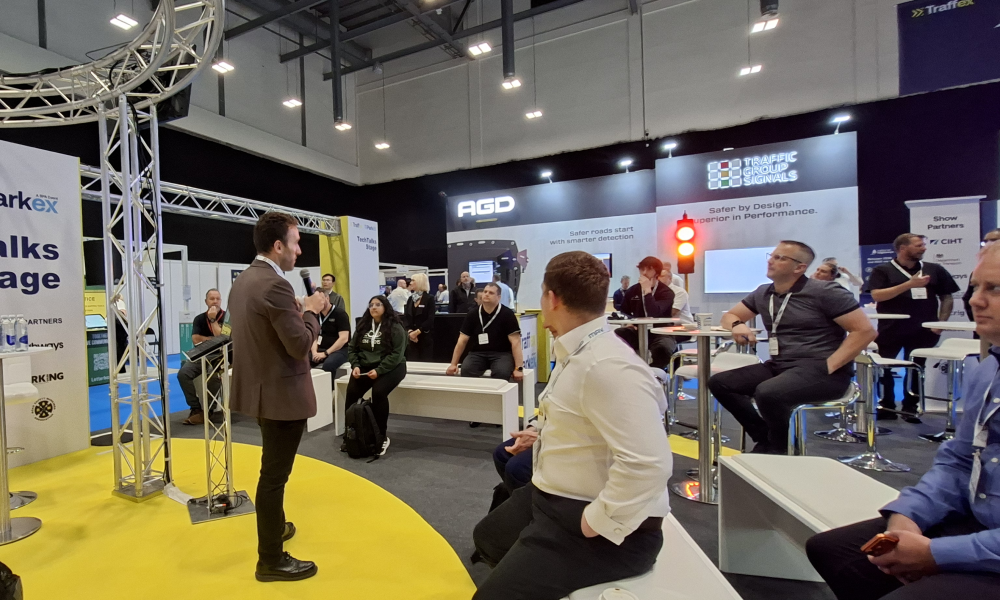
I took the opportunity to sit down with Max Sugarman, Chief Executive of Intelligent Transport Systems UK, to discuss ITS UK’s new initiative “Stuck on Red”, which he announced at the TechTalks Theatre at Traffex, which I was hosting.
Alistair Gollop:
Max, your keynote at TechTalks Traffex certainly caught people’s attention. You opened with that striking map of England, half the country glowing orange and red. What exactly were we looking at?
Max Sugarman:
That was our traffic signal obsolescence map. It shows the age profile of England’s traffic technology estate, everything from controllers to signal heads. Green areas have modern, serviceable assets, red means obsolete. As of January 2026, more than half of England’s signals fall into the red or amber categories. If nothing changes, that figure rises to around 61 percent within two years. It’s a visual way of saying that we’re heading for a critical point.
Alistair:
So this is the heart of your new initiative, Stuck on Red?
Max:
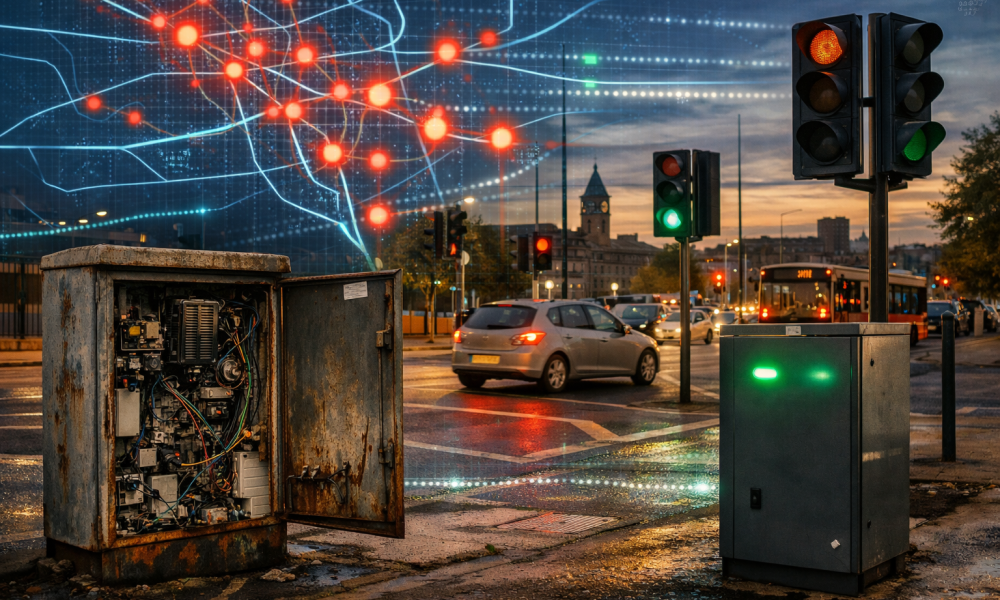
Exactly. We launched Stuck on Red – From Obsolescence to a Network Fit for the Future to highlight the scale of the problem and to push for a rolling fund for traffic technology renewal. We’ve had pothole funds for years, billions committed to road surfaces, but almost nothing comparable for the digital infrastructure that keeps those roads safe and efficient. I’ve started calling it the “dot hole” problem — not a pothole, but a digitally obsolete hole in our network.
Alistair:
That’s a neat phrase and it makes the issue tangible. But how did you gather the data behind those maps?
Max:
We worked with partners across the industry, such as Swarco, Telent, TfL, Yunex, to collate asset age data from local authorities and manufacturers. It’s based on the age of equipment, which gives a clear baseline. We know it’s not perfect, but it’s a start. The next step is to refine it with risk-based assessments, because age alone doesn’t always equal obsolescence. Some kit over 10 years old still performs well, others are hanging on for dear life.
Alistair:
I challenged that point during your session — that obsolescence should be defined by risk, not just age. But I take your argument that you needed a clear, communicable metric to start the conversation.
Max:
Absolutely. We wanted something policymakers could grasp quickly. When we showed the maps to the Minister for Roads, the reaction was immediate: “Right, I get this.” It’s a powerful visual. Now we can build on it with more nuanced data — performance, energy efficiency, compatibility with connected and automated mobility. But first, we needed to get the issue on the radar.
Alistair:
And you’ve certainly done that. The campaign’s website is full of resources, including maps, briefing notes, even a template letter for councillors and MPs. What’s the funding model you’re proposing?
Max:
We’re calling for a rolling fund of £45 million a year over five years. That’s enough to start turning the map green. We estimate around £450 million of assets need renewal nationally. Local authorities could cover roughly half, but central government support is essential. We’re not asking for a one-off lump sum — that wouldn’t be efficient. A steady, planned renewal programme would let authorities modernise systematically.
Alistair:
And you argue it would pay for itself?
Max:
Yes. Obsolete equipment costs more to maintain and consumes more energy. Upgrading to modern, efficient systems reduces operational expenditure. It’s not just about safety and reliability — it’s about sustainability and cost-effectiveness. LED signal heads, for example, are at least 30 percent more energy-efficient than halogen. Yet we still have halogen lamps in service. That’s money literally burning away.
Alistair:
I was shocked when you said that at Traffex — that some authorities are still running halogen signals. It’s 2026!
Max:
It is, and that’s the point. We’ve made progress, but there’s still a long tail of outdated equipment. And as we move toward connected and automated mobility, those old systems simply can’t cope. They’re not ready for vehicle-to-infrastructure communication, adaptive control, or the data demands of modern networks.
Alistair:
So Stuck on Red isn’t just about replacing old kit — it’s about future-proofing?
Max:
Exactly. We’re talking about a network fit for the future. That means technology capable of supporting connected vehicles, active travel, accessibility, and sustainability goals. Modern traffic systems are the backbone of all that. Without them, we can’t deliver safe crossings for pedestrians and cyclists, efficient freight movement, or reliable public transport priority.
Alistair:
You mentioned Scotland, Wales and Northern Ireland in your talk — are you expanding the mapping beyond England?
Max:
Yes. We started with England because the data was available, but we’re now working on RAG-rating maps for the devolved nations. Urban centres in Scotland, for instance, have particularly ageing estates. We want a UK-wide picture so we can make a coherent national case.
Alistair:
And how’s the sector responding?
Max:
The engagement has been fantastic. We launched the campaign on Tuesday and immediately had strong feedback from suppliers, consultants, and local authorities. Everyone recognises the issue. The challenge now is to turn that awareness into action — to get more organisations listed as backers, to share the maps, to write to policymakers. We’ve already started briefing MPs and councillors.
Alistair:
You said something interesting in your keynote — that it’s the industry’s job to raise the alarm, not to wait for government to notice.
Max:
Yes. Other sectors are very open about lobbying for investment when they face structural challenges. We should be the same. If we don’t make the case, no one else will. My background is in public affairs, and I’ve seen how effective a united industry voice can be. This isn’t about suppliers chasing contracts — it’s about safeguarding the functionality of our national transport network.
Alistair:
And local authorities are key to that, aren’t they?
Max:
Absolutely. They know their estates better than anyone. We’re encouraging them to assess their readiness for emerging technologies — connected and automated mobility, adaptive control, data integration. We’ve published a Connectivity Scale to help authorities benchmark themselves. But they also need support and guidance. Many are under-resourced, and the political environment makes it hard for them to speak out. That’s why ITS UK is taking the lead in raising the issue nationally.
Alistair:
It feels like a turning point — the moment when digital infrastructure finally gets the same attention as physical roads.
Max:
That’s the goal. When people talk about road maintenance, they think of potholes. We want them to think of “dot holes” too — the invisible digital gaps that undermine safety and efficiency. If we can get this issue to that level of recognition, we’ll have succeeded.
Alistair:
And what’s next for the campaign?
Max:
We’ll be publishing updated maps later this year, expanding the dataset, and continuing outreach. We’re also exploring partnerships to quantify the operational savings of renewal — hard numbers that show the return on investment. And we’ll keep pushing the message that modern traffic technology isn’t a luxury; it’s essential infrastructure.
Alistair:
It’s a compelling vision — a network that’s safe
Click the buttons below to see more articles:
See all ArticlesIndustry InsightEventsITS Thought LeadershipITS Educational