150x150.png)
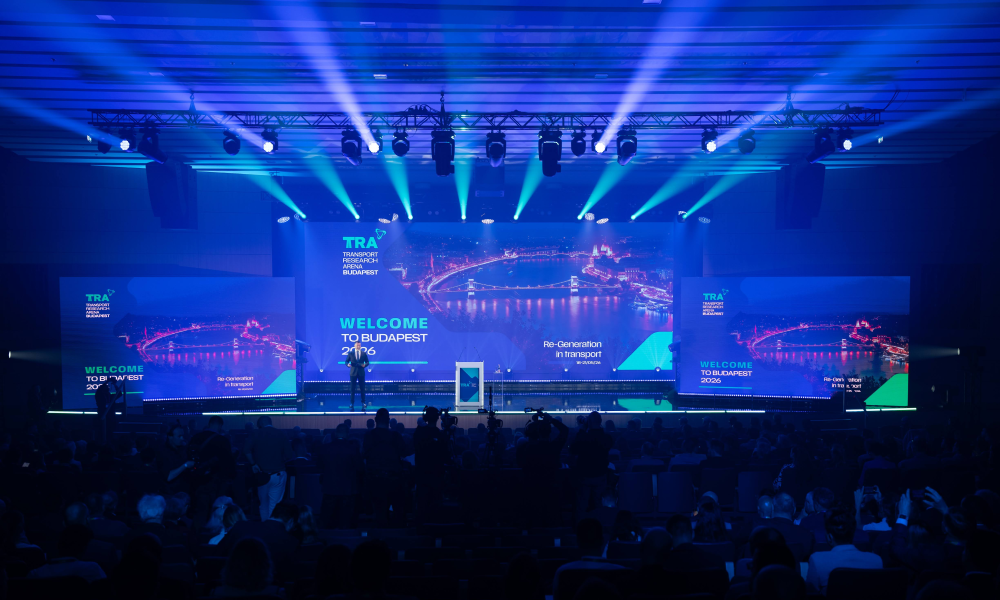
Europe’s flagship transport research and innovation gathering, the Transport Research Arena (TRA), returned this year with a flourish in Budapest. With it came a wave of Intelligent Transport Systems (ITS) and mobility technology developments that signal where the sector is heading next. As the continent’s largest transport research conference, TRA has always been a harbinger for emerging priorities. The 2026 edition, themed Re Generation in Transport, placed a clear emphasis on automation, data driven mobility, electrification, resilient infrastructure and the skills needed to support a rapidly transforming sector.
Across four days, TRA brought together researchers, industry leaders, policymakers and innovators to explore how Europe can accelerate the transition to safer, cleaner, more efficient mobility systems. With more than 30,000 m² of exhibition space showcasing prototypes, demonstrations and interactive experiences, the event provided a panoramic view of the technologies shaping the next decade of transport.
What follows is a deep dive into the most significant ITS and mobility technology themes emerging from Budapest, across the ideas, research and innovations that will shape European mobility long after the conference lights dim.
Automation has long been a pillar of TRA, but this year’s programme demonstrated a notable shift, the conversation is no longer about if automated mobility will scale, but how to ensure it does so safely, responsibly and with public confidence.
Technical Session 1 opened with a series of studies examining real world passenger responses to autonomous buses on Istanbul’s BRT line, offering insights into behavioural acceptance and operational feasibility. Researchers also presented machine learning driven safety evaluations of automated vehicles in mixed traffic, highlighting how simulation environments are becoming indispensable for validating AV performance before deployment on public roads.
One standout theme was the human experience inside automated vehicles. A study exploring “working while commuting” in AVs assessed how productivity expectations could reshape acceptable travel times, a subtle but important factor in future transport modelling. Meanwhile, a framework for enhancing passenger trust through emotion aware driving and adaptive interfaces underscored the growing convergence of human machine interaction, psychology and mobility engineering.
The message from Budapest was clear: automation is maturing, but its success hinges on understanding human behaviour as much as technological capability.
If automation is the visible face of future mobility, predictive analytics is the invisible engine behind it. TRA 2026 showcased a surge of research into AI driven forecasting, edge cloud computing and multimodal data integration, all essential for building responsive, adaptive transport networks.
A notable contribution came from researchers demonstrating real time pedestrian trajectory prediction using collaborative edge cloud computing with NVIDIA Triton, pointing to a future where roadside and cloud systems work in tandem to enhance safety.
Other studies explored physics informed bus time to intersection prediction, spatio temporal graph convolutional networks for short term traffic forecasting and crowdsourced data integration models for safer transport solutions. These innovations reflect a sector increasingly reliant on high resolution, multimodal data to manage congestion, optimise operations and support automated mobility.
Even maritime and aviation domains featured prominently, with research into open maritime intelligence for traffic management and AI driven complexity learning for adaptive air traffic network optimisation.
The breadth of predictive mobility research at TRA signals a shift toward transport systems that are not only connected, but anticipatory.
Electrification remains a cornerstone of Europe’s decarbonisation strategy and TRA 2026 provided a detailed look at the technologies that will underpin the next wave of electric mobility.
Solid state battery performance under automotive driving conditions was a major focus, with researchers presenting evaluations of novel solid composite electrolytes. Complementing this were frameworks for early stage battery concept development, offering tools for manufacturers navigating the complex design space of next generation cells.
Vehicle to Grid (V2G) technology also featured prominently, including a London based case study modelling the feasibility and benefits of V2G for urban bus fleets, a promising avenue for grid balancing and fleet optimisation.
On the infrastructure side, a multi port megawatt charging system (MCS) optimisation framework for both light and heavy duty EVs highlighted the rapid evolution of high power charging ecosystems. Advances in battery diagnostics using on chip electrochemical impedance spectroscopy and AI driven predictive maintenance for fuel cell heavy duty vehicles rounded out a comprehensive electrification agenda.
Europe is not only scaling EV adoption, but also building the technical foundations for an integrated, intelligent electric mobility system.
Freight transport which is often overshadowed by passenger mobility took a central role this year, with a strong emphasis on digitalisation, automation and climate resilience.
The MAGPIE project presented strategies for clean and smart logistics in and around ports, reflecting Europe’s push to decarbonise maritime linked freight corridors. Complementing this were studies on port logistics adaptation to climate change and the socio economic implications of just transitions in shipping.
One of the most forward looking contributions was the AUTOSUP framework, which uses digital twins and decision support tools to advance multimodal freight automation. With freight volumes continuing to rise, such tools will be essential for managing complexity and reducing emissions.
Research into modal shift using truck GPS data and analyses of interactions at German trimodal hubs further underscored the importance of data driven freight planning.
TRA’s theme of designing systems around people was evident in sessions exploring active travel, user behaviour and urban mobility innovation.
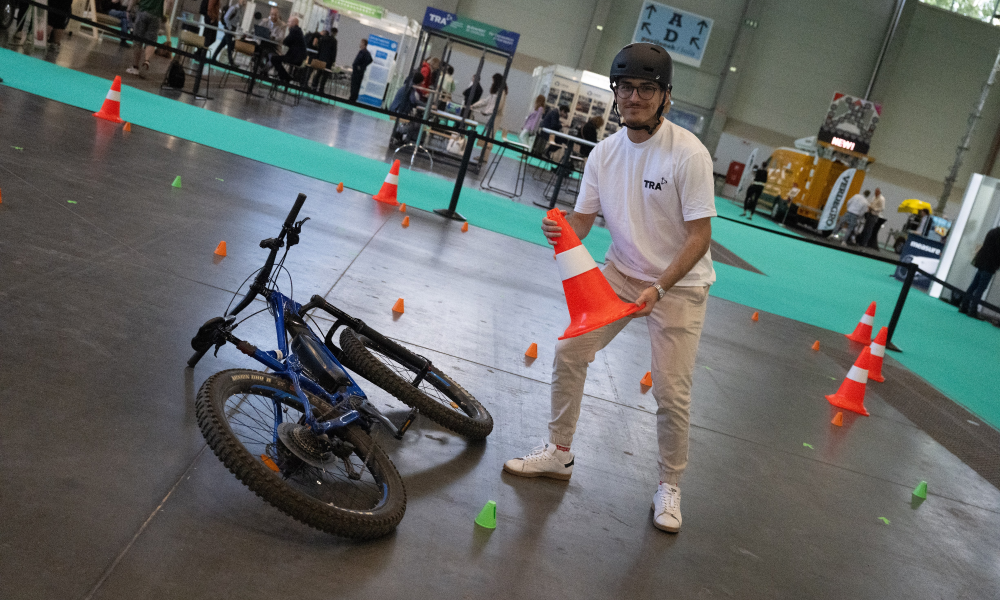
Budapest Public Roads presented work on transitioning from 3D road data to data driven urban mobility, highlighting how cities can leverage digital infrastructure to improve planning and operations.
EIT Urban Mobility’s AstraVigil initiative, showcased later in the programme, focused on enhancing future urban mobility through data spaces, a concept gaining traction as cities seek interoperable, privacy preserving ways to share mobility data.
Workshops on road safety, shared mobility and skills for the future reinforced the idea that technology alone cannot deliver sustainable mobility. It must be paired with policy, education and behavioural insight.
A recurring theme across the conference was the urgent need to develop new skills and mindsets to support Europe’s transport transformation. Sessions on workforce development, new teaching approaches and the CEDR PhD and Postdoc Symposium all pointed to a sector grappling with rapid technological change.
The emphasis on young researchers (a hallmark of TRA), was particularly strong this year, culminating in the Young Researchers Awards Ceremony atop a Budapest rooftop.
TRA 2026 in Budapest made one thing abundantly clear: Europe’s mobility transition is accelerating and ITS is at its core. From automated mobility and predictive analytics to electrification, freight digitalisation and human centric urban design, the innovations showcased this year reflect a sector moving decisively toward integrated, intelligent, sustainable transport systems.
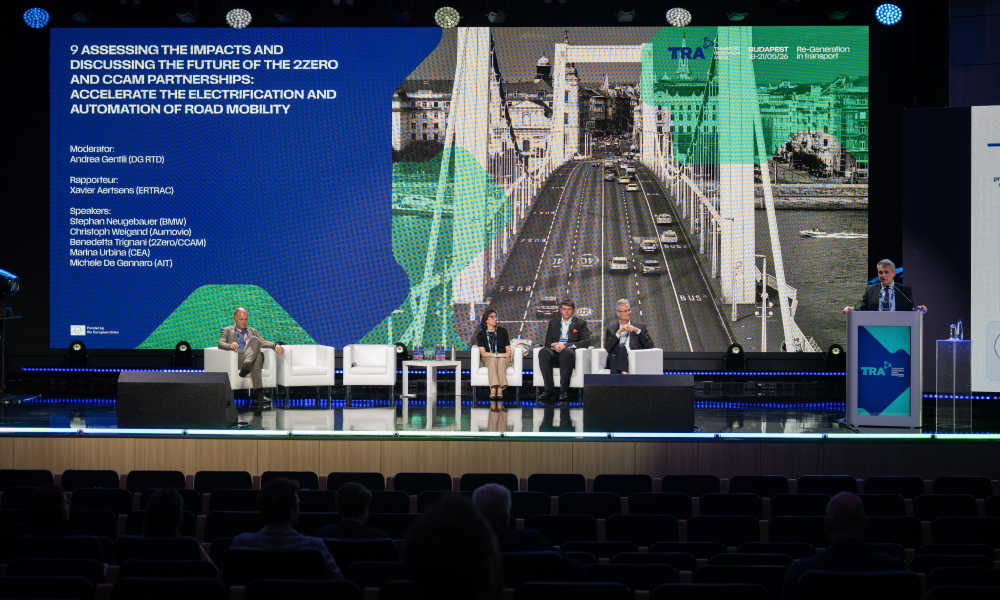
As Europe prepares for the next wave of mobility challenges, including climate resilience, urbanisation, digital sovereignty and workforce transformation, the ideas emerging from TRA will help shape the policies, technologies and collaborations that define the continent’s transport future.
TRA has always been a glimpse of what’s coming next. In 2026, that future looked more connected, more automated, more data driven and more human centred than ever.
Click the buttons below to see more articles:
See all ArticlesIndustry InsightEventsITS Thought LeadershipITS Educational