
As transport authorities across the UK face growing pressure to deliver safer, more sustainable and increasingly efficient transport networks, the role of collaboration has never been more important. New mobility services, connected vehicle technologies, digital traffic management systems and the rapid evolution of data-driven decision making are transforming the way transport networks are planned, operated and maintained. Yet technology alone does not deliver better outcomes. Success depends upon the ability of local authorities, national government, industry and academia to share experiences, learn from one another and accelerate the adoption of proven solutions.
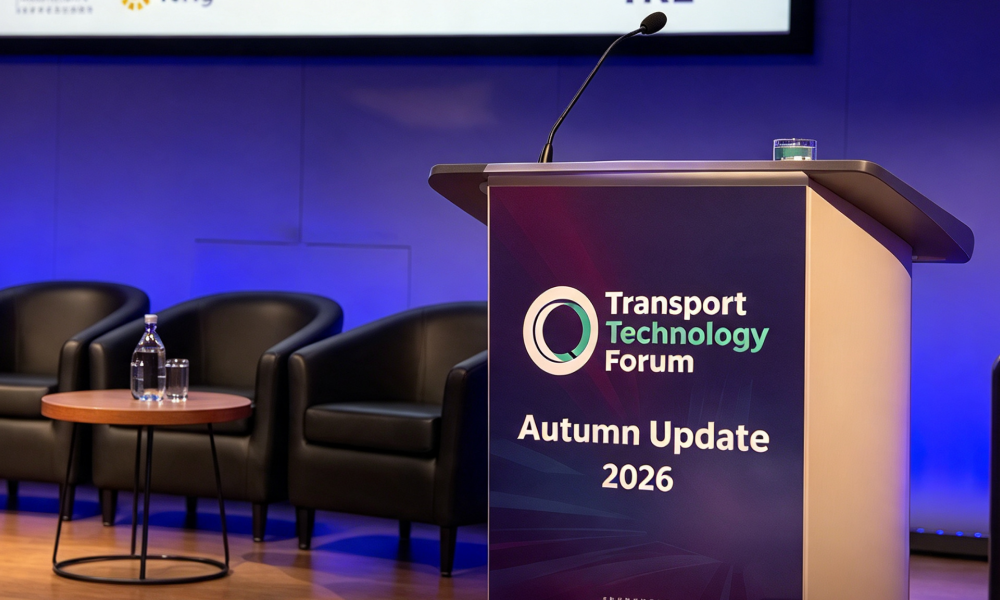
Against this backdrop, the Transport Technology Forum (TTF) Autumn Update 2026, held in Birmingham on 16-17 November, provided an important opportunity for the sector to come together and take stock of progress. Bringing together representatives from local authorities, the Department for Transport, technology suppliers, consultants and researchers, the event focused on one of the most pressing challenges facing the sector: how to translate technological innovation into practical improvements for local transport networks and highway services. The event was designed to support knowledge sharing, showcase best practice and provide a forum for open discussion around the opportunities and challenges associated with transport technology deployment.
While many transport conferences focus on future concepts and emerging innovations, the strength of the TTF Autumn Update lies in its practical relevance. Local authorities remain at the sharp end of transport delivery, responsible for managing increasingly complex networks while working within financial and operational constraints. Consequently, attention throughout the event centred on the technologies and approaches capable of generating measurable benefits today, while also laying the foundations for the connected and automated transport systems of tomorrow.
One of the most significant themes running through discussions was the growing importance of data as the lifeblood of modern transport operations. Roads are no longer simply pieces of physical infrastructure. They are becoming increasingly intelligent assets capable of generating, sharing and responding to information in real time. Traffic signals, roadside sensors, connected vehicles, mobility platforms and digital traffic regulation systems all contribute to an expanding ecosystem of transport data. Harnessing that information effectively enables authorities to optimise traffic flows, improve incident response, support active travel initiatives and reduce network emissions.
The challenge facing many authorities is not the lack of data but the ability to integrate and utilise it effectively. Many transport networks continue to operate with legacy systems that were never designed to communicate with one another. As a result, one of the key priorities for the industry is improving interoperability and establishing common frameworks that allow information to move seamlessly between organisations, platforms and technologies. Events such as the TTF Autumn Update play an important role in helping authorities understand how others are overcoming these barriers and delivering successful digital transformation programmes.
Alongside these discussions, the event saw the launch of new guidance to help local highway authorities manage and maintain roadside technology. Introduced by project leads Steve George and Gafoor Din, Well Managed Highway Infrastructure: Management of Roadside Technology follows a comprehensive rewrite of guidance first published in 2011. It updates the Management of Electronic Traffic Equipment Code of Practice to reflect the growing range of technology now installed on local roads and the operational demands placed on the authorities responsible for maintaining it.
Digital Traffic Regulation Orders (D-TROs) continue to be a particularly important area of development. The move towards digital management of traffic regulations promises to fundamentally improve how authorities communicate restrictions and network changes to vehicles, journey planning systems and mobility service providers. Rather than relying on static documentation and lengthy administrative processes, digitally accessible regulations have the potential to create a more dynamic and responsive transport environment. As connected vehicles become increasingly capable of consuming real-time information, the value of accurate digital regulation data will only increase. Gavin James, Deputy Director, Transport & Technology at the Department for Transport (DfT), outlined plans to make digital Traffic Regulation Orders (TROs) mandatory, alongside updated Manual for Streets.
Connected vehicle technology was another area attracting significant interest. Although fully autonomous vehicles often dominate headlines, the immediate benefits of vehicle connectivity are already becoming apparent. Connected vehicle applications can provide advance warning of hazards, roadworks, congestion and adverse weather conditions. They can support priority movements for public transport and emergency services while contributing valuable operational data back to traffic management systems. For local authorities, the challenge lies in preparing roadside infrastructure and operational systems to take advantage of these emerging capabilities while ensuring investments remain flexible enough to accommodate future developments.
Parking was also on the agenda, with David Sinclair of the National Parking Platform (NPP) updating delegates on the platform's progress and future direction. He described the NPP's transition to an industry-owned, not-for-profit consortium, explained how local authorities can join, and set out its approach to building a more connected parking ecosystem. Looking ahead, David highlighted ambitions for nationwide coverage and for integration with wider transport services and EV charging.
Discussion also highlighted the growing role of mobility technologies in supporting wider policy objectives. Decarbonisation remains a central priority across the transport sector, with authorities seeking practical ways to reduce emissions without compromising accessibility or economic growth. Intelligent Transport Systems are increasingly being viewed as essential enablers of these ambitions. By optimising traffic flows, reducing stop-start conditions, improving journey reliability and supporting modal integration, ITS technologies can generate environmental benefits without necessarily requiring large-scale infrastructure expansion.
The relationship between technology and place was another recurring theme. Successful deployment is not simply a technical exercise. Solutions must be aligned with local needs, community expectations and broader transport policy objectives. Urban centres face different challenges from rural authorities, while regional mobility patterns vary considerably across the country. Knowledge sharing therefore becomes particularly valuable, enabling authorities to learn from practical experiences rather than attempting to solve identical problems independently.
Birmingham provided a fitting backdrop for these discussions. With the city preparing to host the ITS World Congress in 2027, there is increasing focus on the UK's international leadership in transport technology and innovation. A dedicated pre-event session jointly hosted by TTF and ERTICO explored how deployment of transport technology can be accelerated across both the UK and Europe, examining barriers to implementation, funding challenges and governance considerations. Participants considered how lessons learned today could help create a lasting legacy ahead of the global ITS gathering scheduled for the following year.
Perhaps the most valuable outcome of events such as the TTF Autumn Update is the opportunity they provide for honest discussion. Technology deployment rarely follows a straightforward path. Procurement challenges, funding limitations, integration complexities and skills shortages remain significant concerns for many authorities. By creating a collaborative environment where successes and setbacks can be shared openly, the sector becomes better equipped to avoid repeating mistakes and more capable of delivering effective solutions at scale.
This collaborative approach is particularly important as transport authorities prepare for the next phase of digital transformation. Artificial intelligence, machine learning, predictive analytics and digital twins are moving rapidly from conceptual discussions into real operational applications. These technologies offer considerable potential to improve decision making, optimise asset management and enhance network resilience. Realising those benefits, however, requires confidence, capability and access to practical examples of successful implementation.
The TTF Autumn Update 2026 demonstrated that the UK's transport technology community continues to place significant value on cooperation, knowledge exchange and evidence-based innovation. Rather than focusing solely on emerging technologies, the event maintained a strong emphasis on practical delivery and tangible outcomes for local transport networks. That balance is essential if the sector is to move beyond pilot projects and create lasting improvements for road users and communities.
As local authorities continue to navigate increasingly complex transport challenges, forums such as the TTF Autumn Update provide a vital bridge between policy, technology and implementation. By bringing together the people responsible for shaping the future of transport, the event reinforced an important message: smarter mobility is not solely about deploying new technologies. It is about sharing knowledge, building partnerships and creating the confidence needed to transform innovative ideas into better journeys for everyone.
Click the buttons below to see more articles:
See all ArticlesIndustry InsightEventsITS Thought LeadershipITS Educational