150x150.png)
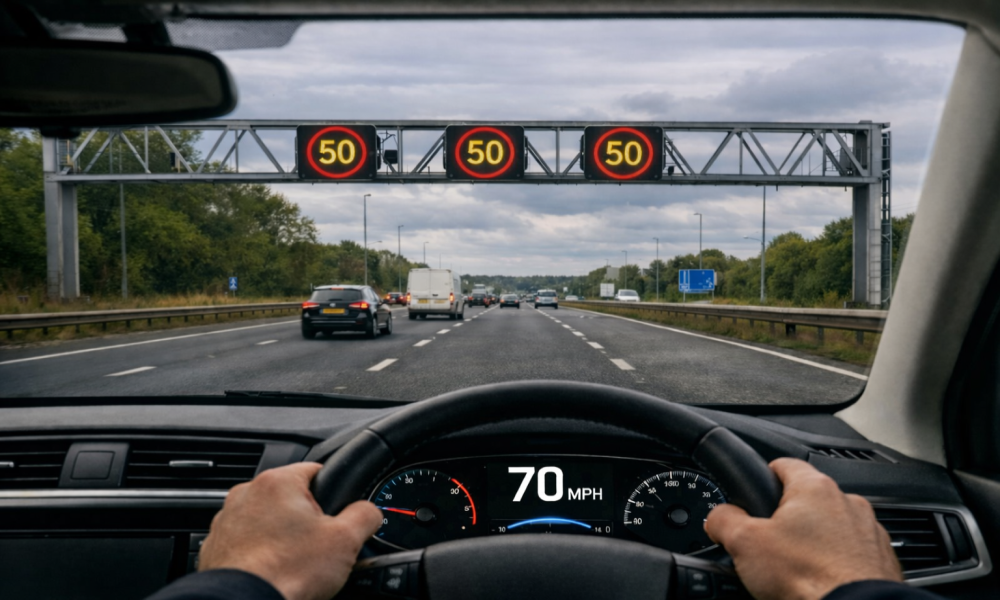
Compliance is the quiet currency of every transport system. We design, regulate, model and optimise on the assumption that people will broadly do what the system expects of them: stop at red lights, obey speed limits, stay in lane, park appropriately, use bicycles and e-scooters responsibly, follow signs and respect priority rules. Yet every practitioner knows that real-world behaviour is far messier. The most sophisticated ITS deployment can be undermined by a single shortcut, impulse or misjudgement.
What is striking is how rarely the sector talks about this directly. We discuss enforcement, infrastructure, algorithms, sensors, data fusion, digital twins and AI-driven optimisation, but far less often do we examine the behavioural psychology that determines whether any of it actually works. Compliance is too often treated as a technical outcome, when in reality it is a human one. That blind spot matters.
To understand why people ignore transport technologies and rules, even when doing so is dangerous, irrational or socially costly, we need to look beyond the device, the signal or the sign. We need to look at the person using the system in the moment: rushed, distracted, frustrated, uncertain, overconfident or simply following the behaviour of everyone around them. The next wave of ITS innovation must therefore be as much about human psychology as it is about hardware and software.
Transport modelling often assumes rational actors making optimised decisions. Behavioural science tells us the opposite, humans are predictably irrational. We are driven by heuristics, biases, habits, emotions and social cues far more than by logic.
Speeding is a familiar example. Most drivers know the risks, the law and the penalties, yet speeding remains one of the most common offences on the road. That is not because drivers are carefully weighing the evidence and making a rational calculation. More often, they are discounting future risk, assuming that nothing will happen today, overestimating their own skill, normalising the behaviour because others are doing the same, or responding to emotional states such as stress, lateness, frustration or thrill-seeking.
Red-light running follows a similar pattern. People rarely make a calm, conscious decision to break the law. Instead, they respond to time pressure, momentum, impatience or the fleeting belief that they can still make it through. The behaviour may be irrational, but the psychology behind it is not.
ITS technologies often assume that if information is provided, people will act on it. In practice, information alone rarely changes behaviour. Real-world compliance depends on whether a person is capable of doing what is being asked, whether the surrounding environment gives them a realistic opportunity to do it and whether they are motivated to do it at that particular moment.
This way of thinking reflects the COM-B model, widely used in behavioural science, which frames behaviour in terms of capability, opportunity and motivation. Yet this model is almost entirely absent from mainstream ITS discourse. We deploy variable message signs, in-vehicle alerts, enforcement cameras, geofencing, lane guidance and micromobility rules, but we do not always ask whether users have the practical ability, environmental support or immediate motivation to comply.
Seen through that lens, many apparent acts of non-compliance look different. A cyclist weaving through traffic may not be reckless but may be navigating infrastructure that offers no safe alternative. A driver ignoring a lane-keeping system may be experiencing alert fatigue. An e-scooter rider breaking a geofence may be confused by inconsistent rules across operators or boroughs. A pedestrian stepping into the road may be responding less to the crossing signal than to the movement of other people around them.
The technology is not the problem. The behavioural assumptions behind it are.
E-scooters and shared bikes have exposed the limits of compliance-by-design. Cities introduced rules around no-ride zones, slow zones, parking bays and pavement bans, often assuming users would follow them because the rules were visible or technically enabled. Many did not.
The reasons are not mysterious. Rules can vary from street to street or operator to operator, creating ambiguity. Riders may feel vulnerable but not dangerous, lowering their perception of the risk they pose to others. Social norms can quickly form, so that if pavement riding becomes common it also begins to feel acceptable. New riders may already be managing balance, steering, navigation and traffic, making compliance one more demand on limited attention. In many cases, there is also little immediate feedback when a rule is broken.
Micromobility has shown, in very public fashion, that compliance cannot simply be assumed. It has to be designed, nudged, reinforced and socially embedded.
Transport is a social environment. People constantly take cues from those around them. If one person crosses on red, others are more likely to follow. If most drivers exceed the limit, the limit begins to lose social authority. If cyclists routinely filter through traffic, the behaviour becomes expected. If e-scooters are abandoned on pavements, that pattern can spread and harden into a local norm.
This is social proof, one of the strongest drivers of human behaviour. ITS systems rarely account for it. Enforcement cameras catch individuals, but behaviour spreads socially. Variable message signs speak to individuals, but norms are set collectively.
The sector needs to think less like engineers and more like sociologists.
Even when ITS systems are designed to help, people may override or ignore them. Sometimes this is a form of reactance, a resistance to feeling controlled or instructed. Sometimes it reflects trust problems, with users either dismissing warnings because they under-trust the system or relying too heavily on automation because they over-trust it. In other cases, alerts become background noise through habituation or the sheer volume of information creates cognitive overload and selective attention.
Perceptions of fairness matter too. If enforcement is seen as revenue-raising rather than safety-driven, compliance can become entangled with resentment. Identity and emotion also play a part. For many people, driving is connected with autonomy, status and personal space, which means interventions that feel intrusive can provoke resistance even when they are technically sound.
If ITS wants better compliance, it must embrace behavioural design. The first principle is to make the desired behaviour the easiest behaviour. People tend to follow the path of least resistance, so infrastructure and interfaces should make compliance feel intuitive rather than being an effort to observe.
Timing also matters. Behaviour is situational, which means a contextual nudge delivered at the moment of risk can be more powerful than a general warning delivered too early or too late. A speed reminder is most effective when it appears where the temptation or danger is greatest.
Systems should also work with social norms rather than ignore them. Showing people that most others are complying can be more persuasive than emphasising how many are not. Positive norms are powerful because people are strongly influenced by what they believe their peers are doing.
At the same time, ITS design needs to reduce cognitive load. Signage, interfaces and alerts should be simple enough to process under real conditions, not just in a controlled environment. Immediate feedback, whether visual, auditory or haptic, can also strengthen compliance more effectively than delayed penalties, because it connects the behaviour and consequence in the user’s mind.
Finally, systems should be designed for emotion, not just logic. Frustration, stress and impatience all contribute to non-compliance. Technologies that reduce emotional load, clarify expectations and make the safe choice feel natural will do more than simply tell people what they should already know.
The ITS sector has spent decades optimising technology. The next decade must focus just as seriously on optimising behaviour. That means bringing behavioural scientists into project teams, designing systems around real human limitations rather than idealised models and using behavioural data to refine algorithms, interfaces and interventions.
It also means treating compliance as a human-technology interaction challenge, not simply a policing issue. Mobility is functional, but it is also emotional, social and psychological. Transport technology can only deliver its full value when people use it as intended and people are more likely to do that when systems are designed with human behaviour at their core.
The psychology of compliance is not a niche concern. It is the missing link between ITS ambition and ITS reality. Every red-light runner, speeding driver, lane drifter and pavement-riding scooter user is telling us something important: somewhere, the system is not fully aligned with human behaviour.
If the ITS sector wants safer, smoother and more efficient networks, it must stop treating compliance as a technical footnote and start treating it as a behavioural science challenge. The future of intelligent transport will not be defined only by the sophistication of our technology, but by the willingness and ability of people to work with it.
Click the buttons below to see more articles:
See all ArticlesIndustry InsightEventsITS Thought LeadershipITS Educational