150x150.png)
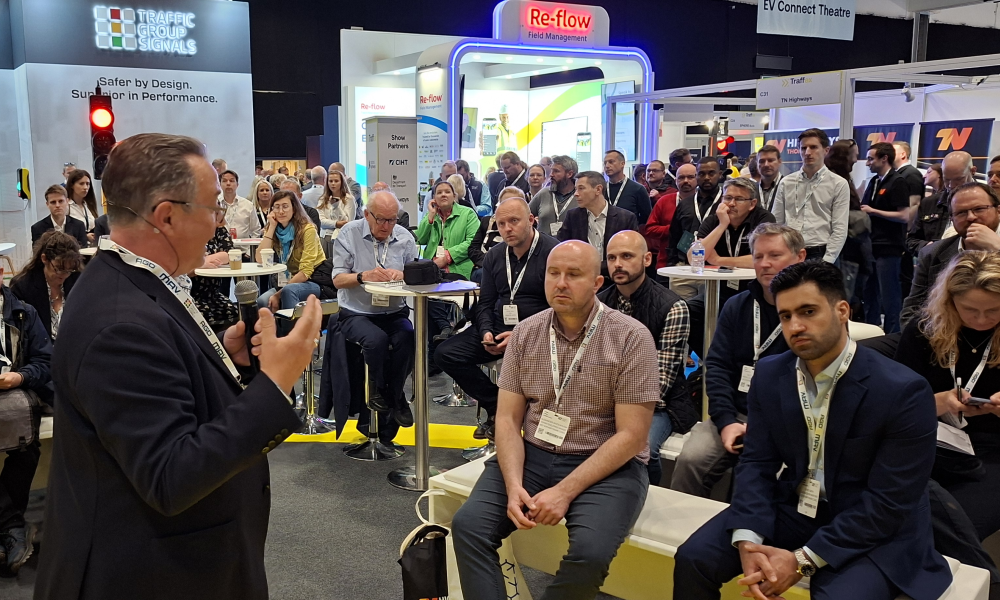
If the dominant mood at Traffex 2026 in Coventry was one of pragmatism, the dominant message for the intelligent transport systems sector was even clearer, the next phase of innovation will be judged less by pilots and promises than by whether it can be deployed at scale, across whole networks and with benefits that road users can actually feel. Across the Roadmap and TechTalks theatres on the opening day at the CBS Arena, speakers repeatedly returned to the same idea. The sector is moving into an implementation era, where connectivity, data, safety and asset renewal are no longer parallel conversations but parts of the same delivery agenda. That message was not confined to one session or one technology strand. It was built into the event itself, which this year presented Traffex as a forum for practical delivery rather than abstract debate, with an agenda focused on case studies, procurement realities, timelines and solutions that can survive public-sector scrutiny as well as commercial pressure.
That framing was reinforced by Elliot Shaw’s keynote on Road Investment Strategy 3. While his speech was rooted in the practical challenge of delivering a £27 billion programme for England’s strategic road network, it also carried major implications for ITS suppliers, integrators and public sector clients. Shaw’s emphasis on safety, reliability, resilience, customer information and better network performance suggests that digital capability is becoming a core requirement of highways delivery rather than an optional add-on. In other words, RIS3 is not only a roads investment settlement, it is also a signal that technologies supporting incident response, asset intelligence, traveller information and operational efficiency will have to prove their value in mainstream deployment. For the ITS market, that changes the conversation. The question is no longer simply whether digital tools can improve outcomes, but whether they can do so consistently, affordably and in a form that authorities can procure and maintain over the life of an asset. In that sense, Shaw’s remarks aligned with a wider feeling around the exhibition floor, public bodies are still interested in innovation, but they are increasingly asking harder questions about integration, lifecycle costs, workforce readiness and measurable return on investment.
Darren Capes’ keynote speech in the TechTalks Theatre on connected vehicle services gave that delivery agenda a sharper technological edge. His case for a Connected Vehicle Services Framework, built around open, interoperable and user-focused services, speaks directly to one of the biggest long-term questions in UK ITS, how to move from fragmented, product-led deployments toward a nationally coherent service environment. The significance of that message goes beyond vehicles alone. It touches local authority data quality, roadside and cellular communications, service standards and the need to make digital road information feel as consistent and dependable as physical infrastructure. For the ITS community, that is both a market opportunity and a challenge to collaborate around outcomes rather than competing standards. Capes’ emphasis on services that work regardless of platform or device is especially important at a time when the policy environment is becoming more demanding. As digital traffic orders, automated vehicle readiness and smarter roadside services move further up the agenda, inconsistencies in underlying data and governance become more than an inconvenience; they become barriers to scale. What his presentation suggested, therefore, is that the next chapter in UK road technology will be won not just by clever applications, but by the less glamorous disciplines of standardisation, stewardship and cross-network coordination.
Beyond those two speeches, the wider shape of Traffex also pointed to the issues likely to dominate ITS and mobility technology discussions over the next 12 to 24 months. The event programme placed strong emphasis on implementation-focused technology sessions, while the exhibition floor brought together suppliers spanning traffic management, safety systems, ITS, EV infrastructure and operational tools. That mix matters. It reflects a market in which traffic signals, kerbside systems, enforcement, road worker safety, electric vehicle charging, data platforms and maintenance technologies are increasingly being considered as parts of one connected ecosystem rather than separate procurement silos. In practical terms, that means buyers are looking for solutions that can plug into existing operational environments, support better decision-making and justify investment under tighter budget scrutiny. It also explains why local authority voices have been so prominent in this year’s agenda. Traffex has leaned heavily into the day-to-day realities of council delivery, with senior figures from authorities across England and Wales helping shape sessions on asset management, network operations, standards and policy implementation. For ITS suppliers, that is an important signal. The market opportunity remains substantial, but the most persuasive solutions are likely to be those that address live operational pain points such as data quality, maintenance backlogs, scheme prioritisation, workforce capacity and the need to align digital tools with legacy processes that have not disappeared simply because the sector talks more often about transformation.
One notable signal from the event’s broader agenda was the prominence of electric vehicle infrastructure, including discussions on funding, rural provision, accessibility and the use of AI in deployment planning. This is significant because EV roll-out is increasingly intersecting with digital mobility management. Charging infrastructure is no longer just an energy question; it is also a data, access and network-management question, especially where local authorities need to balance grid constraints, kerbside demand, parking policy and user information. As a result, the future mobility stack on display at Traffex is becoming more integrated, with transport technology expected to connect infrastructure planning, real-time operations and customer experience. The same pattern could be seen in adjacent themes from the co-located events and exhibitor news. Parking technology is becoming more tightly bound to digital enforcement, kerbside intelligence and national policy changes, while digital traffic order management is moving from niche innovation to a more urgent compliance and operational issue. Elsewhere, roadside AI and real-time digital controls were being presented not as futuristic concepts but as tools for improving worksite safety, reducing paperwork and giving managers a clearer picture of what is happening on the network as conditions change. Put together, these strands point to a broader shift in mobility technology, value increasingly comes from connecting previously separate systems so that information can move faster, decisions can be made earlier and interventions can be targeted more precisely.
What emerged from day one in Coventry, then, was not a single breakthrough announcement so much as a clearer picture of where the sector is heading. The UK’s transport technology market appears to be converging around a set of practical priorities: open connected services, better use of operational data, more resilient and maintainable assets, safer roads and mobility infrastructure that works across local and strategic networks alike. There was also a notable sense that different parts of the market are beginning to speak a more common language. Roads policy, local delivery, vehicle connectivity, parking systems, EV charging and roadside operations are still distinct disciplines, but the logic tying them together is becoming harder to ignore. All depend on trusted data, clearer standards, interoperable systems and organisations that can move from trial mode into routine delivery. For ITS specialists, that should be encouraging. It suggests that intelligent systems are moving closer to the centre of transport delivery. But it also raises the bar. The winners in this next phase will be those that can turn technical capability into dependable, scalable services that help road authorities and operators deliver visible results. If Traffex 2026 offered one especially important lesson, it is that the ITS sector now has a stronger invitation to shape mainstream transport outcomes, but less room to hide behind potential alone. The conversation in Coventry was no longer about whether technology belongs at the heart of roads and mobility policy. It was about which technologies are mature enough, adaptable enough and understandable enough to make that role stick.
Click the buttons below to see more articles:
See all ArticlesIndustry InsightEventsITS Thought LeadershipITS Educational