150x150.png)
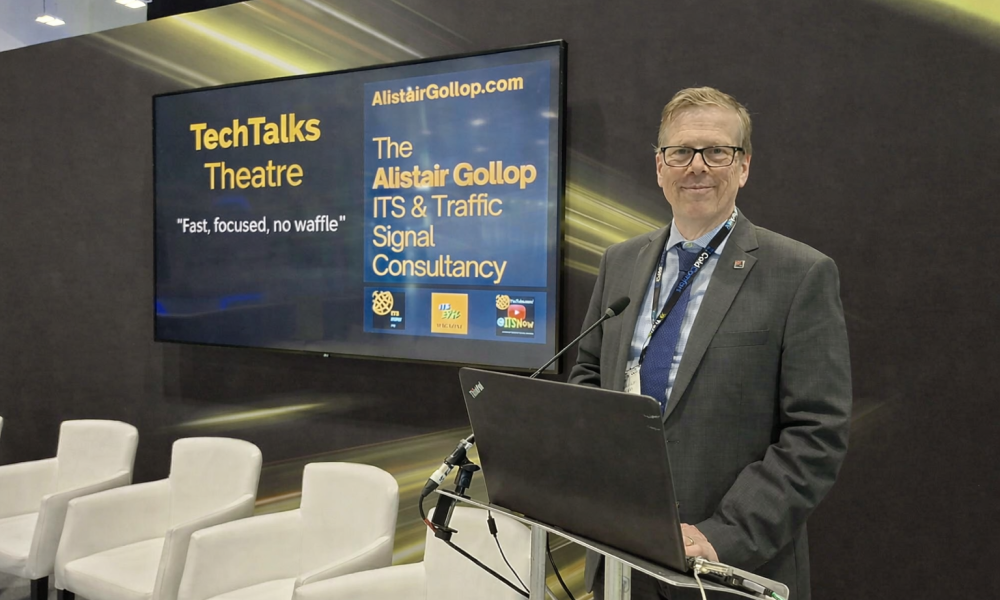
As Traffex 2026 opens its doors this week, there is a palpable sense that the highways and mobility sector has reached an inflection point. The conversations that once revolved around pilots, proofs-of-concept and cautious experimentation have given way to something far more decisive. Across global events — from Orlando to Hong Kong, Zurich to Miami — the message has been remarkably consistent: Intelligent Transport Systems (ITS) are no longer optional enhancements. They are the essential enabling layer for the mobility systems we will need in the years ahead.
As one line from the TechTalks opening address puts it, “the technologies used to operate and manage our networks… are now being recognised as the essential enabling layer for the mobility systems we will need in coming years.” That sentiment frames not only the TechTalks Theatre programme, but the wider Traffex exhibition floor, where suppliers, authorities, innovators and policymakers converge to discuss what comes next.
This year’s Traffex arrives at a moment when the sector is grappling with a complex mix of pressures, including ageing infrastructure, rising public expectations, constrained budgets, climate-driven disruption and the accelerating pace of digitalisation. Yet it also arrives at a moment of extraordinary opportunity. The tools, data and capabilities that once felt futuristic are now deployment-ready. The question is no longer whether to adopt them, but how fast.
The shift in tone across the sector is unmistakable. Cities are no longer debating whether to invest in digital infrastructure, they are asking how to scale it. National agencies are no longer wondering whether connected mobility will arrive, they are preparing the regulatory frameworks that will shape it. And suppliers are no longer positioning ITS as a niche specialism, they are embedding it as the foundation of their product strategies.
This is reflected in the technologies dominating the Traffex agenda: connected corridors, digital traffic regulation orders, AI-supported operations, automated enforcement, dynamic kerbside management, digital twins, smarter signal deployment and frontline intelligence tools that reduce rework and improve safety. These are not abstract concepts. They are practical, deployable systems that are already reshaping how networks operate.
The sector’s challenge, and opportunity, lies in integration. As the TechTalks address notes, “Connected vehicles, cooperative corridors, automated freight… all rely on the same underlying truth. If we want mobility that is safer, cleaner, more efficient and more equitable, then ITS is the mechanism that makes it possible.”
New for this year, the TechTalks Theatre provides a curated space for the sector to explore these themes in depth. Across two days, the programme brings together local authorities, national agencies, suppliers, researchers and innovators, each offering a different lens on the same set of challenges.
What stands out is the practical nature of the sessions. This is not technology for technology’s sake. It is technology in service of outcomes: reducing risk, improving safety, cutting waste, speeding up delivery and giving operators better visibility of what is happening across their networks.
Day One opens with Alistair Gollop giving the opening address, he’ll be hosting both days of the conference and starts by introducing the keynote speaker Darren Capes from the Department for Transport. Darren will be setting out how the DfT is shaping the next generation of transport. His keynote frames the national ambition behind digital infrastructure, standards and future mobility.
From there, the programme moves through a series of sessions that reflect the breadth of the sector’s challenges:
Across the day, the theme is clear: better data, better tools, better deployment.
If Day One sets the direction, Day Two pushes the sector to confront its most pressing risks and opportunities. This again starts with an opening address from Alistair Gollop, who will introduce Max Sugarman of ITS UK opens with a keynote on obsolescence, a topic that has become impossible to ignore. Ageing signal infrastructure is no longer just a maintenance issue; it is a reliability, resilience and public trust issue. As the address notes, “Few issues capture the pressure facing the sector more clearly than the challenge of ageing traffic signal infrastructure.”
The day then broadens into sessions on:
The unifying thread is implementation. As the Day Two address puts it, “Today is not just about identifying problems; it is about showing what better looks like.”
What makes Traffex 2026 feel different is the sense of urgency and readiness. The sector knows what needs to be done. The technologies exist. The data exists. The expertise exists. What is needed now is alignment between central and local government, between suppliers and operators, between policy and practice.
TechTalks captures this perfectly. It is a space built for conversation, challenge and collaboration, the ingredients that turn capability into delivery.
As the closing words of the programme remind us, “The work we do together, in rooms like this, will determine how effectively we harness ITS’s potential.”
This week at Traffex, that work begins in earnest.
Click the buttons below to see more articles:
See all ArticlesIndustry InsightEventsITS Thought LeadershipITS Educational