150x150.png)
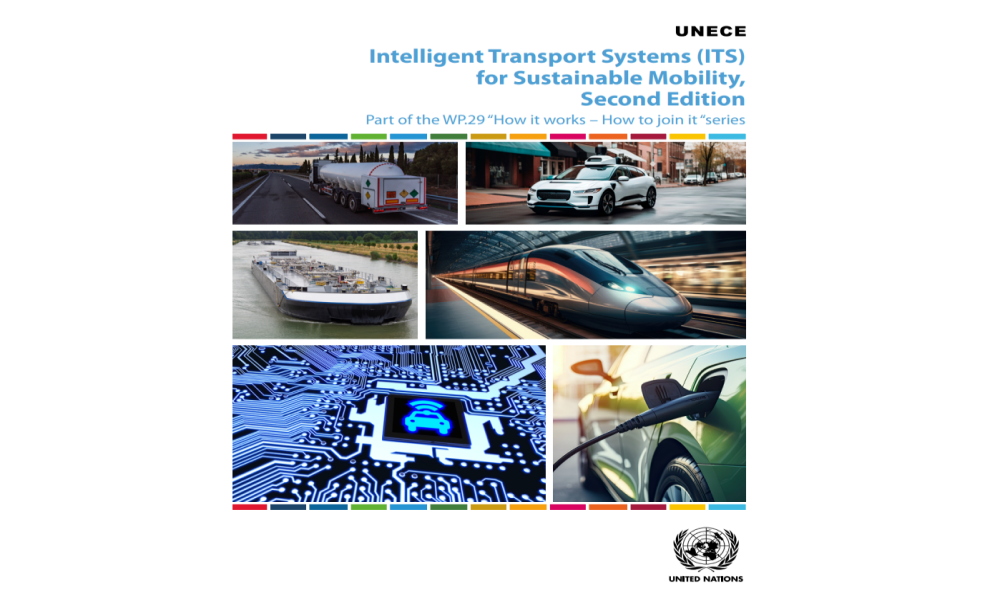
For much of the modern era, the story of automotive innovation has been told from the driver’s seat. Progress has been measured by what happens inside the vehicle, from the introduction of the seatbelt to the rise of sophisticated driver assistance systems in the 2020s. Each advance has promised a safer journey through smarter machines. Yet a growing body of evidence suggests that this vehicle centred approach has reached its natural limit.
The United Nations Economic Commission for Europe has placed this tension at the heart of the second edition of its landmark publication, Intelligent Transport Systems for Sustainable Mobility. Rather than calling for ever more intelligent cars, the report argues for a more fundamental shift. Safety and sustainability, it contends, will only be achieved when intelligence is embedded into the environment itself. Roads, junctions and signals must become active participants in the transport system rather than passive backdrops to human error.
The urgency of this shift is difficult to ignore. Globally, around 1.35 million people lose their lives each year in road traffic collisions. This is not an abstract figure but an ongoing public health crisis, with road injuries remaining the leading cause of death among children and young adults aged between five and 29. Despite decades of campaigns and incremental technological gains, the toll remains stubbornly high.
At the same time, transport continues to be a major driver of environmental harm. Congestion, inefficient driving patterns and fossil fuel dependency contribute heavily to carbon emissions and poor air quality, particularly in urban areas. The UNECE report draws a clear link between these challenges, arguing that safety and sustainability can no longer be treated as separate problems. A traffic jam is not just an inconvenience but a concentration of emissions and a pressure cooker for frustration, distraction and risk taking.
For years, the promise of intelligent transport systems has rested on the idea of the smart car. Vehicles have been tasked with sensing their surroundings, interpreting hazards and reacting in real time. While this has delivered genuine benefits, the report highlights a fundamental constraint. A vehicle, no matter how advanced, can only respond to what its sensors can perceive. In a complex and unpredictable environment, that field of vision is inevitably limited.
The UNECE proposes a broader and more resilient model, one built on infrastructure to everything communication. In this vision, roads, traffic lights, pedestrian crossings and even local energy networks are digitally connected. Intelligence is distributed across the system, allowing information to flow where it is most needed rather than remaining locked inside individual vehicles.
When intelligence resides in the infrastructure, safety becomes predictive rather than reactive. A connected junction equipped with thermal imaging or lidar can identify a pedestrian stepping into danger before they are visible to an approaching driver. That information can then be shared instantly with nearby vehicles, providing a warning that no single sensor could deliver in isolation. Responsibility for safety shifts from individual reflexes to collective awareness.
The same principle applies to sustainability. Too often, cleaner transport is reduced to a discussion about electric vehicles. While electrification is essential, the UNECE stresses that driving patterns matter just as much. Stop start traffic wastes energy regardless of what powers the vehicle. By embedding intelligence into traffic systems, cities can smooth flows and prevent congestion before it forms. Adaptive signal timings and coordinated corridors allow freight and public transport to move steadily through urban areas, reducing energy use, emissions and harmful particulate matter from braking.
Beyond day to day operations, smart infrastructure creates a powerful foundation for policy. Digitised roads and networks generate a living digital twin of the transport system, allowing authorities to see not just where accidents occur but where near misses are building. Interventions can be targeted before tragedy strikes. Environmental impacts can be measured in real time, enabling dynamic approaches to access, pricing and regulation based on actual air quality rather than static assumptions.
The report is careful not to gloss over the challenges. Chief among them is interoperability. For a truly holistic system to function, vehicles and infrastructure must speak the same digital language across borders and manufacturers. A car built in Sweden must be able to understand a traffic signal in Turkey or a delivery robot in Italy. Without common standards for communication, cybersecurity and data protection, smart infrastructure risks becoming a patchwork of isolated pilot projects rather than a shared public good.
This is where the UNECE sees its most important role. As a regulatory and convening body, it is uniquely placed to drive international harmonisation. Only through aligned frameworks can intelligent transport systems scale to the level required to save lives and reduce emissions globally.
Equity sits at the heart of this argument. The burden of road deaths falls disproportionately on low and middle income countries, where infrastructure is often underdeveloped and vehicle technology lags behind. A shift towards intelligent infrastructure offers a way to deliver safety benefits that do not depend on owning the latest car. Low cost sensor arrays, solar powered lighting and connected warning systems at dangerous rural junctions can protect pedestrians, cyclists and motorcyclists as effectively as drivers in high end vehicles.
From within the Intelligent Transport Systems sector there is broad agreement with this vision. Industry leaders increasingly argue that the transition towards intelligent infrastructure is not only inevitable but overdue. However, they also warn that ambition alone will not deliver safer or more sustainable roads. Realising the UNECE’s vision will require sustained and coordinated investment, particularly across Europe where ageing transport networks must be upgraded to meet digital demands. Without long term funding, shared standards and political commitment, intelligent infrastructure risks remaining confined to isolated pilots rather than becoming the backbone of everyday mobility. For the sector, the message is clear. The technology exists, the evidence is compelling, but progress now depends on treating intelligent transport systems as critical national infrastructure worthy of the same scale of investment as roads, railways and energy networks.
Intelligent Transport Systems for Sustainable Mobility reads less like a technical report and more like a manifesto. It recognises that the vehicle focused philosophy of the twentieth century has reached its ceiling. If the ambition of zero road deaths and net zero emissions is to be realised, roads must be reimagined as more than strips of tarmac. Read the full report HERE.
Click the buttons below to see more articles:
See all ArticlesIndustry InsightEventsITS Thought LeadershipITS Educational