150x150.png)
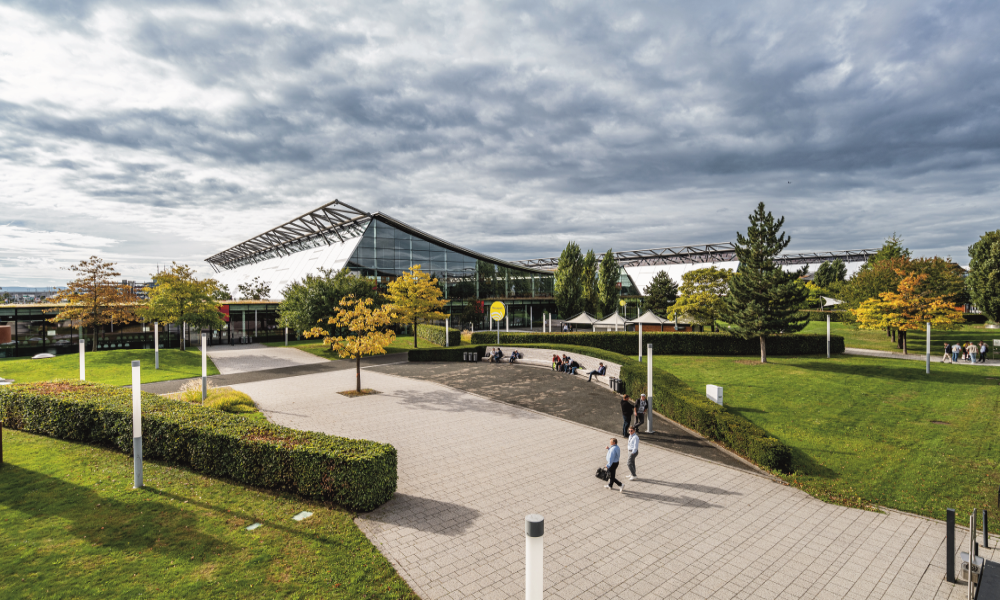
The i-Mobility 2026 exhibition, held from 9–12 April at Messe Stuttgart, marked a significant turning point for Europe’s transport and mobility sector. As a central component of the Stuttgart Spring Fairs, this year’s event demonstrated a clear transition away from abstract smart city concepts and toward the real-world deployment of Intelligent Transport Systems (ITS) and software-defined vehicle architectures.
With more than 12,000 attendees and strong participation from major automotive and technology players, the four-day exhibition reflected an industry that is moving decisively from experimentation to execution. Across exhibition halls, conference sessions and live demonstrations, the emphasis was firmly on scaling solutions that are ready to operate within today’s cities and transport networks.
One of the most impactful elements of i-Mobility 2026 was the dedicated Municipalities Day, which brought together public authorities, transport operators and technology providers to address a long-standing challenge: integration. Rather than focusing on isolated pilot projects, discussions centred on how cities can embed new mobility technologies into existing governance frameworks and daily operations.
Sessions explored practical approaches to fleet electrification, highlighting how municipal services can transition to zero-emission vehicles without disrupting service reliability. Charging infrastructure was another key theme, with attention shifting toward intelligent, load-managed networks capable of balancing local energy systems rather than simply expanding the number of plug-in points. Digital mobility services also featured prominently, demonstrating how data-driven platforms can support better land-use decisions, reduce congestion and improve public transport coordination.
Intelligent Transport Systems played a defining role at this year’s exhibition, particularly through the growing momentum behind Cooperative ITS. Exhibitors showcased how vehicle-to-infrastructure communication is being accelerated by advanced cellular networks, offering a flexible alternative to traditional, hardware-intensive roadside installations. This approach promises faster deployment, lower lifecycle costs and improved interoperability across regions.
Research institutes and startups added another layer to the conversation by presenting advances in Physical AI—agent-based systems designed to manage fleets and orchestrate increasingly complex mobility ecosystems. These solutions enable true multimodal travel, allowing travellers and operators to move seamlessly between shared micromobility, autonomous shuttles and long-distance rail, with digital systems handling coordination in the background.
A noticeable shift at i-Mobility 2026 was the industry’s alignment around software-defined vehicles. Whereas earlier editions focused heavily on individual hardware innovations, this year’s attention turned to software platforms, AI frameworks and over-the-air update capabilities that allow vehicles to evolve throughout their operational life.
Live demonstrations in the Messe Stuttgart test area illustrated how these approaches are translating into production-ready solutions. Visitors experienced advanced driver assistance and automated driving functions operating at Level 3 and Level 4, as well as smart ticketing and account-based payment systems that simplify access to public transport and shared mobility services.
Sustainability remained a fundamental theme throughout the exhibition. The Future Mobility Award 2026 recognised startups working on battery circularity and sustainable fuel supply chains, underscoring the industry’s focus on lifecycle impacts rather than tailpipe emissions alone.
Alongside large vehicles and infrastructure, micromobility emerged as a practical and mature solution for urban transport. Dedicated indoor tracks for e-scooters, cargo bikes and other light electric vehicles demonstrated how these modes are increasingly viewed as essential components of last-mile connectivity rather than niche alternatives.
As i-Mobility 2026 comes to a close, attention now turns to the next major gatherings in the European transport calendar, including Vehicle Tech Week Europe in June and InnoTrans in September. The message from Stuttgart is clear: smart mobility is no longer defined by ambitious concepts alone. In 2026, the focus is firmly on delivering integrated, scalable ITS solutions that can operate reliably at city and regional level—turning long-held visions into everyday reality.
Click the buttons below to see more articles:
See all ArticlesIndustry InsightEventsITS Thought LeadershipITS Educational